TLDR;
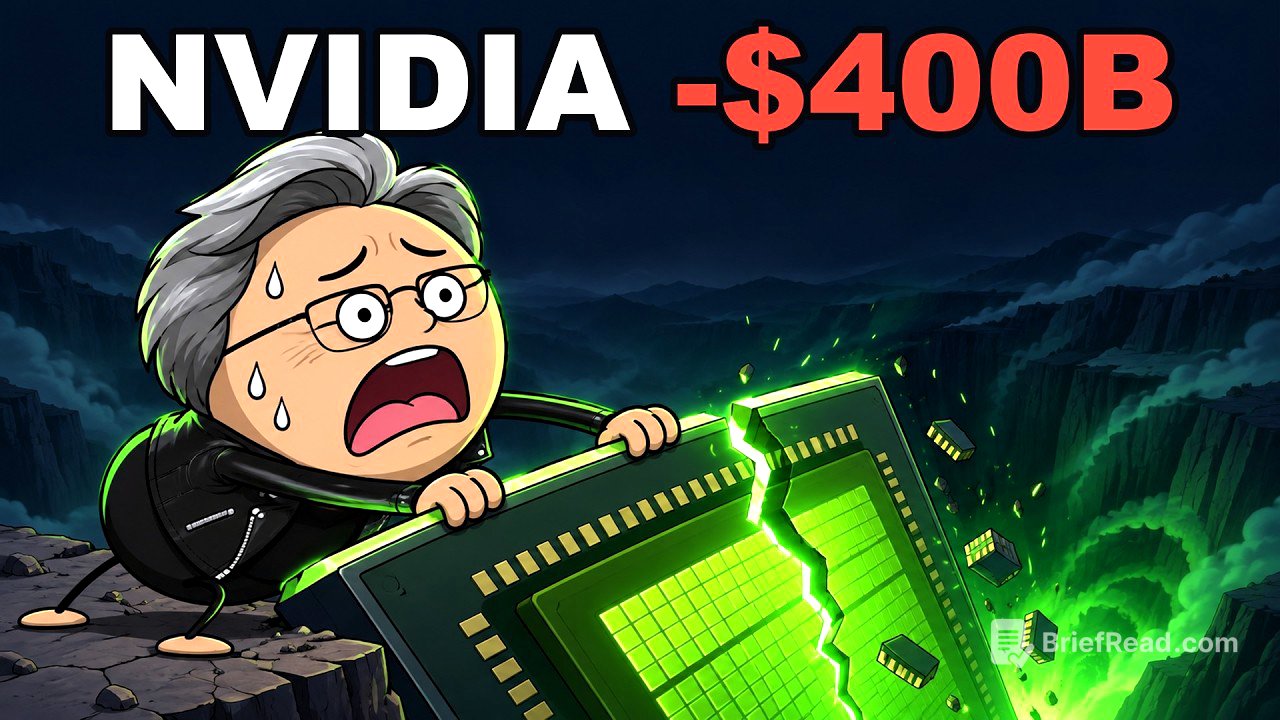
The video discusses a dramatic drop in the stock market, particularly focusing on Nvidia, which lost over $400 billion in a single morning, despite not being at fault for the crash. Key points include the over-reliance on a few major tech companies, the implications of upcoming elections affecting data centre expansions, and the potential vulnerabilities within the AI market.
- Nvidia's loss came without bank failures or significant news.
- Investors pulled back due to fears relating to data centres following elections.
- There are cracks in the financial structure of AI and chip companies.
The $400 billion morning [0:00]
On a Thursday, Nvidia suffered a staggering loss of over $400 billion in market value, with no significant economic event triggering this sudden crash. The overall economy remained stable, and there were no bank failures or legislative changes that might have explained the sudden downturn. By midmorning, the S&P 500 had lost more than $2 trillion. Investors were concerned about the AI bubble potentially bursting. The situation was brought on by a confluence of factors, including an election, issues with chip availability in Hong Kong, and wealthy investors locking in profits from a profitable year.
The Top [0:48]
The narrative began with Nvidia reaching an all-time high in October, valued at approximately $5.4 trillion, which constituted a substantial proportion of the S&P 500. Despite owning a diverse set of companies, individual investors were heavily exposed to Nvidia and a handful of other tech giants. There was an indication that the market was heavily skewed, with the top seven companies dominating a significant share of index funds, reminiscent of the dot-com boom.
The Cracks [1:57]
By late October, key vulnerabilities within the market were starting to emerge. The first crack involved circular financing, where Nvidia was investing in its customers, raising concerns about the sustainability of such a model. The second crack addressed the dependency on chips as collateral for loans, meaning if companies like CoreWeave struggled to pay, the value of these chips could plummet. Additionally, a few major clients accounted for a large portion of Nvidia's sales, which risked financial stability. Lastly, the inability to secure adequate electricity for data centres posed a significant threat to future expansions.
The Midterms [5:01]
Election day brought unexpected outcomes, as Democrats won significant control in Congress, potentially limiting subsidies and expansions of data centres. Local votes heavily favoured restrictions on data centres, prompting fears on Wall Street regarding delays in the construction of essential infrastructure. This uncertainty impacted stock values, as lack of permits and regulations loomed over planned expansions.
The One-Day Party [6:48]
Following the elections, the market initially reacted positively, experiencing one of the best trading days after midterms since the 1980s. The Dow surged, boosted by hopes for cheaper oil and other favourable conditions. However, that optimism was short-lived, as new issues began to surface regarding Nvidia's chip availability and the ongoing challenges in Hong Kong.
Thursday [8:09]
A significant downturn occurred the following Thursday, with Nvidia's stocks plummeting. In New York, the Nasdaq reached its lowest point quickly, erasing gains made in the previous rally within minutes. By the end of the trading day, the Dow dropped dramatically, resulting in one of the largest falls in over a year, dramatically impacting investors and contributing to widespread fear in the market.
Who Gets Hurt [10:59]
The consequences of the market crash were felt widely, affecting around 70 million Americans who invest in 401(k)s. Teachers and firefighters, among others, faced losses linked to index funds heavily invested in top tech companies. The downturn also impacted local economies tied to data centres, with a ripple effect on jobs and services that support these facilities.
Did the Bubble Pop? [12:02]
In conclusion, while the stock market experienced a significant crash, it did not indicate the bursting of the AI bubble. Despite sharp declines in stock values, the underlying sales of companies like Nvidia were still strong, and significant spending was expected to continue. However, concerns arose about potential regulatory changes and the overall sustainability of current investments, marking a moment of uncertainty about the future trajectory of the market.