TLDR;
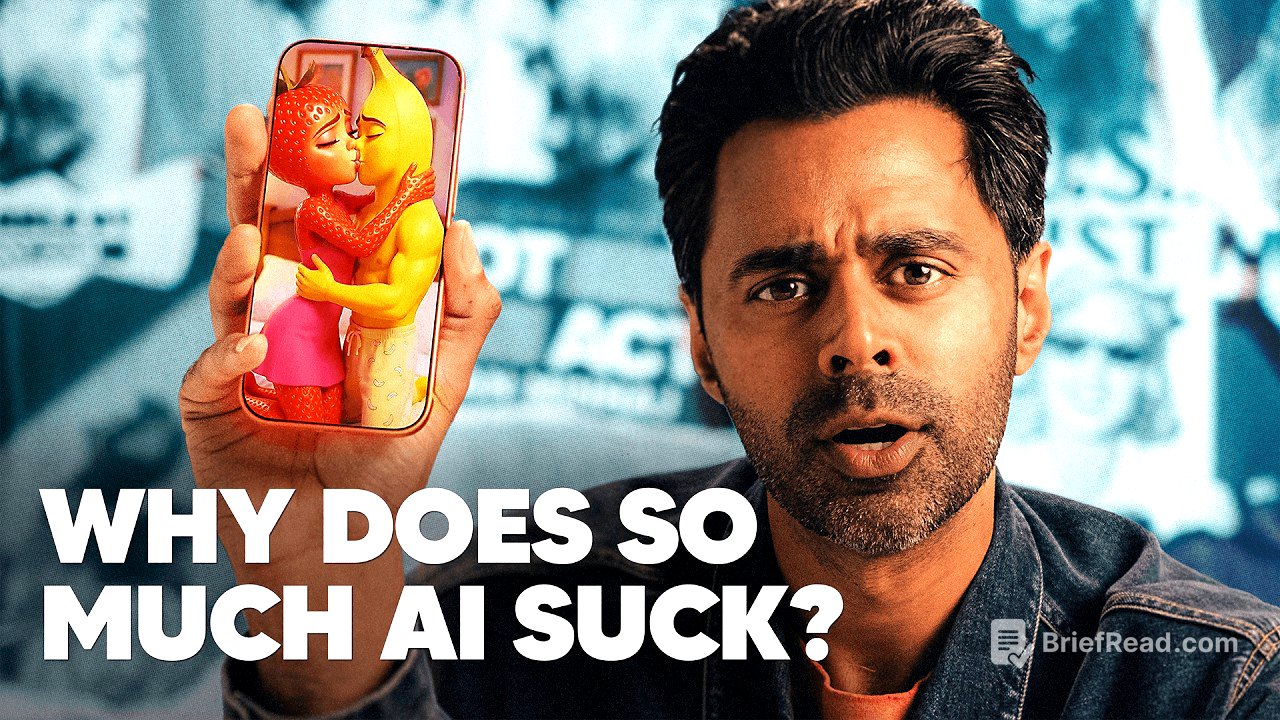
The video explores the impact and hype surrounding artificial intelligence (AI) across various sectors, including its real and perceived relevance to everyday people. Key takeaways include the categorization of AI technologies, the social implications of AI, and discussions with expert Joanna Stern on the future of AI in everyday life and work.
- AI is one of the most hyped technologies today, often compared to past tech bubbles.
- The value of AI for regular individuals and job security concerns are significant themes.
- The conversation addresses the potential benefits and drawbacks of AI in fields like radiology, transportation, and personal relationships.
A.I. hypebeasts [0:00]
The host begins by reflecting on past tech innovations that fizzled, contrasting them with the massive hype surrounding AI today. Quotes from tech figures claim that AI will revolutionise human capabilities and lead to an era of exploration and creativity. However, the host questions the promised benefits, highlighting that much current AI integration feels more like corporate strategy than genuine aid for everyday life. This leads to a sceptical view that AI might serve more to maximise corporate profits rather than enhance human experience.
The 4 categories of artificial intelligence [2:49]
The host categorizes AI into four key areas: 1) AI that surpasses human capability, such as early cancer detection by radiologists; 2) AI that does what humans already do but in a cheaper and less effective way, such as customer service chatbots; 3) existing products enhanced with AI branding despite limited improvements, like smart toothbrushes; and 4) potentially dangerous robots, including self-driving cars like those by Tesla, which have caused accidents. This classification illustrates the mixed utility and questionable efficacy of current AI technologies.
Introducing Joanna Stern [9:10]
Joanna Stern, a former tech journalist, shares insights from her year-long experiment with integrating AI into her daily life. She used AI in various forms, from therapy to household chores. Stern aims to investigate how pervasive AI will shape human interactions, questioning whether this shift would lead to greater connection or deeper isolation.
Dishwashers that decode the human genome... [10:30]
The conversation turns to the absurdity of marketing claims surrounding AI-enhanced products, exemplified by a high-tech dishwasher presented as revolutionary. The discussion touches on how tech companies seem to slap "AI" onto products to elevate their market appeal without significantly improving their function. This highlights a broader trend of overstatement in the tech industry regarding the actual benefits of AI.
A.I.Maxxing [12:53]
Stern reflects on her integration of AI into every part of life, questioning its implications. The conversation discusses whether this shift is beneficial, considering how AI infiltrates everyday technology like search engines and personal devices. This exploration reveals a mix of optimism and concern about automation and the consequences for human interaction.
BOOOOOOOOOOOOO! [15:00]
This section covers cultural responses to AI, including reactions from individuals who feel threatened by its rise, especially in creative fields. AI-generated art and media are scrutinized, with the host expressing disdain for the inferior quality of certain generative AI outputs, hinting at broader implications for creativity and authorship in the digital era.
Radiology [16:26]
Joanna discusses her personal experiences with AI in the medical field, particularly in radiology. She details an occasion where AI successfully identified a cancer marker missed by a human radiologist, emphasizing the potential of AI to act as a valuable tool in medical diagnostics. While expressing hope for such advancements, she also raises concerns about the implications for human roles in medicine.
Waymo [18:44]
The topic shifts to self-driving technology, specifically Waymo. Stern shares her trust in self-driving cars, arguing they can perform better than humans in many circumstances. However, both she and the host discuss the unpredictability of such technology and concerns about human drivers' safety compared to AI systems.
Vibecoding [22:38]
Stern explains "vibecoding," where AI can create applications based on simple user prompts, democratising software creation. This prospect raises questions about the future of coding and software development, with the duo contemplating what it means for individual creativity and the job market.
Ads [25:49]
The discussion critiques the marketing of AI in consumer products, noting how many items are overhyped and lack substantive benefits. The conversation reflects on consumer culture's gullibility and the marketing strategies companies adopt in the age of AI.
Wearables [28:17]
Joanna's experiences with various wearables during her integration of AI are examined. While some devices provided convenience, overall effectiveness and real-life improvements were mixed. The duo discuss the extent to which these technologies enhance daily life versus creating unnecessary complexities.
Form and function [34:01]
Stern analyses how AI products, from robots to everyday appliances, often fail to reconcile form and function effectively. Challenges include how human-centric designs contrast with the limitations faced by robots in performing tasks that require complex human motions.
Chatbots [41:22]
The impact of chatbots on personal relationships comes under scrutiny, with Stern recounting her interactions and the emotional implications of using AI for companionship. The host and guest discuss growing concerns over dependence on chatbots for emotional support in a society increasingly affected by loneliness.
Children and A.I. [47:11]
Stern reveals the challenges faced by children in forming real relationships in an AI-pervasive environment. They discuss how children modelling behaviour after AI chatbots could lead to unrealistic expectations in genuine human interactions, causing potential long-term psychological implications.
Am I going to lose my job to A.I.? [50:07]
Concerns about job security amid AI advancements are discussed, with both the host and Stern exploring how AI could displace certain tasks while simultaneously enabling the creation of new job opportunities. The discussion highlights the need for a nuanced understanding of AI's impact on the job market.
Data centers [52:13]
The operation and functionality of AI data centres are explained, with insights into energy consumption and environmental impact. They discuss the balance of power and water use in cooling systems and the ambiguous discourse surrounding the sustainability of AI technology.
What is the intelligence age? [56:25]
The video concludes with reflections on the "intelligence age", as articulated by industry leaders, hinting at potential societal consequences of relying on AI to do our thinking. It highlights the dilemma of how AI could distance humans from critical thinking, urging a more responsible and mindful integration of technology into daily life.