TLDR;
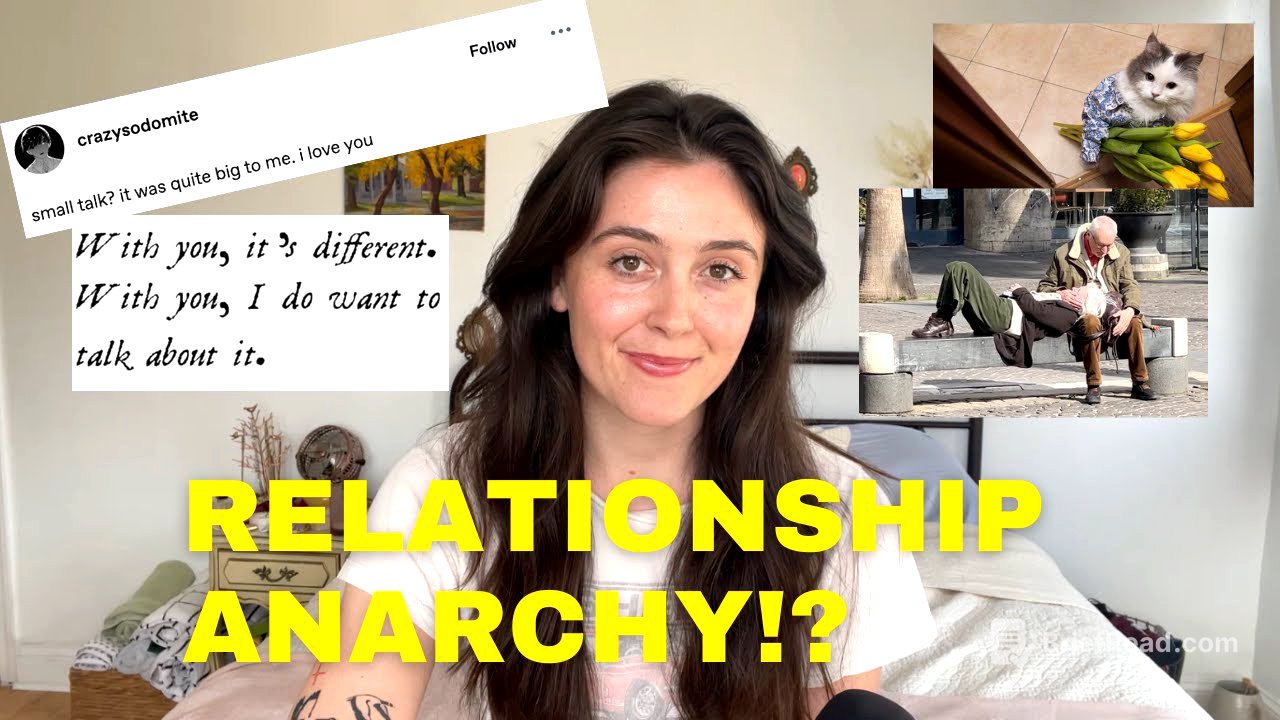
This video explores the language surrounding love and relationships, highlighting how societal norms and flawed metaphors can negatively impact our understanding and experiences of love. Anna discusses the dangers of pathologising desire, the need to extract ownership from love, and the reasons behind our fear of commitment. She touches on the historical context of love and marriage, advocating for equity in relationships and introducing the concept of relationship anarchy as a framework for defining relationships based on individual needs and authentic connection.
- Pathologising desire and misusing mental health language can harm relationships.
- Metaphors of ownership and war in love can create unhealthy power dynamics.
- Equity, understanding and meeting diverse needs, is crucial for healthy relationships.
- Relationship anarchy offers a framework for defining relationships based on individual needs and authentic connection.
Intro [0:00]
Anna introduces the topic of the language of love, inspired by a quote from Bell Hooks' "All About Love". The core idea is that changing our language around love can drastically change our relationships. Anna aims to explore the reasons why this is the case, setting the stage for a discussion on flawed metaphors and the pathologising of desire in modern relationships.
Brilliant Sponsorship [0:53]
Anna promotes Brilliant, an educational platform that offers interactive lessons in maths, science, programming, and data analysis. She highlights its hands-on approach, which is more effective than traditional lecture videos. Anna shares her personal experience of using Brilliant to improve her maths skills, appreciating how the courses prioritise applicable concepts and build critical thinking through problem-solving.
The flaws in our language around romantic relationships [2:03]
Anna discusses two main issues with the language used around romantic relationships. The first is the tendency to pathologise desire and misuse mental health terms. The second is the use of flawed metaphors that reinforce harmful narratives about love. She believes addressing these issues can lead to significant improvements in how we approach and experience relationships.
Pathologizing Desire [3:30]
Anna discusses the trend of pathologising desire and misusing mental health language in relationships. She points out how quick people are to diagnose others or themselves based on minor flaws, often without professional expertise. She references a TikTok highlighting the misuse of terms like "narcissism" and "trauma bond". Anna quotes Jamila Bradley, who argues that diagnosing people turns relationships into checklists of disorders, hindering empathy and meaningful connection. She criticises the transactional view of relationships that arises from pathologising attachment, where closeness is reduced to acceptable or unacceptable behaviours.
Extracting Ownership from Love [6:10]
Anna reflects on the feeling of ownership and possession often tied to monogamy. She argues for extracting these feelings from romantic relationships, even within monogamous partnerships. She suggests interrogating our relationship with ownership itself, appreciating beauty without needing to possess it. Anna shares a quote from Insta Georges about giving to a partner in a way that helps them grow and heal, even if it means letting them go. She emphasises that staying with someone whose needs aren't being met is self-obsession, and that sometimes the most loving thing is to let go of societal expectations of love lasting forever.
Why we're all afraid of commitment [11:20]
Anna explores why many people fear commitment, linking it to the idea of ownership and possession. She references an essay by MuseGuided, who contrasts love (a spark, a flame) with commitment (sober, measured). Anna suggests that the fear of commitment stems from the feeling of being owned, which many resist. She argues that commitment should be seen as a decision based on current compatibility, with the understanding that it's okay to let go if needs change.
A brief and incomplete history of love & marriage [14:11]
Anna provides a brief historical overview of love and marriage. In ancient Greece and the Middle Ages, marriage was primarily a civic duty and familial contract, not necessarily based on love. The Enlightenment brought the idea of choosing a spouse based on love, but it was the Romantic era that elevated love to a secular religion, with the concept of finding a soulmate. In the 20th century, Freud highlighted how love can reflect our personal issues. Anna notes that the democratisation of love, with birth control, divorce laws, and civil rights, led to a paradox: more choice, more fear of choosing wrongly.
How to introduce equity to romantic relationships [17:00]
Anna suggests that the next step in evolving relationships is to focus on equity, understanding that everyone has different needs and won't be equally cared for if treated the same. She references Jamila Bradley's essay "Fake Fairness is Killing Our Relationships," which introduces the concept of fake fairness and its patterns: shrinking yourself, mutual deprivation, and ongoing performative restriction. Anna explains these patterns with examples, highlighting how they deprive individuals of connection and genuine needs. She emphasises the importance of asking better questions, focusing on what would be satisfying for both partners, and giving and asking with intention.
Relationship Anarchy [22:00]
Anna introduces the concept of relationship anarchy, clarifying that it differs from polyamory. Relationship anarchy lacks hierarchy, has individual definitions for each relationship, fluid boundaries, values authentic connection, and emphasises personal autonomy and individual freedom. Anna encourages viewers to explore this concept further, acknowledging her own limited understanding.
Relationship Anarchy Smorgasbord [24:25]
Anna shares a resource called the "relationship anarchy smorgasbord," a tool for naming wants and needs with clarity and communicating with care. She emphasises the importance of ensuring that communicated wants and needs are genuinely your own, not societal expectations. The smorgasbord provides categories for intentional reflection on desires, their frequency, and their necessity for thriving. It also addresses trust and exclusivity. Anna mentions that Insta George added political elements and spiritual intimacy to the traditional smorgasbord. She concludes by highlighting the tool's potential for opening dialogue and fostering self-awareness, helping individuals understand compatibility in relationships.