TLDR;
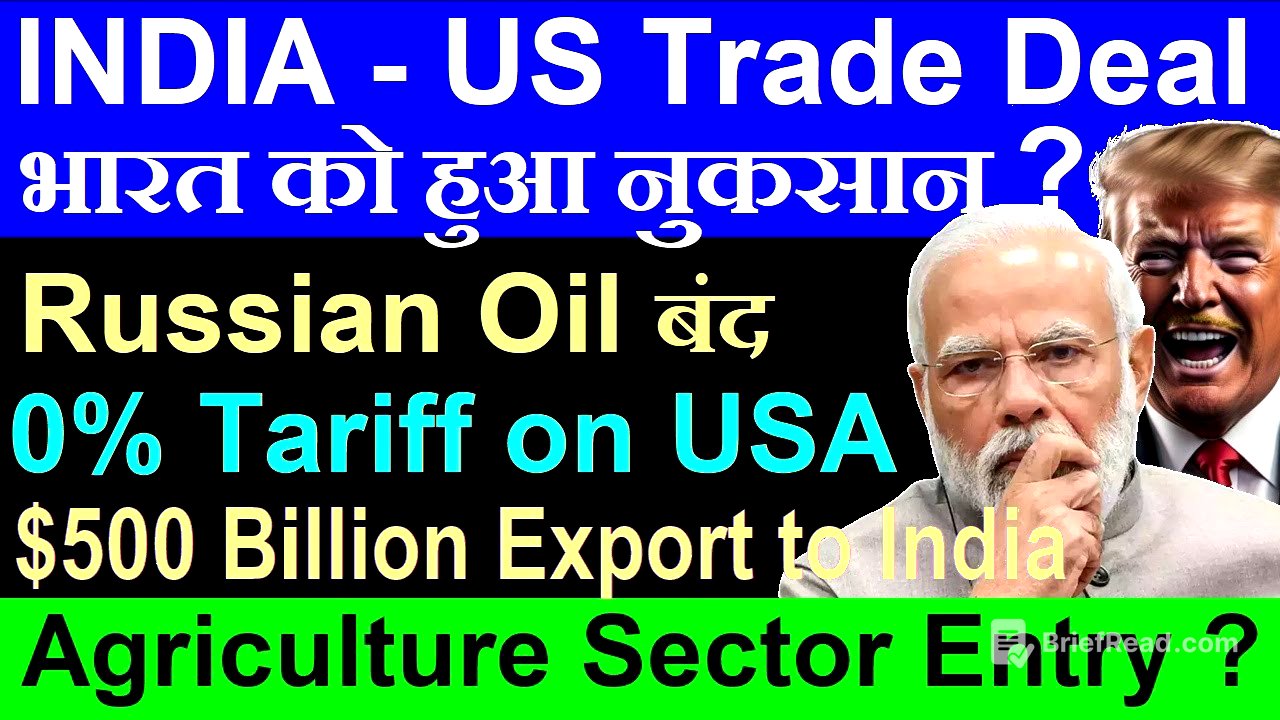
This video discusses the trade deal between India and the United States, analysing the potential benefits and drawbacks for both countries. It highlights key points such as the reduction in tariffs for India, the impact on the Indian Rupee, and potential advantages for the US, including increased exports and the cessation of Russian oil purchases by India. The video also touches upon the controversy surrounding the inclusion of agriculture in the deal and concludes with an assessment of which country may have gained more from the agreement.
- Reduction in tariffs for India from 50% to 18%.
- Strengthening of the Indian Rupee following the trade deal announcement.
- Potential increase in US exports to India, including energy and agricultural products.
- Controversy surrounding the inclusion of agriculture in the trade deal.
Introduction [0:03]
The video begins by acknowledging the buzz surrounding the newly signed trade deal between India and the United States. While the announcement has generated excitement, the specifics of the deal remain unclear, leading to questions about the actual gains and losses for each country. The presenter mentions that details are expected to be revealed in a press conference by Piyush Goyal, addressing the existing confusion.
India's Benefits [2:27]
The video outlines several benefits for India resulting from the trade deal. Firstly, it reduces uncertainty related to tariffs, specifically mentioning the decrease from 50% to 18%. This reduction is expected to boost India's exports, particularly since the US has historically been India's largest positive trade partner. The deal has also positively impacted the Indian Rupee, strengthening it against the dollar. This could potentially attract foreign institutional investors (FIIs) back into the Indian market. Furthermore, the reduced tariff puts India in a more competitive position compared to countries like Pakistan and Bangladesh, especially in the textile industry.
America's Benefits [7:41]
Turning to the benefits for the United States, the video refers to statements made by Trump. A key point is that India has agreed to stop buying Russian oil, fulfilling a major US objective related to the Russia-Ukraine war. Additionally, India is expected to purchase oil from the US and Venezuela, providing a double benefit to the US. The deal also includes a zero-tariff arrangement for American goods entering India, a move that has stirred some controversy. Furthermore, India has committed to significantly increasing its imports of American goods, potentially reaching $500 billion, which could be facilitated by increased crude oil purchases.
Controversy Surrounding Agriculture [10:34]
A significant point of contention is the inclusion of agriculture in the trade deal. Trump's statement mentioned agriculture as one of the sectors from which India would import goods from the US with zero tariffs. This has raised concerns and led to demands from opposition parties, including Congress, for greater transparency regarding the details of the deal, particularly concerning agriculture. The presenter suggests that the inclusion of agriculture may be a deliberate tactic by Trump and expresses doubt that it will actually be part of the final agreement.
Conclusion [11:58]
In conclusion, the video suggests that while both India and the US stand to benefit from the trade deal, the US may have gained a larger advantage. Based on the available information, the presenter estimates that the deal favours the US by 70%, with India benefiting by 30%. This assessment is based on factors such as the cessation of Russian oil purchases by India, the potential for increased US exports, and the zero-tariff arrangement for American goods. The presenter invites viewers to share their own perspectives on which country benefits more from the deal.





![Learn Python - Full Fundamental Course for Beginners | Python Tutorial for Beginners [2019]](https://wm-img.halpindev.com/p-briefread_c-10_b-10/urlb/aHR0cDovL2ltZy55b3V0dWJlLmNvbS92aS92X1M2NGtsZHJ5Yy9ocWRlZmF1bHQuanBn.jpg)