TLDR;
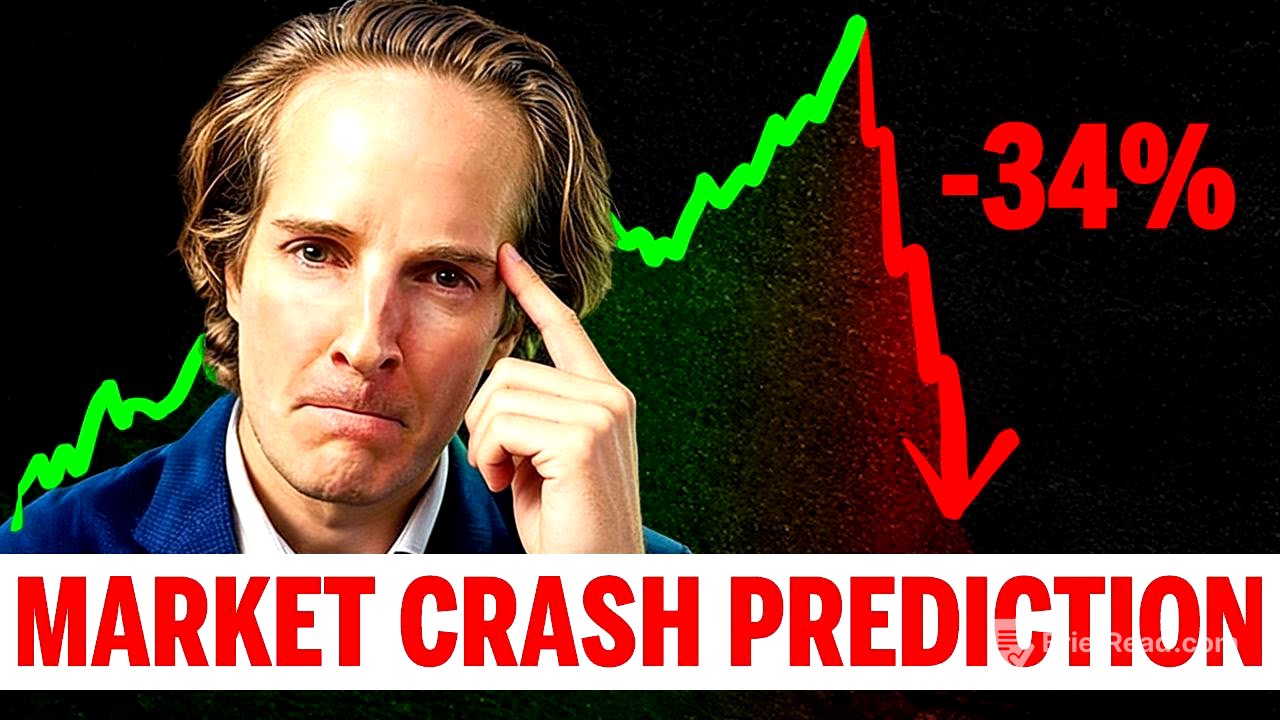
This video discusses the Federal Reserve's recent money printing activities and their potential impact on the stock market, particularly in relation to a predicted IPO frenzy in 2026. It highlights the fractional reserve banking system, the risks associated with 0% reserve requirements, and historical patterns of market peaks followed by crashes. The video offers a timeline for the upcoming market cycle, suggests strategies for positioning your portfolio, and advises against buying into IPO hype.
- The Federal Reserve has resumed printing money, injecting $40 billion per month into the economy.
- A wave of trillion-dollar IPOs from companies like SpaceX and OpenAI is anticipated in 2026.
- The video suggests a potential market correction is likely towards the end of 2026.
Intro [0:00]
The Federal Reserve has started printing $40 billion a month, and also injected $75 billion into JP Morgan at the end of the year. This is happening while major private companies like SpaceX and OpenAI are preparing for trillion-dollar IPOs. This pattern has occurred twice before, leading to significant market crashes in 2000 and 2021. The video aims to explain the Fed's actions, their connection to the IPO frenzy, and provide a timeline for when the market party might end, so viewers can position themselves to profit.
Reserve Management vs. Quantitative Easing [1:53]
The Federal Reserve has initiated "reserve management purchases," effectively printing $40 billion per month, or $480 billion per year. This involves the Fed creating new money to buy bonds from banks that are running low on cash, providing them with funds to lend out. While Fed Chair Jerome Powell claims this isn't quantitative easing, the Fed's balance sheet is expanding after two years of shrinking. Banks are experiencing low reserves and high usage of the Fed's emergency lending window, indicating financial stress. This money printing is expected to boost asset prices in the short term, but it's driven by concerns about the banking system's stability.
The Fractional Reserve System: Why Your Cash Isn't There [2:34]
When you deposit money into a bank, it doesn't stay there; the bank lends it out to someone else. This is known as the fractional reserve banking system, where banks keep only a fraction of deposits in reserve. For example, if you deposit £100 and the bank lends £90 to someone else, the total money in the economy effectively increases from £100 to £190.
How Banks Really Work: The Neighborhood Loan Example [4:40]
To illustrate the fractional reserve system, imagine you give Sarah £100 for safekeeping, but Sarah gives £90 of that to Tom. You still have £100 in your account with Sarah, and Tom has £90 in cash, effectively creating £190 from the initial £100. This demonstrates how banks lend out most of the money deposited.
The 0% Reserve Requirement: A Systemic Risk [6:13]
Since March 2020, US banks have been required to keep 0% in reserves, meaning they can legally lend out every dollar deposited. This raises the question of what happens if everyone wants to withdraw their money at the same time, leading to a bank run and potential collapse of the system. The collapse of Silicon Valley Bank in 2023, which occurred in just 48 hours due to nervous tech startups withdrawing deposits, serves as a recent example of this risk. The Fed's money printing aims to prevent bank runs by ensuring banks have enough cash to meet withdrawal demands.
The Liquidity Loop: How Printing Leads to IPOs [7:15]
The Fed printing money increases banks' reserves, encouraging them to lend more. This increased money supply drives up asset prices, including stocks and real estate. As the stock market rallies, founders and investors rush to launch IPOs at the market's peak.
, The Trillion-Dollar Club: SpaceX, OpenAI, and Databricks [9:34]
Several major private companies are planning to go public around the same time, including SpaceX (potentially valued at over a trillion dollars), OpenAI (also targeting a trillion-dollar valuation), and Databricks (with a more reasonable valuation of $134 billion). These companies, primarily in the AI and tech sectors, are rushing to the exit, raising questions about why early investors are so eager to sell.
The Sarah’s Lemonade Analogy: Why Founders Sell Now [11:28]
Company founders and early investors sell when conditions are most favourable, similar to Sarah selling lemonade during the summer when demand is high and people have money to spend. They wait for a bull market, optimistic investors, and easy money, often right before the market peaks and reverses.
Historical Lessons: The 1999 and 2021 IPO Crashes [12:36]
The dot-com bubble in 1999 saw 457 IPOs, many with zero revenue, followed by a NASDAQ crash of 78%. In 2021, after the Fed printed $4 trillion, IPOs like Roblox, Bumble, Rivian, and Coinbase were launched, but by 2023, 95% of IPO investors had lost money. These historical examples show that IPO frenzies often coincide with market tops.
The Three Stages of the 2026 Market Cycle [14:35]
The market cycle consists of three stages: economic weakness leading to banks needing reserves, the Fed cutting rates and printing money (where we are now), and a liquidity party where new money floods in, stock prices rally, and valuations increase. Smart money sees the peak coming, and private companies rush to IPOs, while retail investors buy everything.
The "Music Stops" Indicator: Watching the 6-Month Lockup [16:21]
The IPO wave is coming, and a key indicator to watch is the six-month lockup period after IPOs, when early investors, founders, and employees can start selling their shares. This, combined with potential midterm election wobbles, suggests a market correction is likely in late 2026.
Presidential Cycles and the Midterm Wobble [17:42]
Year two of presidential cycles is typically not great for the market due to uncertainty around midterms. Year three usually sees better market performance.
The 2026 Playbook: Stops, Position Sizing, and Quality [18:39]
The recommended playbook involves automating stops on all positions, keeping position sizes small, and looking for higher-quality companies when they become cheaper. Watch for major IPOs and huge price pops after listing, and be wary when your barber starts giving you stock tips.
Why I Don’t Buy IPOs: The Exit Liquidity Trap [19:51]
The speaker avoids IPOs because there are already 5,000 listed stocks with years of audited returns to choose from. He questions why insiders and early investors are selling to retail investors, effectively making them the "exit liquidity."
Forecast: The Late 2026 Market Cliff [22:42]
The Fed's money printing will support the market, and the trillion-dollar IPOs will generate excitement, potentially leading to higher highs. However, these are warning signs of a likely correction in late 2026, depending on the midterm election results.
Outro [23:36]
The video encourages viewers to prepare for 2026 by becoming better informed and skilled investors.