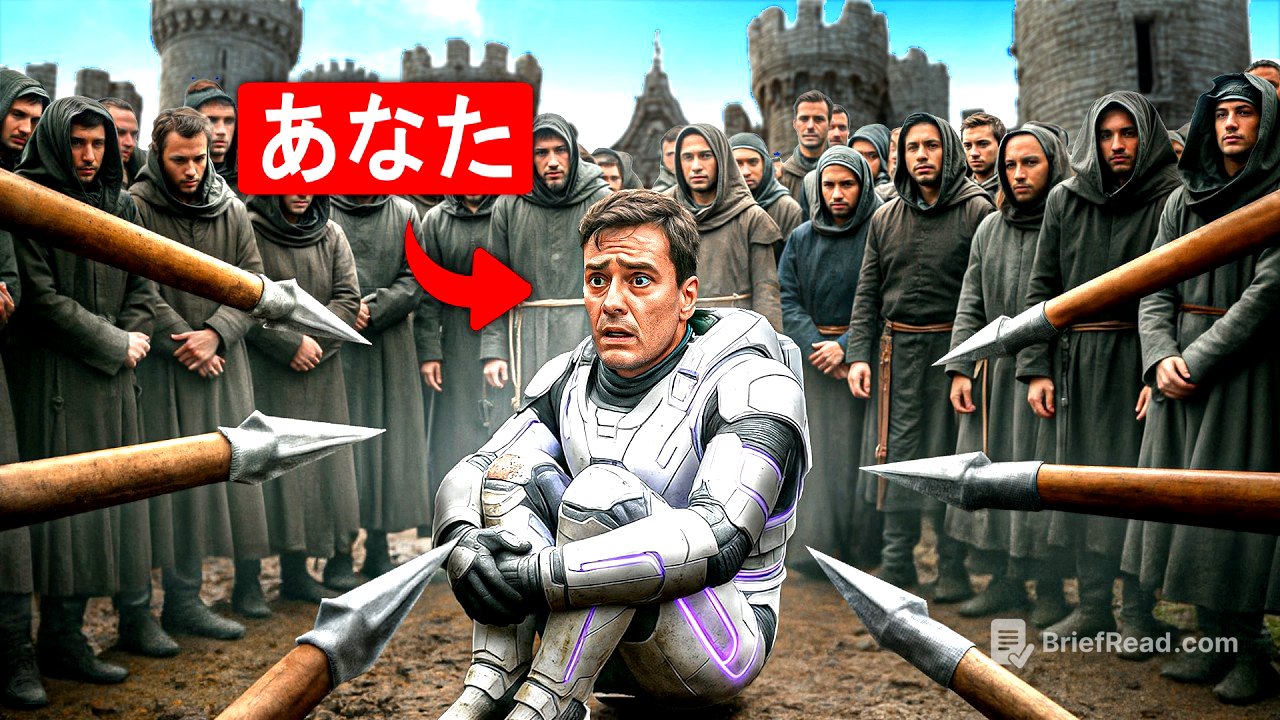
TLDR;
This video serves as a survival guide for a time traveller suddenly finding themselves in medieval Europe. It covers essential aspects of life, including navigating social hierarchies, understanding the feudal system, dealing with religious beliefs and superstitions, and coping with the ever-present threats of war, disease, and violence. The guide emphasises the importance of adapting to the medieval mindset, learning the rules of the game, and finding a place within the established order to survive. It also touches upon the gradual changes that led to the end of the Middle Ages, highlighting the rise of cities, the impact of the printing press, and the shift in people's perspectives.
- Understanding the feudal system and social hierarchies is crucial for survival.
- Religion and superstition heavily influence daily life and must be respected.
- War, disease, and violence are constant threats that require vigilance and adaptability.
- The rise of cities, the printing press, and new ideas gradually transformed medieval society.
はじめに――見知らぬ時代の異邦人 [0:00]
The video introduces the concept of being a stranger in medieval Europe, a world vastly different from modern times. It highlights the challenges of navigating a society where your modern knowledge and identity are irrelevant. Survival depends on understanding and adapting to the local customs, hierarchies, and dangers. The video sets the stage for a practical guide on how to live and thrive in this unfamiliar era, focusing on essential skills such as knowing who to trust, what to say, and how to behave.
第1章 到着――中世で迎える初日 [2:13]
Upon arriving in a medieval village, the immediate sensory experience is overwhelming, marked by the pervasive smell of smoke, the sight of crude dwellings, and the unwelcoming stares of the locals. Your modern clothing and lack of religious symbols immediately mark you as an outsider. Communication is a significant barrier, as you likely don't speak the local dialect or understand their customs. The villagers are wary of strangers, and help is not freely given. To survive the first day, seek refuge in the church, feign a plausible identity (such as a pilgrim or a craftsman), and find a place to sleep, even if it's just a spot on the floor. Be discreet, avoid drawing attention, and remember that silence is your first enemy.
第2章 領主、土地、そして封建制の絡み合い [9:31]
In medieval Europe, land is the ultimate source of power, and the feudal system dictates the social order. You do not own the land you stand on; it belongs to a lord who grants you the right to live and work on it in exchange for service and a portion of your produce. This lord is also bound by obligations to higher authorities, such as a duke, king, or even the Pope. To survive, you must understand your place in this hierarchy and act accordingly. If you are a peasant, you are tied to the land and subject to the lord's will. While the lord is supposed to provide protection, this is not always guaranteed. Climbing the social ladder is difficult but possible if you can gain the favour of a lord through skill or service. Remember that loyalty and obedience are paramount, but choose your allegiance carefully.
第3章 神、畏れ、そして聖なる秩序 [17:57]
Religion permeates every aspect of life in medieval Europe. The Church controls births, marriages, and deaths, and its teachings dictate moral and social norms. God is seen as an all-seeing, all-powerful figure who rewards and punishes. The Church hierarchy, from the Pope to the local priest, wields immense influence. To survive, you must adhere to religious practices, attend church, and avoid sin. The Bible is inaccessible to most people, so they rely on images, stories, and the teachings of the clergy. Fear of hell and the devil is widespread, and people seek protection through relics and rituals. Understanding and respecting the Church's authority is essential for avoiding persecution and finding acceptance in the community.
第4章 戦争、騎士道、そして暴力の稼業 [26:02]
War is a constant reality in medieval Europe, with conflicts ranging from large-scale battles to petty squabbles between lords. Even in times of peace, preparations for war are evident in the fortified villages and armed retinues. Knights, often romanticised, are essentially professional killers bound by a code of chivalry that is not always upheld. To survive, understand the realities of warfare and the motivations of those involved. Peasants are often conscripted into armies, while mercenaries fight for pay. Violence is ingrained in society, and even children engage in war games. To avoid becoming a victim, stay out of the way of armies, avoid conflict, and be aware of the signs of impending war.
第5章 村の暮らしと仕事、そして生き延びるためのリズム [34:17]
Life in a medieval village is a constant cycle of work and survival. Villages are small, close-knit communities where everyone knows everyone else. Time is dictated by the seasons, the weather, and the church bells. Agriculture is the primary occupation, with peasants working the land from dawn till dusk to produce enough food to survive. Living conditions are basic, with simple dwellings and limited food options. Despite the hardships, there is also joy and community, with people singing, drinking, and celebrating together. To survive, you must participate in the communal life, share resources, and support your neighbours.
第6章 女性、権力、そしてこの世界のルール [41:58]
In medieval society, women are subject to the control of men, whether fathers, husbands, or sons. Their value is primarily tied to their ability to bear children and maintain the household. Noblewomen may have some influence through marriage and managing estates, while peasant women work tirelessly in the fields and homes. Widows can gain some independence but are also vulnerable to suspicion and accusations of witchcraft. To survive as a woman, you must navigate the social constraints, find ways to exert influence within your limited sphere, and avoid anything that might attract unwanted attention.
第7章 都市、手工業、そして新しいものの台頭 [49:23]
Towns and cities offer a different way of life compared to rural villages. They are centres of trade, craft, and innovation, with a diverse population and a faster pace of life. Unlike the feudal system, social status in towns is based on skill and occupation rather than land ownership. Guilds regulate trades and provide protection for their members. Towns are governed by councils of merchants and craftsmen, and they often seek charters from the king to gain more autonomy. However, towns are also vulnerable to fire, disease, and attacks from bandits or nobles. To thrive in a town, you must learn a trade, join a guild, and be prepared to defend your interests.
第8章 疫病、死、そして未知の重み [57:06]
Disease and death are ever-present threats in medieval Europe. Medical knowledge is limited, and treatments are often based on superstition rather than science. Epidemics can decimate entire communities, leading to fear, panic, and persecution. The Black Death, in particular, had a profound impact on society, killing a large percentage of the population and disrupting the social order. To survive, you must learn to recognise the signs of disease, take precautions to avoid infection, and be prepared to face death.
第9章 信仰、民間伝承、そして見えざる世界 [1:03:58]
In addition to organised religion, medieval people also believe in a world of spirits, fairies, and magic. Folk tales and superstitions provide explanations for unexplained events and offer protection against evil forces. Healers and wise women use herbs and rituals to cure illnesses. While the Church tries to suppress these beliefs, they remain deeply ingrained in the culture. To survive, you must respect these beliefs, even if you don't share them, and be aware of the potential dangers of the unseen world.
第10章 中世の終焉――そしてその先に何が来るのか [1:11:48]
The end of the Middle Ages was a gradual process marked by the rise of cities, the growth of trade, and the spread of new ideas. The invention of the printing press revolutionised communication and allowed for the dissemination of knowledge. The Renaissance brought a renewed interest in art, science, and humanism. The Reformation challenged the authority of the Church and led to religious wars. These changes transformed medieval society and paved the way for the modern world. However, the transition was not always smooth, and many of the old ways persisted. The Middle Ages ended not with a bang but with a slow, transformative shift in people's minds and beliefs.



!["This is a civilisational failure!" – World's Strictest Headmistress Katharine Birbalsingh [ARC26]](https://wm-img.halpindev.com/p-briefread_c-10_b-10/urlb/aHR0cDovL2ltZy55b3V0dWJlLmNvbS92aS9FcWpfU25USWhOWS9ocWRlZmF1bHQuanBn.jpg)