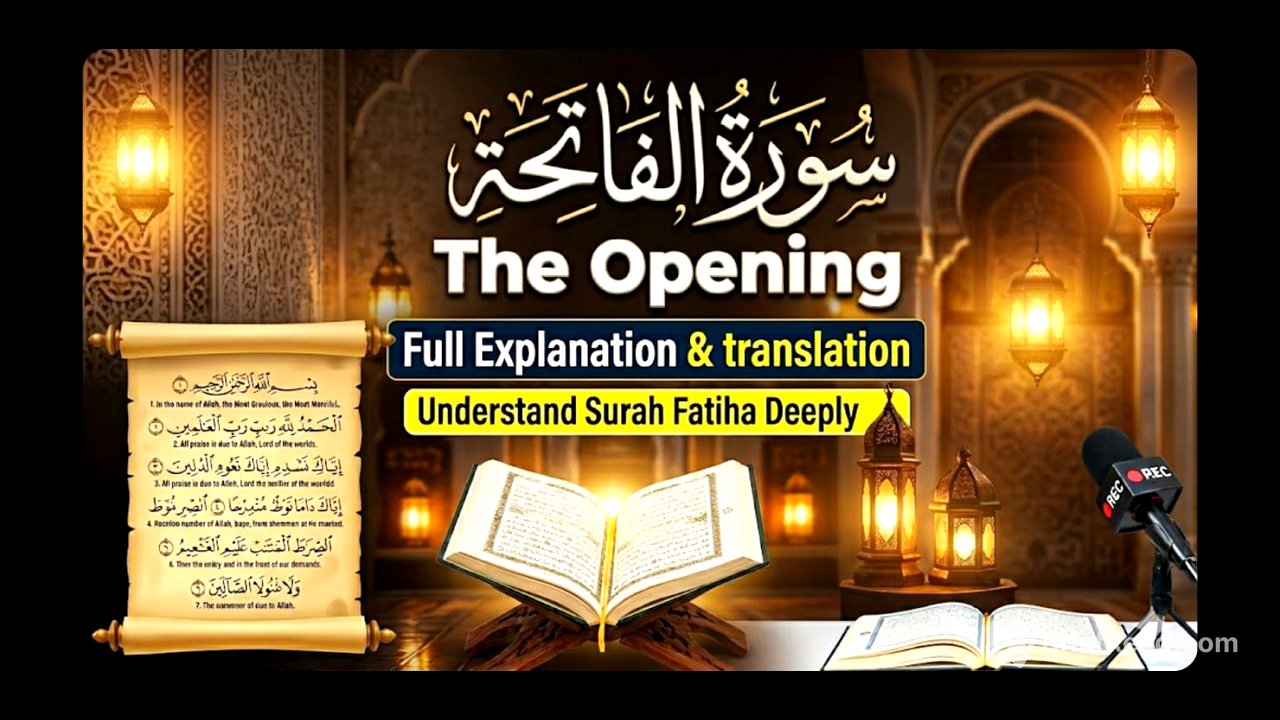
TLDR;
This video explores the meaning of "Rabbil Aalameen" (Lord of all the worlds) from the Quran, explaining the concept of رب (Rabb) and عالمين (Aalameen). It discusses how رب encompasses not only the idea of a provider but also a master, owner, and caretaker. The video also touches on the relationship between the Creator and creation, and how Allah's mercy and care extend to all, regardless of belief.
- رب (Rabb) signifies more than just "Lord" or "Provider," including aspects of ownership, authority, and care.
- The term "Aalameen" refers to all creations, with a focus on intelligent beings (humans, jinn, and angels) as the primary subjects of the Quran.
- Allah's ربوبیت (Rububiyyat) or Lordship, is unconditional, encompassing all of creation with boundless mercy and without discrimination.
Introduction [0:06]
The video begins with a prayer and an introduction to the topic: understanding "Rabbil Aalameen." It highlights that while "Alhamdulillah" focuses on Allah's oneness, "Rabbil Aalameen" describes Allah's role as the sustainer and cherisher of all the worlds.
Meaning of "Rabb" [0:46]
The term "Rabb" originates from the root "Raba," signifying ownership and mastery, not a personal or descriptive name of Allah. It can be used for humans in the context of ownership, as seen in the story of Prophet Yusuf (Joseph), where his master is referred to as "Rabb." However, when combined with "Aalameen" (worlds), it specifically refers to Allah as the Lord of all the worlds.
Meaning of "Aalameen" [1:53]
"Aalameen" is the plural of "Aalam," derived from the root "Ain, Laam, Meem," meaning a world or universe. It signifies everything created by Allah, including humans, jinn, angels, animals, plants, and the heavens and earth. In Arabic grammar, "Aalameen" is a masculine plural used for intelligent beings. Although it technically refers to intelligent beings, it is used in a broader sense to include all creations, with emphasis on humans and jinn as the primary audience of the Quran.
Relationship Between "Rabb" and "Aalam" [2:32]
The combination of "Rabb" and "Aalam" establishes a relationship between master and servant. Allah is the master, and the creation is the servant. While "Malik" (owner) can imply various types of owners, including unjust ones, Allah's Lordship is defined by His attribute of الرحمان (Ar-Rahman), meaning the Most Compassionate.
Allah as Ar-Rahman [12:38]
Allah is not just a master but a loving and compassionate one. His mercy is intrinsic to His nature, free from injustice. This understanding completes the concept of Allah as the sustainer, guardian, and owner of all the worlds with immense love and compassion.
Deeper Understanding of "Rabb" [13:52]
The term "Rabb" encompasses more than just providing sustenance. It includes being the Malik (owner), السيد ( سيد - master), المربی (one who nurtures and cares), المنعم (bestower), and القیم (one who maintains in the right condition). When we say "Rabbil Aalameen," we acknowledge that every aspect of our lives is under Allah's care and control.
Allah's Attributes in Rububiyyat [18:56]
Allah's 99 attributes are manifested in His role as the Rabb. This includes الخالق (the Creator), الرازق (the Provider), اللطیف (the Subtle), الحکیم (the Wise), and الصبور (the Patient). Allah creates, provides, and sustains with wisdom and patience, not immediately punishing for every mistake.
Analogy of a Parent [21:31]
The video draws an analogy between Allah's ربوبیت (Rububiyyat) and the role of parents. Just as a father lovingly raises his children, enduring silent struggles and providing for their needs, Allah cares for His creation. However, Allah's mercy is limitless and unconditional, unlike human compassion, which can be limited and flawed.
Allah's Unconditional Mercy [24:22]
Allah's mercy extends to all, regardless of their belief or actions. He does not withhold sustenance or blessings from those who deny Him. This unconditional mercy is a testament to His boundless ربوبیت (Rububiyyat).
Conclusion [26:01]
The video concludes by urging viewers to reflect on the breath they take and to be grateful to Allah. Before He reclaims what is His, we should turn to Him in obedience and gratitude, recognising His boundless mercy and care.