TLDR;
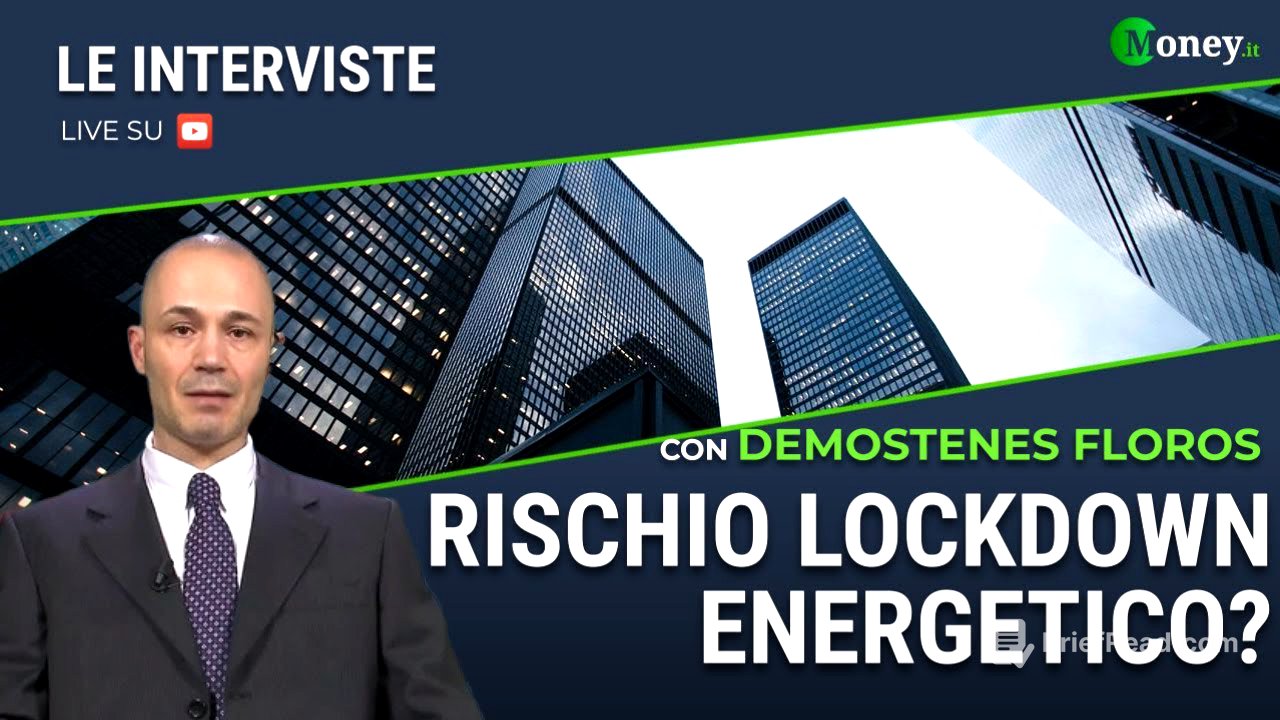
This YouTube video features an interview with De Mostren, an energy expert, discussing the potential energy crisis arising from the conflict and the closure of the Strait of Hormuz. He outlines three potential scenarios based on the conflict's duration, assesses the impact on oil and natural gas supplies, and analyses the complexities of energy pricing. The discussion also covers Italy's energy vulnerabilities, the potential for a renewed focus on nuclear energy and the green agenda, and the need for international cooperation, particularly with China, to address energy challenges.
- Three scenarios based on the conflict's duration and Strait of Hormuz closure.
- Impact on oil and natural gas supplies, with potential for significant disruptions.
- Analysis of energy pricing discrepancies and potential economic crisis indicators.
- Italy's energy vulnerabilities and the need for a revised energy policy.
- The role of nuclear energy and the Green Agenda in addressing energy challenges.
- The importance of international cooperation, especially with China, for energy security.
Introduction [0:04]
The host introduces De Mostren, an energy expert from CER and a professor at the University of Padua, to discuss the energy implications of the ongoing conflict and the potential closure of the Strait of Hormuz. The conversation aims to provide insights into the energy aspect of the situation, following a previous discussion on the geopolitical side of the issue. De Mostren also promotes his YouTube channel, "De Mostren's Floor," for those interested in learning more about his activities.
Assessing the Risk of Energy Lockdown [1:05]
De Mostren assesses the risk of an energy lockdown, outlining three scenarios based on the duration of the conflict and the closure of the Strait of Hormuz. The first, optimistic scenario assumes the conflict ends within three months (from February 28, 2026), minimising economic repercussions. The second, medium-term scenario considers the conflict and strait closure lasting until the end of summer, leading to considerably worse economic effects. The worst-case scenario involves the conflict continuing for a year or more, risking recession and stagflation. He notes that global oil supply has already been reduced, and projections indicate a further shortfall in the coming weeks.
The Significance of the Strait of Hormuz [5:59]
De Mostren clarifies the importance of the Strait of Hormuz, emphasising that it's not just about oil but also natural gas, including liquefied natural gas (LNG). While it's been simplified that only 20% of oil transits through Hormuz, this amount is still substantial and can significantly disrupt energy supplies, especially for Europe. He highlights a discrepancy between brand futures (paper price) and brand dated (physical exchanges) prices, with the latter being much higher, indicating a drop in supply and high demand. He suggests this could be due to the futures market anticipating an economic crisis and a destruction of demand.
Italy's Energy Vulnerabilities [11:07]
De Mostren addresses Italy's specific vulnerabilities, noting that while crude oil imports from the Middle East are 13% (mainly from Saudi Arabia and the UAE), this is a considerable amount, exceeding previous imports from Russia before the Ukrainian crisis. He also points out the challenges in replacing these supplies due to declining production and supply. Additionally, he discusses the issue of crude oil quality and refinery compatibility. Italy's heavy reliance on natural gas, particularly LNG from Qatar (10% of consumption), further exacerbates the situation, as alternative suppliers are limited and expensive.
Positive News and Challenges for Italy [14:57]
De Mostren shares two pieces of positive news for Italy: higher-than-average fuel stocks at the end of the cold season and an anticipated increase in global LNG production capacity by 2026. However, he warns that Europe and Asia will likely compete for available LNG, leading to higher prices, especially during spring and summer. He also mentions the CEO of ENI's suggestion to reopen to the Russian Federation for gas and oil derivatives, highlighting the need for careful consideration of economic and geopolitical factors.
Rethinking Italy's Energy Policy [19:46]
De Mostren discusses the need to rethink Italy's energy policy, suggesting the government should regain control of key economic and energy levers after the privatisations of the 1990s, including ENI and INOL. He notes that while ENI's CEO has shifted towards openness to engagement with Russia, there's no guarantee of a favourable response from Russia, especially with increasing demand from Asian countries. He calls for a political debate in Parliament on the role of the state and ENI to achieve energy sovereignty for Italy.
Specific Challenges: Kerosene and Aviation Fuel [23:15]
De Mostren highlights the alarm regarding kerosene and the air transport sector, noting that Europe has enough aviation fuel for only six weeks if tankers don't traverse the Strait of Hormuz. He mentions that several Italian airports have already reported difficulties, potentially affecting flights under three hours. He stresses the need to seriously consider this warning due to the genuine problem of jet fuel availability.
Comparison to the 1970s Oil Crisis [25:53]
De Mostren addresses comparisons to the oil crisis of the 1970s, clarifying that this is the eighth energy crisis since the post-war period. He suggests assessing the current crisis by comparing price changes, quantity reductions, and the duration of the conflict to those of the 1970s. While price increases were more significant in the 1970s, the current reduction in quantities is becoming notably significant. However, he argues that a fourth variable, the International Division of Manufacturing and Labour, is crucial.
The Impact of Deindustrialisation [29:24]
De Mostren argues that the current crisis will disproportionately impact the European Union and the Eurozone due to the shift of manufacturing to Asia, particularly China. He notes that Italy's industrial production declined by 6.1% in 2025 compared to 2022, with energy costs playing a significant role. He expresses concern about the deindustrialisation process in the European Union and Italy, emphasising the need to consider the broader economic context beyond strictly energy-related variables.
Renewed Focus on Green Agenda and Nuclear Power [31:46]
De Mostren discusses whether the current situation can push forward the green agenda and nuclear power. While the government can certainly raise the issue of nuclear power, he emphasises that it wouldn't solve the immediate issues, as reaching a production level similar to France is unlikely. He notes that investments in nuclear power never ended in Asia, particularly in China and India, which will increasingly utilise nuclear energy with Russian technology.
Revising the European Green Agenda [35:04]
De Mostren hopes the European Union won't repeat the mistakes made after 2022 regarding the Green Agenda, as the timescales are unrealistic and involve significant costs and limitations. He suggests extending the timeframe, spreading costs over decades, and revising the agenda to acknowledge real-world limitations. He stresses the need to address the shortcomings of the renewable energy supply chain and cultivate robust collaboration with countries like China, which possess the necessary rare earths and technology. He acknowledges the contradictions this poses but emphasises the importance of addressing them through politics and diplomacy.