
TLDR;
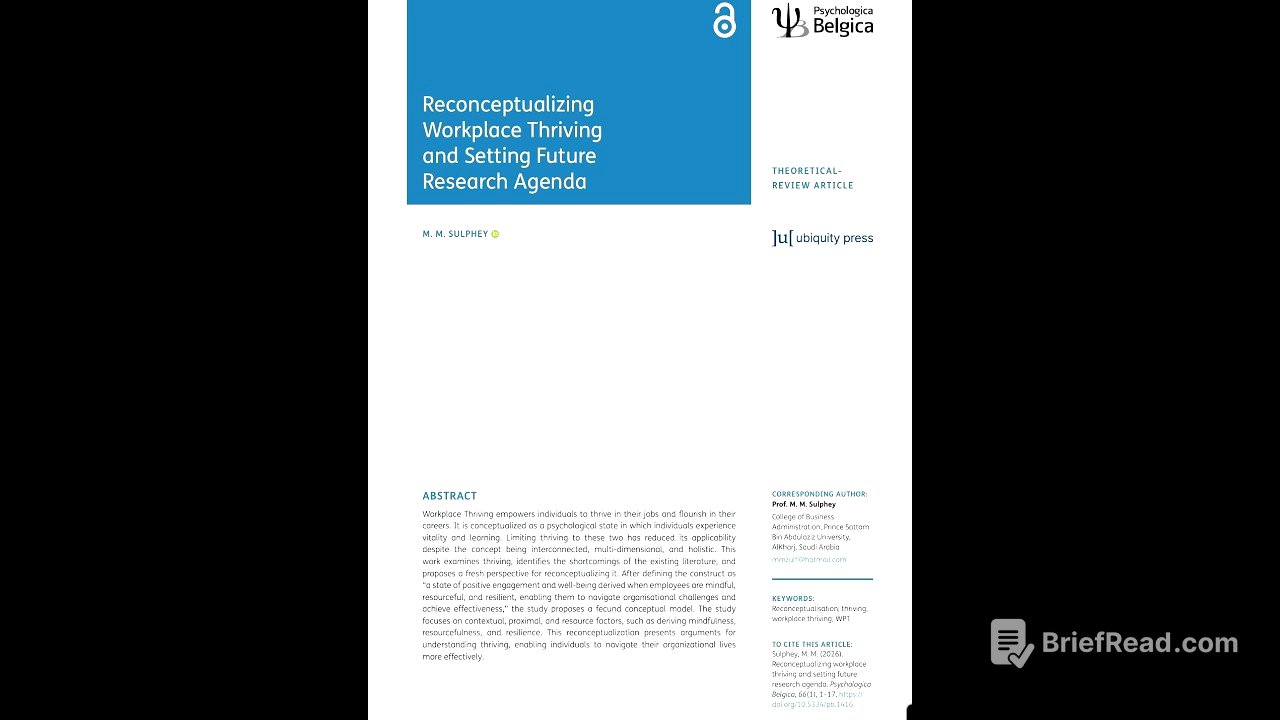
This video explores the psychology of thriving at work, referencing a 2026 theoretical review by M. M. Sulphy published in Psychologica Belgica. The discussion highlights the distinction between merely completing tasks and genuinely thriving in a workplace, introducing a new framework for understanding workplace thriving that incorporates mindfulness, resourcefulness, and resilience, while emphasizing the importance of contextual factors for personal development.
- Workplace thriving involves personal development and supportive conditions, not just task completion.
- The new framework combines mindfulness, resourcefulness, and resilience as key elements necessary for effective functioning at work.
What is Workplace Thriving? [1:56]
Workplace thriving extends beyond just completing tasks or enduring a tiring week. It emphasises genuine opportunities for personal development, supported by favourable conditions in the workplace. True thriving encapsulates maintaining well-being and effectiveness over an extended time rather than merely boosting daily productivity.
The Established Thriving Model [2:28]
Historically, thriving has been viewed as the combination of vitality and learning—feeling energized and acquiring new knowledge. However, Sulphy proposes a more complex model based on three pillars: mindfulness, resourcefulness, and resilience. This raises a question about whether various researchers are examining the same experiences under the term "thriving" or if the term covers different phenomena.
A New Proposed Framework [3:36]
Sulphy's new theoretical framework includes three higher-order dimensions: mindfulness (awareness), resourcefulness (response generation), and resilience (sustained adaptation). Together, these dimensions regulate thoughts, emotions, and motivation when encountering workplace challenges, illustrating their interrelated nature.
Navigating with Three Dimensions [4:14]
Mindfulness is defined as present attention and non-judgmental awareness, which allows individuals to recognise their thoughts and emotions and respond to stressful situations thoughtfully. Resourcefulness involves using cognitive and behavioural skills to adaptively respond and solve problems when facing challenges. Resilience is the process of adapting to stress and setbacks while maintaining psychological and physical functioning. This model breaks resilience down into steps that involve acknowledging disappointment, seeking support, reassessing situations, and returning with a revised approach.
Why Working Context Matters [7:31]
The importance of workplace conditions is highlighted; thriving cannot occur in isolation. Essential elements include trust, respect, access to information, and the autonomy to make decisions. Individual resilience cannot compensate for a failing work environment, emphasising the need for supportive conditions for personal capabilities to flourish.
Testing the New Framework [8:46]
The proposed framework requires strict empirical testing for validation. Future research should focus on clearly defining and measuring the concepts, testing them over time, and comparing them across diverse cultures and industries. The overarching takeaway is the integration of workplace conditions with personal psychological development, illustrating the interconnectedness of employee well-being and working environments.