TLDR;
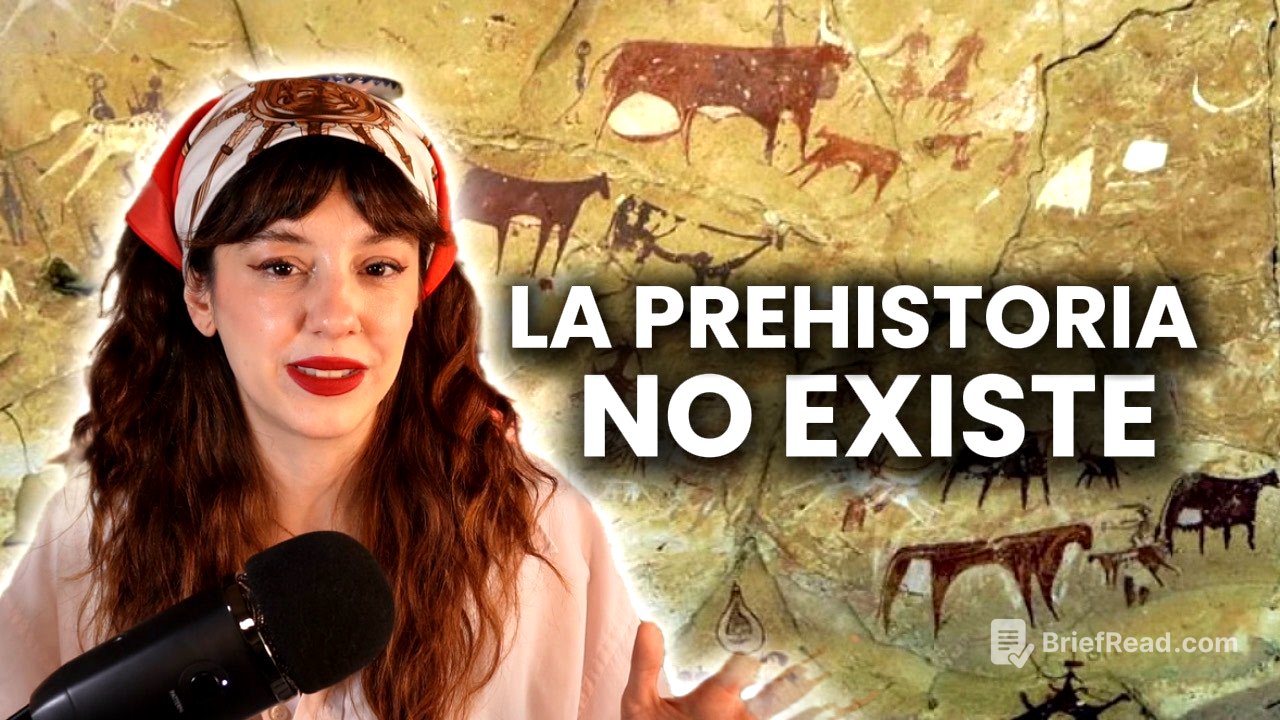
This video critiques the concept of "prehistory", arguing that it is an ethnocentric and Eurocentric term that dismisses the complex cultures of non-European societies and perpetuates colonialist views. The video discusses the development of the term "prehistory," its implications for the understanding of non-European civilizations, and the consequences of referring to these societies as "prehistoric".
- "Prehistory" minimises the history and complexity of non-European societies.
- Eurocentric periodization of history overlooks the achievements of indigenous peoples.
INTRO [0:00]
The video opens by claiming that "prehistory" is not a neutral term but one that is rooted in Eurocentric biases. The author highlights the need to reconsider how we categorise historical timelines, especially regarding non-European societies.
¿PREHISTORIA? [4:05]
The author questions the traditional definition of "prehistory," which spans from the origin of humanity until the invention of writing around 3000 BCE. This term implies that societies without writing lack history and humanity. The concept arose in the mid-19th century within a European context and holds biases that portray non-European peoples as uncivilised.
¿ESCRITURA = CIVILIZACIÓN? [6:48]
The video argues that the traditional division of history is based solely on European events and perspectives. The term "civilisation" is often equated with the existence of writing, which unfairly categorises advanced indigenous cultures as "prehistoric" simply because they utilised non-alphabetic systems. The author posits that the failure to acknowledge the complexity of these societies contributes to ongoing colonial attitudes.
AMÉRICA Y LA PREHISTORIA [10:10]
The narrative highlights that American civilizations were labelled "prehistoric" because they lacked Western-style writing when Europe reached the Americas in 1492. Civilisations such as the Incas employed the quipu system for accounting and communication, while Mesoamerican cultures utilised codices. The author insists that the absence of alphabetic writing should not diminish the recognised achievements of these cultures.
CUERPOS EN MUSEOS [15:12]
This section recounts the tragic story of Cacique Inacayal, who was captured and later exhibited as a specimen in a museum for nearly sixty years. The video explores the ethical implications of displaying human remains based on the prejudiced categorisation of being "prehistoric," contrasting such treatment with the respect afforded to European historical figures. The author raises critical questions about identity and the consequences of using such derogatory classifications.
¿CONCLUSIONES? [21:48]
In conclusion, the video suggests that using terms like "prehistory" has real-world consequences, reinforcing stereotypes of historical inferiority. The author calls for more exact language regarding historical timelines and advocates for the recognition of complex cultures throughout history, irrespective of their writing systems. Ultimately, the challenge remains to redefine historical narratives that honour rather than diminish non-European societies.