TLDR;
The video explores the ancient city of Petra, the remarkable achievements of the Nabataeans, and their trade empire. Key points include:
- Petra as a vital trade centre due to its unique location.
- The advanced engineering techniques used by Nabataeans to master water management.
- The cultural influences from surrounding superpowers after the city's peak.
- The decline of Petra following Roman conquest and changing trade routes.
Introduction [0:00]
The narrator introduces Petra as a magnificent ancient city built by the Nabataeans, a civilization that thrived in the harsh desert environment. The video aims to uncover the history, culture, and innovative practices of these people who constructed what is considered one of the great wonders of the world.
Finding the lost city of Petra [2:06]
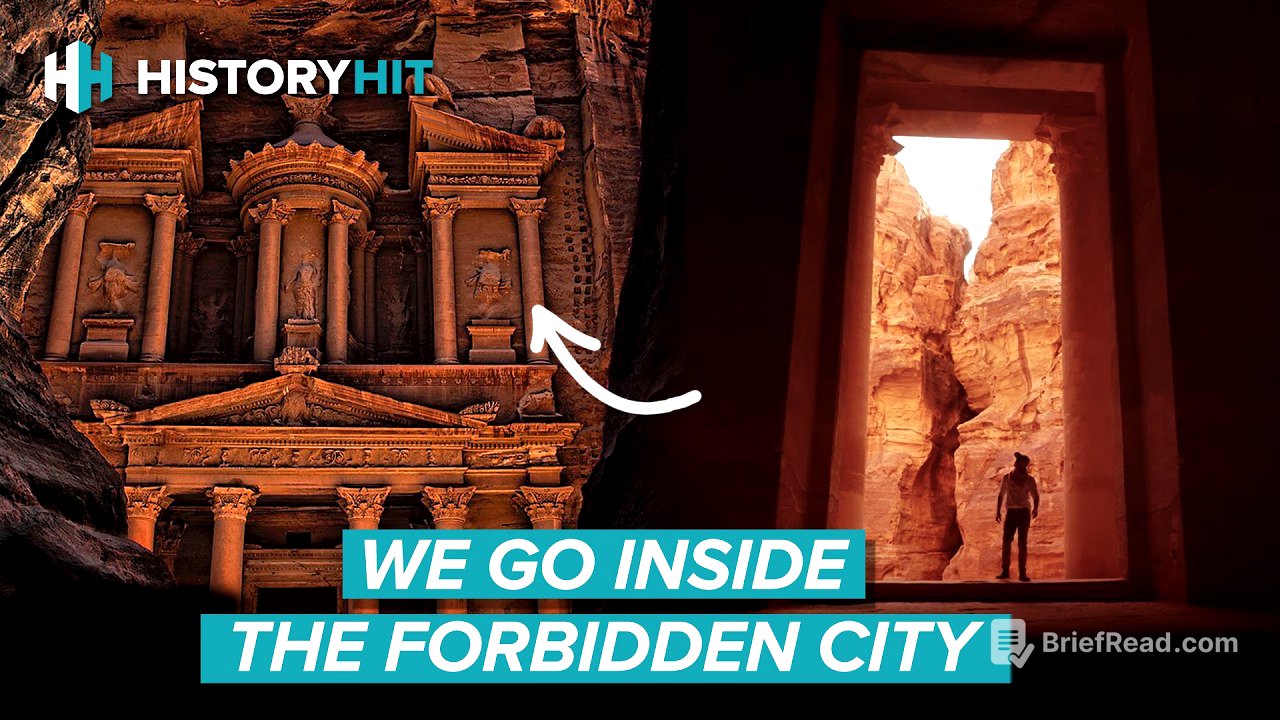
Petra, located in modern-day Jordan, was a hidden gem until Swiss archaeologist Johan Ludvig Burkhardt rediscovered it in 1812. Dressed as a Bedouin, he traversed narrow canyons to document the city's stunning rock-cut architecture, particularly the Al-Khazneh, also known as the Treasury. This monumental structure is believed to be the tomb of King Aretas IV.
Decoding the Al-Khazneh and King Aretas IV [3:42]
The Al-Khazneh is adorned with Corinthian columns and other Greek-inspired architectural features, reflecting the influence of various ancient cultures. King Aretas IV ruled from 9 BC to 40 AD, during which Petra flourished as a trade hub and cultural melting pot, integrating elements from different civilizations.
Inside the Treasury [6:21]
The narrator gains access to the interior of the Treasury, highlighting its vastness and intricate craftsmanship. The smooth walls and well-crafted columns demonstrate the skill of Nabataean artisans. The simplicity of the interior contrasts with its grandeur and historical significance as the burial site of Aretas IV.
The City of Petra [8:02]
Beyond tombs, Petra was a vibrant city with temples, markets, and public buildings. At its peak, over 20,000 people lived there, showcasing the Nabataeans’ ability to thrive in a challenging environment while controlling lucrative trade routes.
How camels built a trade empire [10:06]
Camels played a crucial role in the Nabataean economy and way of life. They were used to transport goods across vast desert distances, enabling the Nabataeans to establish a significant trade network reaching into Arabia, India, and beyond.
What goods were traded in antiquity? [12:03]
The Nabataeans traded various goods such as spices, metals like gold and copper, and incense, particularly frankincense and myrrh. Diodorus noted their trade routes facilitated the transport of these valuable commodities to the Mediterranean region.
The mysterious origins of the Nabataeans [15:18]
The origins of the Nabataeans remain elusive, but historians suggest they were once nomadic tribes who capitalized on trade. Archaeological evidence points towards a gradual settlement in Petra rather than an instantaneous transition from nomadism to urban life.
How Petra mastered water in the desert [18:52]
The Nabataeans engineered a complex water management system, allowing them to harness rainfall and create a fertile environment amidst the desert. This system included channels and underground tanks, providing sufficient water for their population and agricultural needs.
Defending the kingdom from ancient superpowers [23:27]
Throughout history, Petra faced threats from powerful empires. The Nabataeans famously defended against Antigonus, a general after Alexander the Great. Their successful resistance preserved their autonomy and allowed for continued prosperity.
Entertainment and Greco-Roman culture [25:32]
Petra's theatre showcases the cultural influences from the Greeks and Romans. It could host around 8,000 spectators and was the site for performances, reflecting the city's rich cultural tapestry and the integration of various Mediterranean influences.
Exploring a luxury Nabataean mansion [28:10]
Visiting a large Nabataean villa reveals the luxurious lifestyle of the wealthy. Features such as private baths with central heating demonstrate the cultural exchanges between the Nabataeans and the Romans.
Rock-cut tombs and burial traditions [31:16]
Petra is home to over 600 rock-cut tombs, illustrating the society's approach to death. The narrator explores different tomb styles and burial customs, highlighting the importance of honoring the dead, which involved ceremonial practices and the preservation of bodies.
Deities, sacred betyls, and the Nabataean language [36:57]
The Nabataeans worshipped a variety of deities, with carvings and altars scattered throughout Petra. The video discusses the Nabataean language, a Semitic script believed to be a precursor to Arabic, and its cultural significance.
Mountaintop rituals and sacred altars [40:51]
Sacred sites atop mountains were significant to Nabataean religious practices. The main altars were used for rituals and offerings, demonstrating the spiritual connection the Nabataeans had with their gods, particularly Dashera and Aluza.
The Roman conquest and the decline of Petra [43:47]
Petra's downfall began with the Roman conquest in 106 AD, turning it into a province and shifting trade routes away from the city. Subsequent earthquakes and changes in commerce led to Petra's eventual abandonment, cloaking its history in mystery until its rediscovery in the 19th century.