TLDR;
The video discusses the controversy surrounding celebrities who campaigned for the release of Alaa Abd El-Fattah, an Egyptian activist, without properly vetting his social media posts, which contained racist and violent statements. It also touches on the perceived double standards in how public figures are treated for expressing controversial opinions, contrasting the swift condemnation of some with the apparent lack of consequences for others. The video also features an interview about Tally Money, a service that allows users to spend gold as money, aiming to provide a safe and dependable alternative to traditional currency.
- Celebrities face criticism for supporting Alaa Abd El-Fattah despite his racist and violent social media posts.
- The discussion highlights perceived double standards in the treatment of public figures based on their political views.
- An interview introduces Tally Money as a solution for those seeking financial security outside of government-controlled currency.
Celebrity Backlash Over Support for Alaa Abd El-Fattah [0:05]
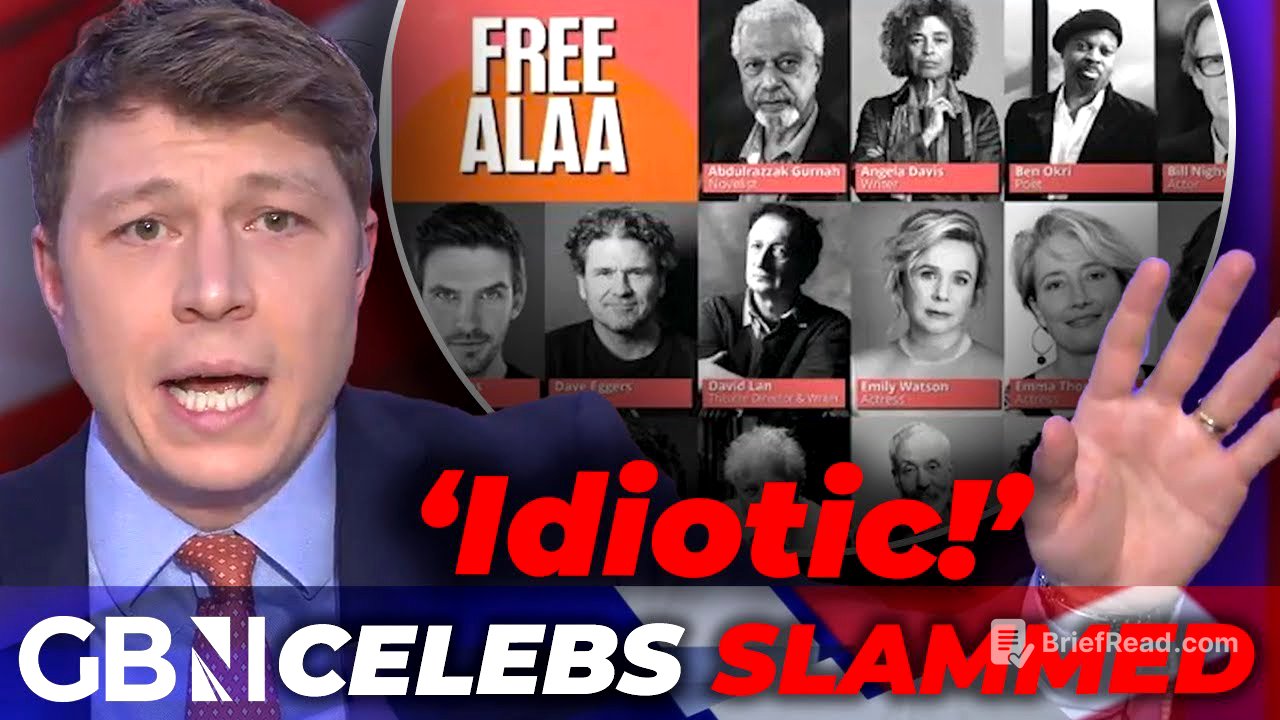
The presenter criticises celebrities who advocated for the release of Alaa Abd El-Fattah, an Egyptian activist, from prison, highlighting his racist and violent social media posts. These posts included anti-white sentiments, advocating violence against police, and support for suicide bombings. The presenter plays clips of actors such as Olivia Coleman, Brian Cox, and Emily Watson reading out statements in support of El-Fattah's release. The presenter questions why these celebrities didn't research El-Fattah's views before publicly supporting him and suggests they should apologise for their actions.
Double Standards in Public Figure Treatment [3:49]
The presenter contrasts the lack of consequences for celebrities who supported El-Fattah with the swift condemnation and "cancellation" of others, such as Ryland Clark, for expressing opinions deemed controversial. Ryland was criticised for saying that illegal immigrants get too much free stuff. The presenter questions why the celebrities who backed El-Fattah aren't facing similar repercussions, given the severity of his statements. The discussion suggests a double standard where left-leaning figures are given more leeway than those with right-leaning views.
Tally Money Interview: A Gold-Based Alternative to Traditional Currency [5:17]
The presenter interviews Cameron Perry, the CEO and founder of Tally Money, about the service. Tally Money allows users to spend gold as money, providing an account with a sort code and account number that operates like a regular bank account but uses milligrams of gold instead of pounds. Perry explains that gold has historically performed well against the pound and offers a dependable alternative to government-controlled currency. The aim is to provide people with a sense of safety and control over their money, especially in times of economic uncertainty.
Panel Discussion: Celebrity Hypocrisy and Cancel Culture [7:15]
A panel discusses the celebrity endorsements of Alaa Abd El-Fattah, with Crystal Fufas suggesting the celebrities were likely given pre-prepared scripts and didn't do their due diligence. Benjamin Butterworth points out that even government officials failed to properly vet El-Fattah. The panel criticises the hypocrisy of celebrities who advocate for human rights but supported someone with extremist views. The discussion also touches on cancel culture, with panellists arguing that there's a double standard where those on the left are treated differently than those on the right.
Debate on Responsibility and Accountability [10:04]
The panel debates whether the celebrities should be held responsible for their support of El-Fattah, with some arguing that they should apologise and others suggesting that the government's failure to vet him is the primary issue. There's disagreement on whether Ryland Clark was truly "cancelled," with one panellist arguing that he is still frequently on television. The discussion also touches on the potential impact of this controversy on the celebrities' credibility in future political endorsements.
Celebrity Virtue Signalling and Guilt [13:36]
One of the panellists suggests that celebrities often engage in virtue signalling to alleviate their guilt about their privileged lifestyles. They argue that these celebrities support causes that won't personally affect them, such as advocating for more rights for refugees without experiencing the consequences of increased housing costs or strain on public services. The panellist predicts that these celebrities will likely make similar videos criticising figures like Nigel Farage in the future.
Call for Accountability and Reflection [15:44]
The panel discusses the need for celebrities to be held accountable for their actions and to reflect on the potential consequences of their endorsements. One panellist suggests playing the clips of the celebrities supporting El-Fattah back to them when they make future political statements. The discussion also highlights El-Fattah's recent apology and subsequent liking of a post claiming the criticism against him is a Zionist conspiracy theory. The panel questions why the celebrities haven't backtracked or released statements acknowledging their mistake.
Concluding Remarks and Government Response [18:46]
The presenter notes that a government spokesperson has stated that El-Fattah is a British citizen and that successive governments have worked for his release from detention. The presenter also mentions that El-Fattah has released a public statement apologising for his shocking and hurtful tweets. The video concludes with a summary of the controversy and the various perspectives on the issue.