TLDR;
The video discusses the early return of migrant workers to their hometowns in China due to economic slowdown, job losses, and low wages. It highlights the increasing unemployment rate, the struggles of those aged 35-45, and the government's efforts to prevent large-scale rural stagnation. The video also touches on the historical context of farmers in China and the current dilemma faced by migrant workers who can neither find work in cities nor settle in the countryside.
- Early return of migrant workers signals economic issues.
- High unemployment and low wages are key factors.
- Government efforts to prevent rural stagnation face challenges.
Economic Downturn and Migrant Worker Exodus [0:02]
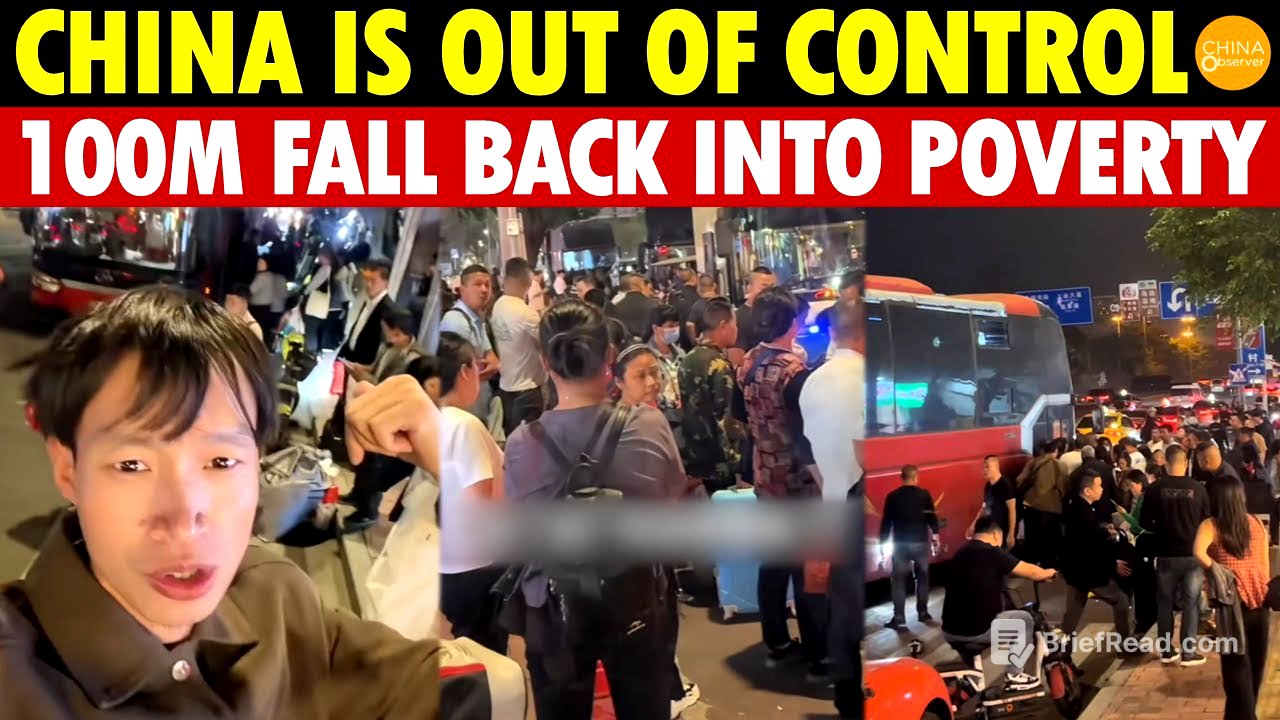
The video begins by illustrating the mass departure of workers from Guanzo, with many factories having no work and people heading home early for the new year. This early return migration, occurring more than two months before the Spring Festival, serves as a warning sign for the economy. The cost of living in cities is high, and with construction sites stalled, factory orders plummeting, and foreign trade declining, many workers prefer to minimise losses by returning home.
Rising Unemployment and Its Impact [2:16]
The narrator highlights the severity of unemployment in China, noting a significant increase in unemployment insurance expenditure. This indicates a surge of unemployed individuals entering the social security system, leading to income disruptions for countless families. The 35-45 age group is particularly affected, lacking skills and opportunities for transition. The video points out that even finding a stable job paying 5,000 yen a month has become a luxury in many cities.
The Dilemma of Low Wages and Returning Home [4:11]
The video explains that factories are still hiring, but wages are so low that people prefer to return to their hometowns rather than work in Guandong. The situation is so dire that working could lead to financial losses. The narrator notes that China is closing 2025 with a rapidly cooling economy, with construction sites stalled, factories cutting production, and new orders falling sharply.
Government Intervention and Historical Context [5:10]
The Ministry of Agriculture and Rural Affairs is focusing on rural employment, aiming to stabilise employment and income for those lifted out of poverty and prevent large-scale unemployment. The government wants to avoid a situation where millions return home at once, leading to joblessness and wage stagnation in rural areas. The video draws a parallel to the Chinese Communist Party's historical use of farmers during the revolution, contrasting it with the current marginalisation of migrant workers through policies like the household registration system.
Challenges of Rural Integration and Social Security [7:21]
The video discusses the challenges faced by migrant workers who choose to stay in their hometowns long-term. One practical issue is the interruption of social security contributions, which could lead to future welfare risks. Additionally, the potential growth of clan power in rural areas, combined with insufficient economic opportunities, is seen as a potential risk to governance.
Public Discourse and Youthful Return Migration [8:52]
The video presents online discussions about the government's efforts to prevent large-scale return migration, with some users questioning whether the government expects to provide for those who cannot survive in cities. The video highlights an unprecedented shift, with large numbers of young people also heading home, marking a distinctly youthful face to this wave of returns.
Personal Accounts and the Reality of Returning Home [9:48]
The video shares personal accounts of young people returning to their villages earlier than usual due to tough economic conditions. They find that living expenses are significantly lower at home, with access to vegetable gardens and other resources. The video also presents stories of individuals who returned home after struggling in cities, facing challenges such as low income, exhausting work, and limited access to opportunities.
Social Media Reflections and Expert Opinions [13:37]
The video notes that young people are sharing their experiences of village life on social media, documenting the calm days after returning home. Experts argue that administrative controls on labour movement cannot reverse an economic slowdown and that the only real solution is a return to high-speed growth and job creation in cities. They stress that issuing documents and drawing top-level plans will not fix the root problem.