TLDR;
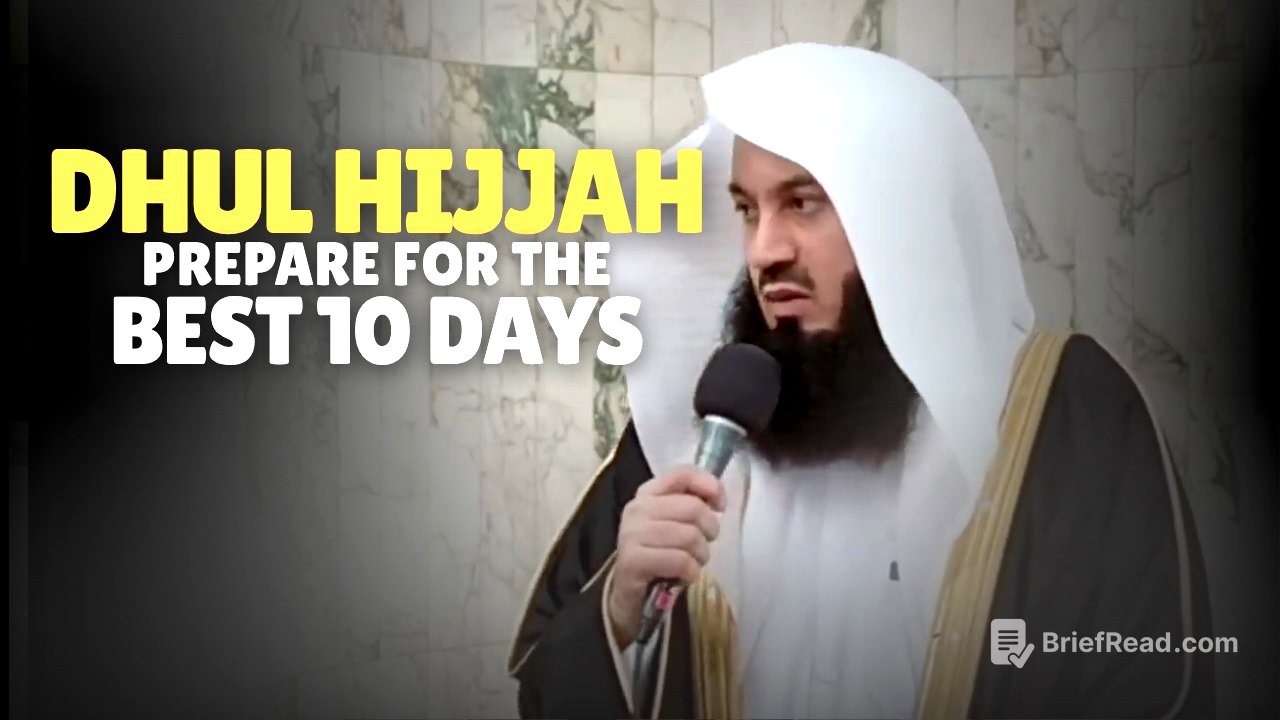
This video by Mufti Menk discusses the significance of the first 10 days of Dhul-Hijjah in Islam, highlighting their importance for performing good deeds and drawing closer to Allah. It emphasises the need to abstain from bad habits and focus on acts of worship, charity, and reading the Quran during this blessed period. The talk also touches on the importance of unity within the Muslim community and the situation in Palestine, urging viewers to remember their brothers and sisters in their prayers.
- The first 10 days of Dhul-Hijjah are a blessed period for good deeds.
- Abstaining from bad habits is crucial before performing good deeds.
- Reading the Quran and engaging in acts of charity are highly encouraged.
- Unity within the Muslim community and prayers for those in need are essential.
The Virtue of Dhul-Hijjah [0:06]
Mufti Menk begins by emphasising the virtue of specific times and places in Islam, such as Ramadan and the Haram in Mecca. He highlights that the first 10 days of Dhul-Hijjah are particularly beloved by Allah for acts of worship. While the nights of Ramadan hold special value, the days of Dhul-Hijjah are considered more valuable for performing good deeds. He encourages Muslims to increase their acts of worship during these days, as good deeds performed within them are greatly loved by Allah.
Preparing for Dhul-Hijjah [2:12]
The speaker stresses the importance of preparing for Dhul-Hijjah by cutting off bad habits as soon as the moon is sighted. He explains that abstaining from what is forbidden is paramount before engaging in good deeds. Just as fasting in Ramadan requires holding back from what is permissible to please Allah, Dhul-Hijjah calls for refraining from sins and focusing on acts of worship.
Remembering the Ummah [3:15]
Mufti Menk urges the audience to remember their brothers and sisters in Palestine, Gaza, and Rafah in their prayers. He asks Allah to ease their difficulties and grant them strength. He also reminds the viewers that Dhul-Hijjah is one of the sacred months in Islam, along with Dhul-Qidah, Muharram, and Rajab, highlighting the sanctity of this period.
Sincerity and Connection with Allah [6:36]
The speaker emphasises the importance of sincerity in one's relationship with Allah. He explains that a true believer is connected to Allah and aware of His presence. This connection involves knowing what pleases Allah and striving to act accordingly. He encourages listeners to reflect on their actions and ensure they are pleasing to Allah.
Seeking Forgiveness and Doing Good Deeds [9:06]
Mufti Menk encourages the audience to engage in acts of worship, such as reading the Quran, especially after Fajr prayer. He explains that reading the Quran has a magnetising effect, bringing one closer to Allah and providing guidance. Even reading one verse a day can bring immense blessings. He also highlights the importance of giving charity, even a small amount, with sincerity. Smiling at others is also considered an act of charity.
The Importance of Unity [16:48]
The speaker stresses the importance of unity within the Muslim community. He laments the divisions that exist and calls for Muslims to unite and support one another. He reminds the audience that they are one Ummah and should strive to act as such.
Seeking Guidance and Forgiveness [19:42]
Mufti Menk encourages listeners to seek guidance from Allah and ask for forgiveness. He advises making the dua "Allahumma ihdini wahdibi," asking Allah to guide oneself and use them to guide others. He also stresses the importance of acknowledging one's shortcomings and seeking forgiveness for them.
Trusting in Allah [23:18]
The speaker emphasises the importance of trusting in Allah and having a strong connection with Him. He encourages listeners to have hope in Allah and to remember Him constantly. He also reminds the audience that Allah is capable of all things and can provide for them in ways they cannot imagine.
Palestine and Justice [26:56]
Mufti Menk addresses the situation in Palestine, emphasising the need for justice and the protection of the Palestinian people. He highlights the historical and religious significance of Jerusalem and Bethlehem to Muslims, Christians, and Jews. He calls for a resolution that respects the rights of all people and ensures peace and security in the region. He clarifies that seeking justice does not mean exterminating people but correcting a historic wrong, allowing everyone to live together peacefully under just leadership.
Final Words of Encouragement [29:39]
In closing, Mufti Menk encourages listeners to make the most of the blessed days of Dhul-Hijjah by engaging in acts of worship, seeking forgiveness, and supporting their fellow Muslims. He reminds them that Allah is always with them and that He will reward them for their efforts. He urges them to strive for unity and to work towards a better future for the Ummah.