TLDR;
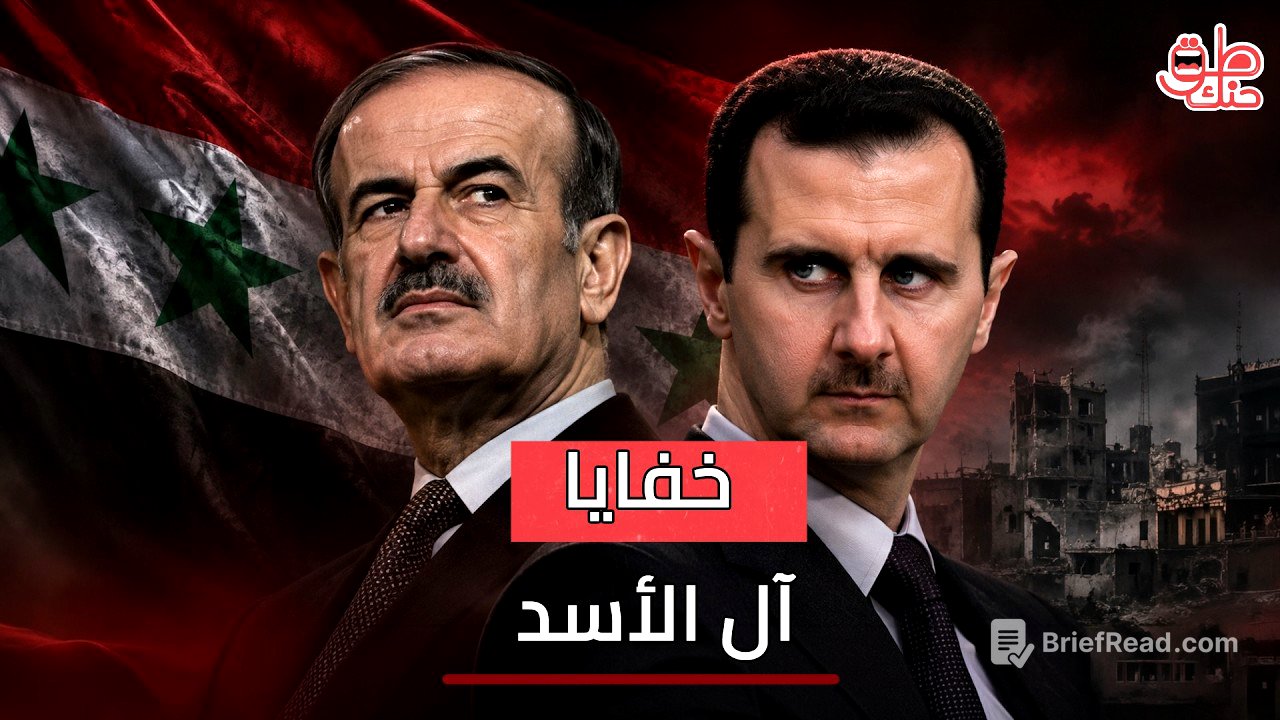
The video examines two phases in the collapse of the Assad family’s power: Fatima Masoud’s escape from violence within the family, and Bashar al-Assad’s final isolation and flight from Syria in December 2024. It recounts allegations and findings reported by German courts and The Atlantic, including a family assassination attempt, Masoud’s role in contacts involving Hannibal Gaddafi, claims about the death of senior adviser Luna al-Shibl, and missed opportunities to negotiate with the United States and regional powers.
- Masoud was granted refugee status in Germany after a court found her account of being shot in her home credible and her return to Syria dangerous.
- The account of Assad’s rule describes his detachment from the country’s economic and military decline, alongside allegations of corruption and repression.
- Assad rejected potential diplomatic openings, alienated allies and presided over a rapid military collapse before fleeing to Moscow.
Fatima Masoud: Family Violence and Flight to Germany [0:00]
In 2017, Fatima Masoud, the widow of National Defence Forces commander Hilal al-Assad and mother of Suleiman al-Assad, sought asylum in Germany. After her husband was killed in 2014, she lost influence amid rivalries within the Assad family. Her son Suleiman was arrested after killing Air Force officer Hassan al-Sheikh in Latakia in August 2015, an incident that provoked rare protests demanding his execution. The video says this left Masoud exposed to other powerful relatives.
In September 2015, armed men entered her fortified home and shot her. She survived four bullet wounds and later accused Hala al-Assad and her son, Karam, of arranging the attack. Fearing another attempt on her life, Masoud left Syria. The video also links her to the case of Hannibal Gaddafi: at the request of his sister Aisha, Masoud helped arrange contacts intended to assist him while he was in Syria. Hannibal was lured to Lebanon, abducted by an armed group and later detained for questioning about the 1978 disappearance of Imam Musa al-Sadr. Masoud told investigators she had been deceived and used to lure him, denying deliberate involvement in the abduction.
German authorities initially refused Masoud asylum, so she appealed to an administrative court. In 2017, the court accepted her account of being shot by people connected to the ruling family as credible and supported by evidence, and granted her refugee status. It concluded that returning to Syria would put her life at serious risk.
Bashar al-Assad’s Isolation and the Fall of His Government [10:29]
The video turns to The Atlantic’s investigation, published in February 2026 and based on interviews with people who had worked inside the Syrian presidential palace. According to those sources, after believing he had won the war in 2017, Assad became increasingly detached from Syria’s destruction and economic crisis. He reportedly spent much of his time playing games on his phone and relied on a narrow circle that included former television presenter Luna al-Shibl, who became a powerful adviser. The investigation also carried allegations about al-Shibl’s personal relationship with Assad and her arranging sexual encounters for him; the presenter stresses that these claims are reported allegations, not independently confirmed facts.
The account contrasts the palace’s reported excesses with the hardship faced by soldiers and ordinary Syrians. A member of the Assad family told the magazine that, during a 2021 visit, elite Republican Guard officers were selling fruit and cigarettes after their shifts to feed their families. The Syrian pound had fallen from 47 to around 15,000 to the US dollar, while soldiers reportedly earned about US$10 a month. Meanwhile, Assad and his brother Maher were said to have amassed billions through the captagon trade. In July 2024, al-Shibl was found critically injured in her armoured car and died days later. Although rumours blamed Iran, The Atlantic reported claims from three sources that Assad ordered her killing after she allegedly began sharing information about Iranian activity with Russia; the investigation noted that Moscow offered no official confirmation.
The video attributes Assad’s stubbornness and insecurity partly to his upbringing in the shadow of his older brother, Basil, whom palace sources described as bullying his younger brothers. After Basil died in 1994, Bashar was recalled from studying ophthalmology in London and prepared to succeed their father, Hafez. The investigation says this background contributed to his refusal to accept advice. In 2020, US envoys Roger Carstens and Kash Patel met Syrian security chief Ali Mamlouk in Damascus to discuss the fate of missing American journalist Austin Tice. The United States was reportedly willing to consider sanctions relief and the withdrawal of its forces from eastern Syria in exchange for evidence that Tice was alive or information to resolve his case. Bashar rejected the proposal, reportedly because Donald Trump had previously called him an “animal”. A renewed approach in 2023 also failed.
Assad also rejected other opportunities to change course. He did not meet Turkish President Recep Tayyip Erdoğan, who sought an agreement on normalising relations and refugee returns, and he failed to respond to offers of Emirati investment tied to distancing Syria from Iran. His allies grew frustrated, while Iran’s former foreign minister Mohammad Javad Zarif reportedly urged him to engage with the opposition. When opposition forces led by Ahmed al-Sharaa began advancing on 27 November 2024, Assad was in Moscow attending his son Hafez’s doctoral dissertation discussion. Russia’s President Vladimir Putin reportedly told him that Russia would not fight on his behalf and advised him to reach an understanding with Erdoğan.
As the government’s forces collapsed, soldiers who had endured years of low pay deserted, Iranian commanders left, and opposition forces advanced through Hama towards Homs. On 7 December, regional foreign ministers attempted to contact Assad about a political transition, but he refused proposals that required him to step down. That evening, he reassured relatives that Saudi Arabia and the United Arab Emirates would stop the advance; his cousin Ehab Makhlouf was later killed while trying to flee. As reports confirmed that the army had disintegrated and senior officers were escaping, Assad prepared to leave his home in Damascus with his son Hafez and only two aides. When his elderly driver asked whether he was really leaving them behind, Assad replied, “What about you? Aren’t you fighting?” He then departed under Russian protection and flew to Moscow, leaving Syria behind.