TLDR;
This lecture covers the evolving business models for audio and video content in the music and entertainment industry, focusing on new revenue streams and models that have emerged due to digital technology and online platforms.
- Key revenue streams include subscriptions, advertising, and transactional models.
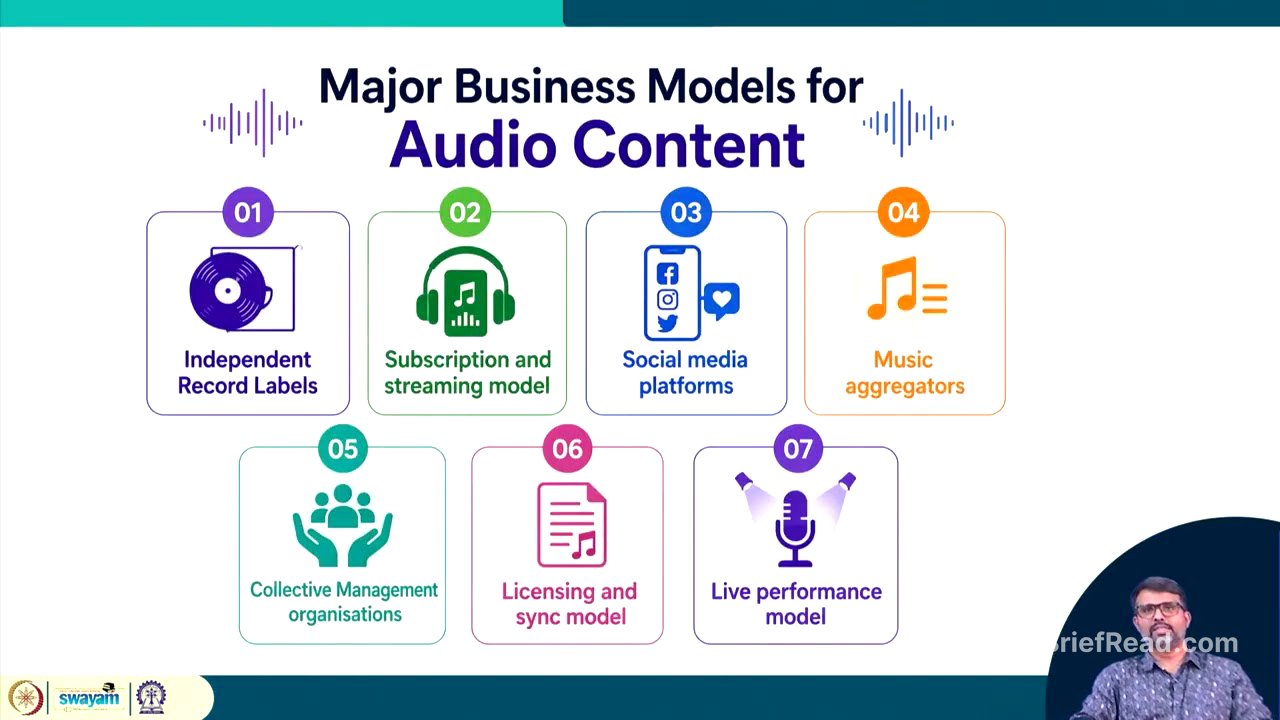
- Major business models for audio content encompass record labels, streaming platforms, and collective management organisations.
Introduction to Business Models for Audio and Video Content [0:20]
The lecture begins by introducing the fundamental concepts of business models in the audio and video content industry. It highlights the significant shift from traditional models reliant on physical sales and broadcasting to diverse digital business practices that utilise streaming services, social media platforms, and online distribution networks. Today, content creators and companies use various revenue streams, including subscriptions and advertising, to sustain operations and reach wider audiences.
Basic Revenue Streams: Subscription and Advertising [2:03]
The lecture outlines subscription as a prominent revenue model, where content is typically placed behind a paywall, requiring payment to access. This includes models like freemium, where basic content is free but premium features require payment. Membership models also provide perks and bonus materials for paid subscribers, exemplified by OTT platforms like Netflix. Advertising is another significant revenue stream, utilising various formats such as display ads and sponsorship-based advertising, highlighting the emerging importance of ads as a source of income for content creators.
Transactional E-commerce Models [6:10]
Transactional or e-commerce models offer flexible access to content via one-time purchases without the need for full subscriptions. This model appeals to users who prefer occasional access to specific content, such as renting a movie on YouTube. Micro-payments for individual pieces of content, like songs or movies, provide consumers the option to pay only for what they want, benefiting platforms by revealing consumer interests and directly transferring royalties to content owners.
Major Business Models for Audio Content [7:58]
The lecture identifies key business models for audio content, including independent record labels, subscription and streaming services, music aggregators, and collective management organisations. Record labels historically held significant control, but their influence is diminishing as independent artists gain opportunities to engage with audiences directly through digital platforms. The roles of different types of record labels—independent vs major—are explained, including the contractual relationships that dictate how artists' work is exploited and monetised.
The Rise of Digital Streaming Platforms [13:05]
Online streaming has transformed the music industry by allowing artists to generate income based on the number of streams. While payouts can be low, streaming services open new opportunities for discovery and audience engagement. The lecture discusses the various rights associated with music sales and distribution, clarifying that streaming relies on public communication rights being licensed rather than traditional sales.
The Role of Social Media and Music Aggregators [14:38]
Social media platforms such as TikTok have become vital for connecting artists with new audiences, allowing for enhanced promotional strategies. Music aggregators serve as intermediaries between artists and digital platforms, managing distribution and legal tasks, including royalty collection and metadata management, thus enabling artists to focus more on creation.
Collective Management Organisations [17:10]
Collective management organisations (CMOs) help authors and performers manage their rights efficiently. They track the use of music, negotiate licensing terms, and facilitate payment collection, which is especially crucial when music is distributed widely across various platforms. In India, the functioning of CMOs is conducted by registered copyright societies, adhering to the Copyright Act.
Licensing Models: Sync Licensing [18:58]
Sync licensing allows artists to grant permission for their music to be used across multiple media types, generating additional revenue streams. This model is particularly significant in industries like Hollywood and is gaining traction in India for advertisements and video games, enhancing the recognition and commercial success of artists through exposure in visual content.
Live Performance as a Major Revenue Stream [20:15]
Live performances have become crucial for artists as a primary income source, especially as physical album sales decline. Artists generate revenue via ticket sales and merchandise during concerts and events, establishing direct connections with audiences and forming essential elements of their business strategies.
Major Business Models for Video Content [20:51]
Various business models for video content are explored, including advertisement-based video on demand, subscription video on demand, pay-per-view, and hybrid models. These models leverage internet-based techniques, allowing viewers to access content for free in exchange for watching ads or through subscription fees, thus creating predictable revenue streams for platforms.
Conclusion: The Evolution of Music and Video Business Models [27:43]
In conclusion, the lecture emphasizes the significant evolution of business models for audio and video content driven by digital technology and online platforms. New methods have emerged, including streaming subscriptions and hybrid models, which have replaced many traditional revenue sources, offering creators and record labels multiple avenues for monetisation while enhancing audience accessibility to media.