TLDR;
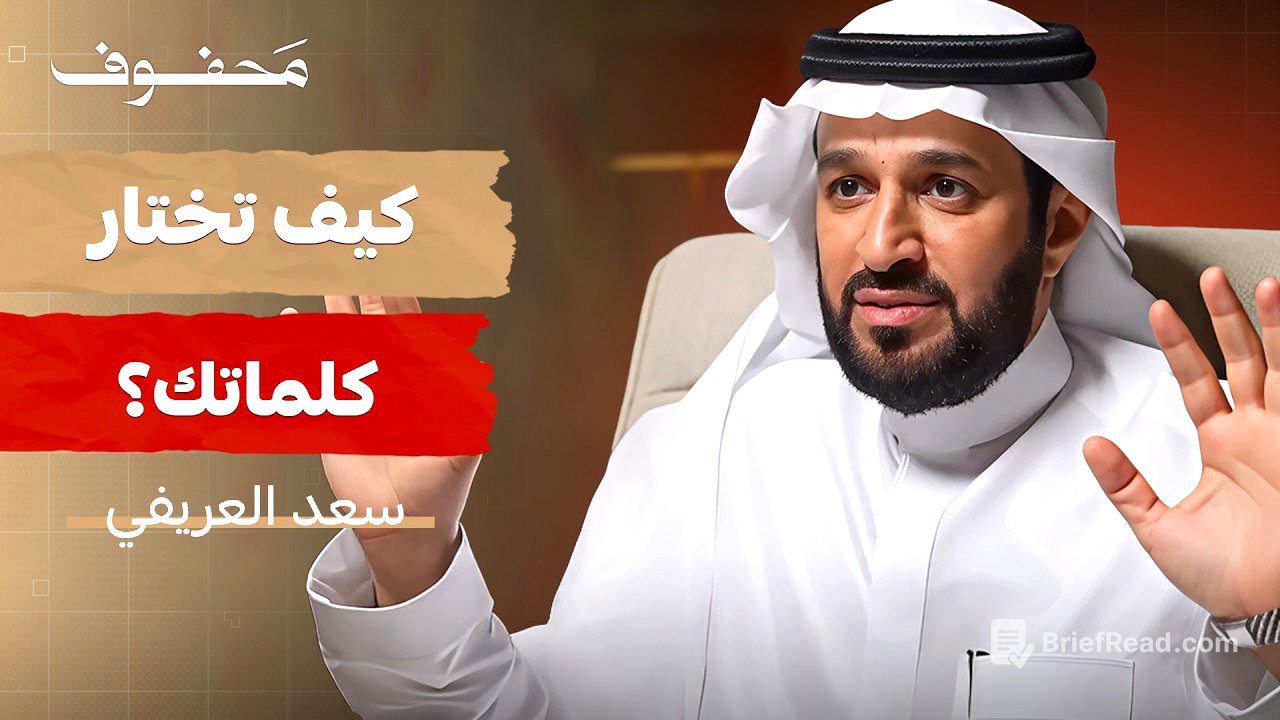
This podcast episode explores the power of words and how mastering language can transform various aspects of life. It covers specialisation in language, the impact of words in different contexts, and practical tips for improving communication skills. The discussion also touches on the unique aspects of the Arabic language and its role in shaping culture and relationships.
- The importance of choosing the right words to influence and persuade others.
- How language shapes personal and professional success.
- Practical techniques for effective communication and building relationships.
المقدمة [0:00]
The power of words to control, persuade, and influence is highlighted. Words can make or break relationships, as illustrated by examples of couples and personal interactions. The importance of careful communication in job interviews and the effectiveness of using the "rule of threes" in speech are also mentioned. The speaker promises to provide insights that will change the listener's life by understanding and using the power of language effectively.
التخصص في توظيف الكلمة [1:55]
The speaker specialises in the role of words, whether written or spoken, in various contexts. He focuses on how words can be used to control, persuade, and influence others, highlighting the importance of linguistic intelligence. Examples include politicians using speeches to sway audiences. The speaker has published research and a book, "The Fabric of the Pre-Islamic Poem," which explores the role of words in poetry, examining why specific words are chosen over others.
عمق الشعر الجاهلي [4:55]
The speaker finds pre-Islamic poetry profound and representative of the Arabic language's grandeur in its early stages. He views subsequent poetry as an attempt to emulate pre-Islamic styles, considering it the original model for all poets. The speaker appreciates the vocabulary, imagery, and words used in this ancient poetry.
التأثير في صناعة الكلمة [6:50]
The speaker transitioned to training, aiming to convince others of the value of words in context. He offers courses such as "The Art of Influencing with Words," which includes 70 rules, and "The Smart Salesperson," which teaches how to turn every word into a deal. Additional courses cover workplace communication, addressing how poor communication can cause tension and loss of employee loyalty. He also provides training in writing professional reports and formal letters, ensuring texts effectively convey their intended message.
الكلمة رأس مال [8:55]
Words are described as a person's capital, shaping relationships with others. These relationships can be built or destroyed through words. Effective communication is essential for everyone, including marketers and business people. A good idea or service can fail if it is not communicated persuasively. People often focus on the idea itself rather than how it is expressed. The way something is communicated influences people more than the content itself.
جمال نغمة التذلل والاستعلاء في الشعر الجاهلي [19:07]
The speaker discusses how words can change situations, sharing a story about a couple on their honeymoon who had a fight. The wife threatened to leave, but a simple phrase from the husband, "Because you know you are beautiful and I love you," completely changed her mind. This highlights how words can reverse emotions. The speaker also explores the themes of supplication and arrogance in Arabic poetry, noting that much love poetry involves the man lamenting the indifference of his beloved. He contrasts this with poets who adopt a more arrogant stance towards women, citing examples from ancient poems.
كيف يؤثر اختيارك لكلماتك على نيل ما تريد؟ [22:29]
The speaker shares two contrasting stories to illustrate the impact of word choice. In the first story, a student who was late for an exam demanded to take it, using the word "ظلم" (injustice), which angered the professor and cost him the opportunity. In the second story, a student who missed an exam due to oversleeping sent a sincere and apologetic email, which led the professor to grant him a make-up exam. The speaker also recounts historical examples, such as Abu al-Najm al-Ijli's insulting verse about Caliph Hisham ibn Abd al-Malik's eye, which resulted in severe punishment. Conversely, Ibrahim ibn al-Mahdi's eloquent plea to Caliph al-Ma'mun led to forgiveness.
تعلم كيف تصنع الكلام دون أن تكون ثرثاراً [35:22]
The speaker discusses the importance of concise and impactful speech, contrasting it with excessive talking. People generally dislike those who talk too much. One should stop speaking when the audience still wants to hear more. He quotes Lord Birkett, who said he is not bothered when people look at their watches, but is concerned if they shake them to see if they are working. The ability to keep people engaged is crucial. The speaker advises against lengthy speeches, noting that "if you preach, be brief, for speech makes some of it forgotten." He shares anecdotes about the value of brevity, including a story about an Arab who criticised a long-winded speaker by saying, "What you are in since today is the defect in you."
كيف تكون الكلمة .. عُملة؟ [56:35]
The speaker explores the relationship between words and currency, noting several similarities. Both have value only when in circulation. Just as one uses words to ask for water, currency must be spent to be useful. The value of both is determined by social agreement. The relationship between a word and its meaning is arbitrary, similar to how the value of currency is agreed upon internationally. Some words are like small change, insignificant in certain contexts. A large bill needs to be broken down to be useful, just as a complex term needs explanation. Small words have limited meaning, and small currency has limited use. Words can be translated, just as currency can be exchanged, though translation may not capture the original nuance.
أثر الكلام في المقابلات الوظيفية [1:04:29]
The speaker discusses how poor expression can lead to missed job opportunities, even for qualified candidates. He advises against starting an interview by mentioning nervousness, as it projects instability. Asking about salary too early or making demands can also decrease chances of getting the job. Evading questions or speaking negatively about previous employers are significant mistakes. The speaker stresses that interview panels want to hear positive attributes and how the candidate can contribute to the company's goals.
ما يميز اللغة العربية عن باقي اللغات [1:08:57]
The speaker discusses the unique characteristics of the Arabic language, noting that it was chosen by God for writing and communication. Arabic is a living, rich language with over 12 million words, far more than English. He mentions Ibn Jinni, who described Arabic as a "courageous" language because it relies on implication and omission, trusting the listener to understand. Arabic also has many synonyms and distinguishes between masculine, feminine, dual, and plural forms, unlike some other languages. The speaker shares examples of Arabic poetry, highlighting its ability to evoke emotions and vivid imagery.
لماذا تضائل وجود اللغة العربية في حياتنا؟ [1:24:54]
The speaker discusses the decline of Arabic language proficiency, attributing it to several factors. Arabic is often viewed as a supplementary subject in education. The traditional curriculum, which included separate courses in texts, expression, reading, grammar, and poetry, has been consolidated. Additionally, foreign languages are introduced too early, before students have mastered Arabic. The speaker praises the old education system, which focused on memorising the Quran, noting that students from Quran memorisation schools often excel in language skills. He also points out that Arabic-speaking children often have a smaller vocabulary compared to their foreign counterparts due to a lack of communication and dialogue.
اكسب الآخرين بالحديث عن معاناتهl [2:04:00]
The speaker emphasises the importance of the presentation of words over the content itself. He uses the analogy of serving excellent mango juice in a dirty cup versus a clean glass to illustrate that a poor presentation can ruin even the best content. He shares a story about a king who sought dream interpreters, where one interpreter was punished for delivering bad news bluntly, while another was rewarded for phrasing the same news positively. The speaker advises against starting conversations negatively and stresses the importance of empathy. He shares a story about a customer service worker who was touched by a customer acknowledging his hard work, which led to exceptional service.
قاعدة الثلاثيات في الكلام [2:32:09]
The speaker introduces the "rule of threes," noting that the universe is based on triads. He explains that people prefer options presented in threes because it provides a sense of freedom without overwhelming them. He suggests using three points when presenting an idea or argument.
كيف أبدأ بتطوير مهاراتي وقدرتي على التعبير؟ [2:46:27]
The speaker advises focusing on the presentation of your message and shares several rules for effective communication. He highlights the "70/70 principle," where 70% of a person's time is spent communicating, and 70% of success depends on effective communication. He stresses the importance of starting conversations positively and avoiding negativity. The speaker also advises against undermining oneself and encourages confidence in one's ideas. He emphasises the value of brevity and shares historical anecdotes about concise communication.
إلى أي مدى يمكن للكلمات أن تغير حياتنا؟ [2:53:41]
The speaker discusses the transformative power of words, noting that they can build or destroy lives. He advises starting with reconciliation in strained relationships and shares a story about a father whose harsh words led to his son leaving home for 15 years. The speaker stresses the importance of choosing words carefully, especially with loved ones. He also shares an anecdote about a professor who inadvertently insulted a student by using a derogatory term. The speaker advises against constant criticism and encourages positive interactions. He shares a story about a customer who secured a discount by complimenting a salesperson. The speaker also advises against making the conversation about yourself, but rather about the other person. He concludes by emphasising the importance of kindness and empathy, especially when interacting with those who are suffering.