TLDR;
Dr. Moeed Pirzada discusses the recent incident in Azad Kashmir where Rangers opened fire on protesters, resulting in casualties and injuries. He expresses concern about the growing violence and the lack of accountability within the Pakistani government. The discussion also covers the political situation in Kashmir, speculating on possible changes in governance and its implications. Furthermore, he touches upon the anticipated US-Iran peace agreement, the geopolitical landscape, and the implications of defence budgets in Pakistan and internationally.
- Rangers fired on protesters in Azad Kashmir, leading to multiple deaths and injuries.
- The video speculates on political changes in Azad Kashmir governance.
- Concerns are raised about Pakistan's accountability and defence expenditures.
- Anticipation surrounds a potential peace agreement between the US and Iran.
Situation in Azad Kashmir [0:00]
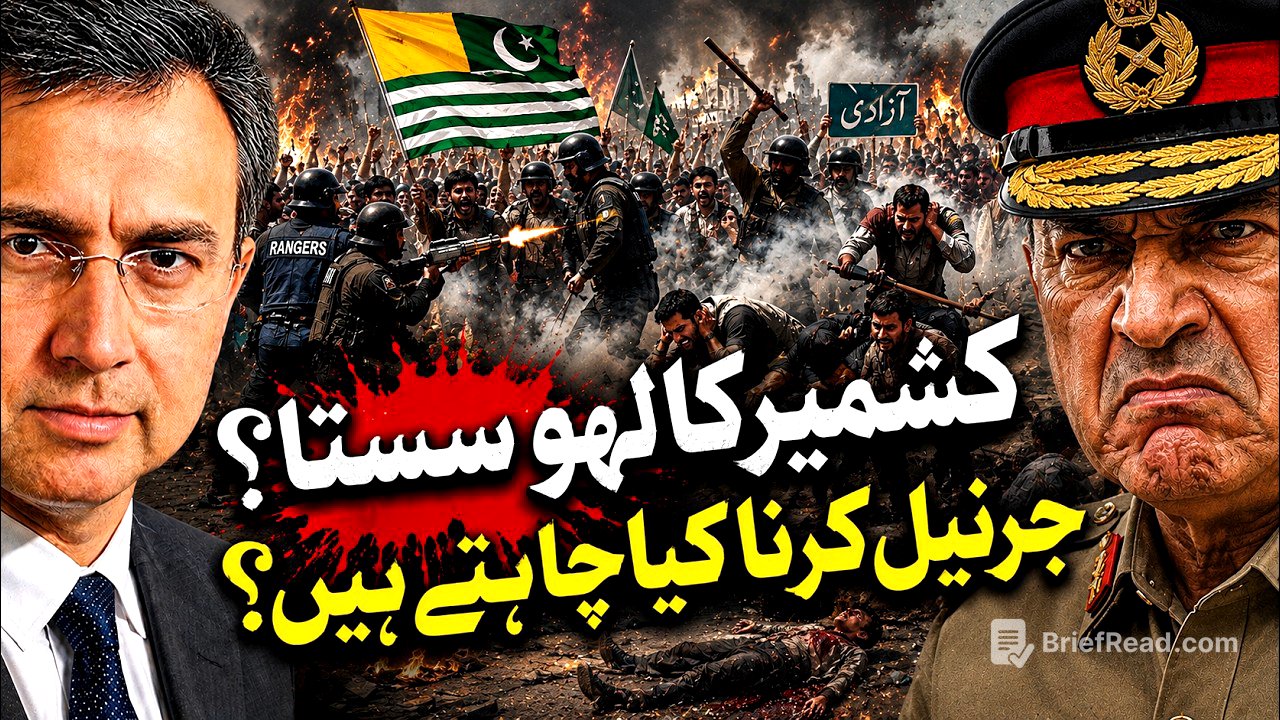
Dr. Moeed Pirzada reports on the recent aggressive action taken by Rangers against protesters in Azad Kashmir, which has resulted in at least three fatalities and several injuries. This event has occurred despite prior peaceful demonstrations over several days. The local authorities issued statements claiming that the police were trying to disperse approximately 800 to 500 protesters. However, armed with armoured vehicles, the Rangers retaliated against the demonstrators, leading to fatalities among civilians. Dr. Pirzada highlights concerns regarding the nature of the state's response and the implications for civil rights in Pakistan.
Accountability and Governance in Pakistan [1:20]
The discussion shifts to the broader theme of accountability in Pakistan. Dr. Pirzada criticises the lack of responsibility among government officials, contrasting it with historical norms where accountability was upheld. He points out that such failures are exemplified in other recent incidents, including a misjudged police operation that tragically led to the death of a child in a family visiting from Australia. The erosion of accountability is identified as a pervasive issue within the government.
Political Dynamics in Azad Kashmir [3:00]
Dr. Pirzada speculates on the political future of Azad Kashmir, questioning the motives behind the increasing unrest and violence. He alludes to possible negotiations or deals among local leadership which might be influencing recent events. The potential for a shift in governance is discussed, with considerations of an upcoming presidential system being more viable than the current leadership. He suggests that there may be external pressures affecting the political landscape, possibly driven by historical agreements and international politics.
US-Iran Peace Agreement [5:00]
The narrative transitions to the expected peace agreement between the United States and Iran, citing that US President Donald Trump is claiming that the deal might get signed soon. Dr. Pirzada outlines the key elements of the purported agreement, including lifting sanctions and economic support for Iran, and discusses its implications for geopolitical relations. The commentary also touches upon the reactions in different countries and the significance of these negotiations for regional stability.
Defense Budget and Economic Concerns in Pakistan [7:00]
Dr. Pirzada outlines the budgetary allocations in Pakistan, highlighting the substantial focus on military expenditures and debt repayments that overshadow development budgets. He notes that the fiscal policies are significantly reliant on international financial institutions, raising concerns about the impacts on essential services such as education and health. The discussion mentions a comparison between Pakistan’s financial struggles and the booming tech sector in the US symbolised by companies like SpaceX.
International Defence Dynamics [10:00]
Towards the end, Dr. Pirzada discusses the shifting dynamics in international defence relationships, particularly between countries like Japan and Germany as they ramp up military expenditures in response to perceived geopolitical threats. He draws parallels to historical context and reflects on how these developments could influence future conflicts and alliances.
Conclusion and Forward-Looking Statements [12:20]
In conclusion, Dr. Pirzada reiterates the urgency of addressing the political and humanitarian crises in Azad Kashmir while acknowledging the broader regional and global contexts. He expresses anticipation towards forthcoming events, especially regarding the US-Iran relations and Pakistan's internal challenges concerning governance and accountabilities.