TLDR;
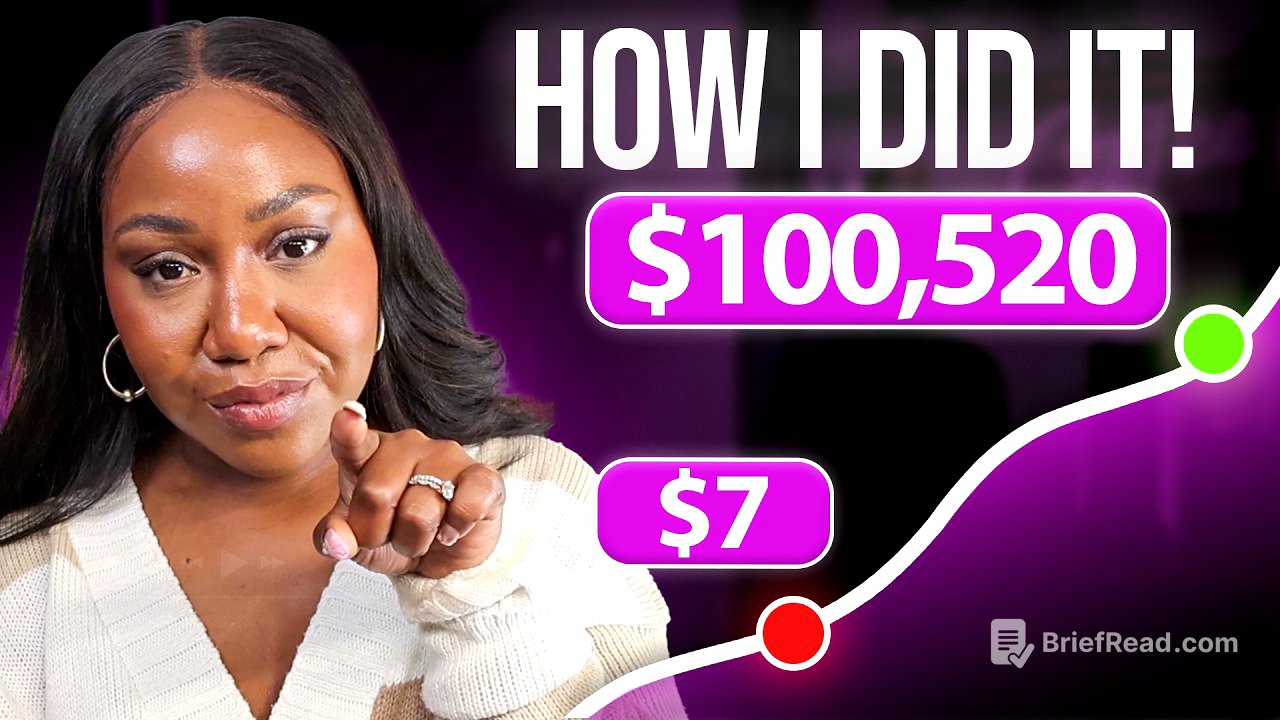
Rochelle Be shares her journey of creating a six-figure digital product business from a simple £7 Canva template, highlighting the struggles and triumphs she faced. She discusses leaving her draining 9-to-5 job, navigating the challenges of selling on Etsy, and finding success through Pinterest marketing and building her own website.
- Overcoming burnout and anxiety through digital products
- Importance of finding the right platform and marketing strategy
- Achieving financial freedom and work-life balance
The $7 product that changed everything [0:00]
Rochelle introduces the idea that a small, £7 digital product made in Canva could lead to quitting a 9-to-5 job and starting a six-figure business. She emphasises that she achieved this without any external financial support, relying solely on her laptop, Wi-Fi, and determination. Before her digital product business, Rochelle had a good corporate job but felt drained, anxious, and unable to live the life she wanted, especially in expensive London. A panic attack on the way to a meeting served as a wake-up call, highlighting that her well-being was less valued than her work.
Every side hustle I tried (and failed) [3:07]
Rochelle recounts her previous unsuccessful side hustles, including drop shipping, trading, Amazon FBA, and working on Fiverr, as well as physical product businesses like hair extensions and jewellery. She realised she lacked the time and energy for physical products due to her demanding 9-to-5 job, and the digital side hustles felt complicated and risky. Despite these setbacks, her determination led her to discover digital products, which seemed to tick all the boxes: no physical inventory, no shipping, low risk, and the ability to work from home with just a laptop and Wi-Fi.
Why Etsy felt perfect at first [4:42]
Rochelle explains why she initially chose Etsy as the platform to sell her digital products. Etsy seemed perfect because it didn't require her to have her own website or actively promote on social media, as Etsy would bring customers to her. She felt like she had finally found the right path.
My first product mistake: wall art (don’t do this) [5:06]
Rochelle shares her first product attempt on Etsy: wall art. She spent weeks creating these products, but they didn't sell for over six months. This was devastating, and she almost gave up on her dream of escaping her 9-to-5 job.
The $7 planner sale that gave me proof [5:46]
After a break, Rochelle returned to Canva and started creating digital planners, inspired by the trend of people making significant income from them. She slowly began listing her digital planners and eventually made her first sale: a £7 planner. This sale gave her the confidence to experiment with different types of planners.
The product that really took off (and why) [6:22]
The product that truly took off was a self-care journal made specifically for black women. This led to a surge in sales, proving to Rochelle that she could create something in Canva that people would buy. She caught the bug and started making more products on Etsy, with each month improving. Despite not being a designer or having prior business experience, she was able to make £17,000 within four months, primarily paying for her Canva subscription.
The dark side nobody talks about: copying + price wars [7:16]
Rochelle reveals the often-unspoken challenges of selling on Etsy, specifically the issue of other sellers copying her products. She notes that while people often share their success stories, they rarely mention how quickly others will replicate winning products, leading to price wars.
My $22 product getting crushed to $0.99 [8:03]
Rochelle describes how her second winning product, a PLR (Private Label Rights) digital planner initially sold for around £22, was quickly devalued due to competitors creating cheap, low-quality versions. The price plummeted to as low as 99p, eliminating any profit margin. This experience was disheartening, almost causing her to abandon her digital product dream.
The real problem: not me… the platform [9:02]
Rochelle realised that the problem wasn't her product or skills, but the platform she was using. She recognised the need for her own website to avoid competing with numerous sellers offering the same products on the same page.
Why I moved to my own site (and what changed) [9:31]
Rochelle explains her decision to move to her own Shopify website to create a unique customer experience, gather her own data, and implement email marketing. This shift allowed her to take control of her business and avoid the intense competition on Etsy.
Social media burnout + fear of being found out [10:11]
After moving to Shopify, Rochelle initially promoted her products on TikTok and Pinterest, making around £4,000 a month. However, she experienced burnout from social media marketing, especially TikTok lives, which caused anxiety. She also feared being discovered by her colleagues, which could jeopardise her corporate career.
The platform I went all-in on: Pinterest [11:17]
Rochelle discovered the potential of Pinterest and decided to focus her efforts there. Pinterest allowed her to promote her products without showing her face or constantly posting content. By creating visually appealing pins with relevant keywords, she could drive traffic to her product landing pages.
The moment I out-earned my 9–5 [12:03]
After dedicating just over three months to Pinterest marketing, Rochelle finally started earning more from her digital product business than from her 9-to-5 job. This was a pivotal moment, solidifying her belief in the potential of her business. However, she was still hesitant to quit her job.
The email I sent two days later [14:47]
Two days after being informed about the possibility of redundancy, Rochelle sent her email, effectively resigning from her corporate job. Despite the fear, it was a liberating moment, marking the beginning of a new chapter in her life.
My life now: freedom, travel, and my first 18K month [15:38]
Seven months later, Rochelle's life has transformed. She hit her first £18,000 month and enjoys a stress-free life with the freedom to work when she wants, travel, and spend time with her family. She feels grateful to help others achieve similar results.
Why your income is capped in a 9–5 [17:30]
Rochelle contrasts the limitations of a 9-to-5 job, where income is capped regardless of effort, with the unlimited potential of her own business. She highlights the freedom to choose when to work, when to push harder, and when to take a step back, leveraging systems to do the work for her.
If you think “this could never be me”… listen [19:38]
Rochelle addresses viewers who may doubt their ability to replicate her success. She emphasises that she started without any special advantages, such as design or business experience, an existing audience, or financial support. Her success was built through Pinterest and YouTube, driven by determination and a desire for freedom.
Start small: my first sale was $7 [21:14]
Rochelle encourages viewers to start small, sharing that her first sale was only £7. She started scared and unsure, without a detailed plan. She points out that viewers today have even more opportunities than she did, thanks to the free content available on platforms like YouTube.
Final Thoughts [23:00]
Rochelle encourages viewers to subscribe to her channel and offers a free tool to help them create a success plan for their digital product business, regardless of their current stage. This plan is based on the strategies and experiences that helped her achieve a consistent six-figure income.