TLDR;
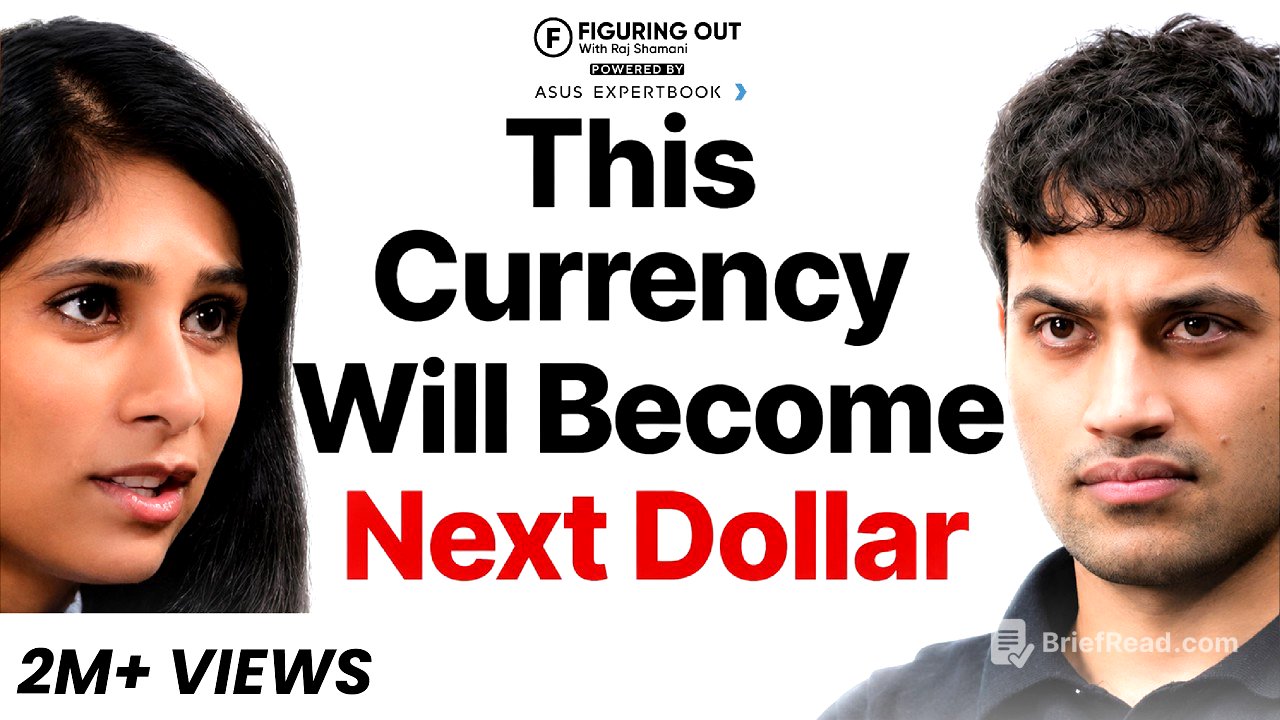
Former IMF Chief Economist Gita Gopinath explains how savings, banks and central banks shape the flow of money, why governments borrow, and why high public debt deserves attention. She expects the US dollar to remain the world’s leading currency, while arguing that India could benefit from shifting supply chains if it tackles domestic barriers to investment. The conversation also explores geopolitical tensions, tariffs, AI investment, risks to the global economy and the growing importance of protecting people’s ability to think and learn. Gopinath’s central message is that the world is taking a “great gamble”: economic and technological upheaval may bring major gains, but weak international cooperation and hidden financial risks could make the consequences serious.
- Central banks adjust interest rates to keep inflation near target; creating money without limits can cause hyperinflation.
- Public debt is becoming a concern even for advanced economies, though its risks depend on growth, borrowing costs and governments’ choices.
- The dollar is likely to remain dominant, while India has an opportunity to expand its role in global manufacturing and supply chains.
- AI could boost productivity, but high investment, uncertain profits and financial interconnections create risks of a market correction.
- Young people should use AI to support learning, not replace independent thinking, expertise and human collaboration.
Intro [0:00]
Gita Gopinath, former Chief Economist of the IMF and a Harvard professor, says the US dollar is likely to remain the world’s dominant currency over the next 20 years. She expects a correction in AI-related valuations because companies are investing enormous sums without clear evidence that future profits will justify the spending. She also warns that government debt is a growing concern, including in advanced economies such as the UK and France.
India’s opportunity lies in becoming a more important participant in global supply chains, particularly in manufacturing. Gopinath says complex procedures, delays in the courts and difficulties in doing business can discourage investment. The conversation also raises questions about why the IMF lends to Pakistan repeatedly; Gopinath later explains the Fund’s role as a financial emergency service for countries in crisis.
Where Does Money Come From & How Do Central Banks Control It? [3:51]
Money available for investment largely comes from savings. Households save when their income exceeds their spending, and these savings reach companies through bank loans, shares, corporate bonds and government bonds. An ageing population can increase the supply of savings because many people in their 40s, 50s and 60s are saving for the future. In most countries, banks play a central role in channelling household savings to businesses; the US relies more heavily on stock and bond markets.
Money is useful because it provides a liquid, widely accepted way to make payments. Central banks manage the amount of money and credit in the economy, aiming to keep inflation near a target—around 2% in the US and 4%, with a tolerance of two percentage points, in India. If demand rises faster than supply and inflation threatens to exceed the target, a central bank can raise interest rates. Higher rates make mortgages, loans and business investment more expensive, reducing spending and demand; those effects can eventually influence people’s housing choices, jobs, wages and investments.
Printing money is not a cost-free alternative to borrowing. If a government spends more than it collects in tax and cannot borrow from domestic or international investors, it may pressure the central bank to create money. Excessive money creation can destroy the currency’s purchasing power and lead to hyperinflation, as seen in countries such as Zimbabwe and Argentina. Borrowing, by contrast, can be sensible when investors trust that a country can repay and use the money productively.
The US can borrow partly because it has a large tax base and investors expect it to honour its debts. Its debt is also traded in a deep, liquid market, where large transactions are less likely to disrupt prices. Debt should be considered relative to the size of an economy, not only by its absolute total: Japan’s debt is much higher as a share of GDP than US federal debt. Investors’ confidence also depends on the country’s future growth prospects, including the possibility that AI could raise US productivity.
Why Governments Borrow & Is America’s $38 Trillion Debt a Problem? [12:28]
Borrowing can support investment when lenders believe a government or business has the capacity to generate returns. Gopinath compares the US to an entrepreneur with a promising idea: it can borrow from others rather than relying only on its current income. The US also has the capacity to raise taxes and, if AI delivers strong productivity growth, the economy could expand enough to make its debt more manageable. But that argument relies on continued trust and growth; countries that lose confidence among investors may face sharply higher interest rates and struggle to borrow.
The dollar’s strength rests not simply on the amount of US debt but also on the size and liquidity of its financial markets, confidence that the government will pay its bills, and belief that the currency will retain its value. Gopinath expects the dollar to remain dominant over the next 20 years under current policy assumptions. A weaker dollar would not by itself mean the end of its global role. She sees no credible alternative in the yuan, a proposed BRICS currency or a synthetic basket of currencies: a successful currency requires a central bank and institutions capable of maintaining its value.
China’s yuan may be undervalued because the country’s growth model has kept household consumption relatively weak. Consumption represents about 40% of China’s GDP, compared with much higher shares in many other economies. China also restricts the movement of capital into and out of the country. Such controls can protect an economy from sudden financial flows, but China imposes unusually tight restrictions, limiting its financial openness. To rival the US as a financial power, it would need deeper markets, more independent financial institutions and greater freedom for capital to move.
US tariffs have reduced direct imports from China, but Chinese firms have responded by building factories in countries such as Vietnam, Mexico and Thailand, while redirecting exports towards Europe. Rerouting trade and establishing overseas production is costly, however, and affects Chinese profits and employment. Gopinath says China is also facing weak domestic demand, a troubled property market and excess capacity in sectors such as electric vehicles and solar panels. The cost of US tariffs falls mainly on US importers, who absorb some of it in lower profit margins and pass some on to consumers; China also loses through weaker demand and more complicated supply chains.
The Dollar’s Global Power, China’s Yuan & the Future of World Trade [18:09]
Investors continue to treat the US as a leading destination for money, even as people debate whether the world order is changing. Gopinath distinguishes a possible fall in the dollar’s value from the much bigger claim that another currency will replace it. She says individuals making financial decisions cannot determine the world order, so they should assess the existing system and recognise that a major change is possible but not certain. A new international currency would require institutions and a central bank to manage it, not simply an agreement to combine several currencies.
China could become a stronger financial rival if it chose to open its markets, allow money to move more freely and build independent financial institutions. Under its present political and financial arrangements, Gopinath says, that transformation is unlikely. For India, the current search for new international partners creates an opportunity to become a larger part of global supply chains, especially in manufacturing. But investors may be deterred by lengthy court cases, unreliable contract enforcement, difficulties trading land, administrative obstacles and poor treatment by officials.
India has already made significant reforms, including the Goods and Services Tax, the digital payments system UPI, improvements to physical infrastructure and the bankruptcy code. Further progress, Gopinath argues, depends on political action to address the remaining bottlenecks and improve human capital and skills. If India can move quickly on those issues, it could attract more international investment at a time when countries are looking for new partners.
The US Economy, a New World Order & India’s Biggest Opportunity [28:42]
Gopinath describes the global outlook as a situation where “everything has changed, and yet somehow nothing has”. Overall growth forecasts have remained close to earlier predictions, even after tariffs, geopolitical conflict and the AI investment boom. Beneath those headline figures, however, countries are experiencing very different outcomes. Middle Eastern economies are being hurt by conflict and higher energy prices, while Taiwan and South Korea are benefiting from their position in the AI supply chain.
AI investment is currently offsetting some of the damage from tariffs and higher oil, diesel and petrol prices. The headline tariff announcements were also more severe than the measures ultimately imposed: after markets reacted, US tariff rates were brought down to roughly 10–12% on average. Gopinath sees such reactions as evidence of guard rails in the global system, but warns that repeated shocks are feeding inflation and pushing interest rates higher. The situation remains uncertain and fragile.
She calls the interaction between AI and geopolitics a “great gamble”. AI has the potential to transform productivity, but it also brings risks, including safety concerns. At the same time, countries are moving away from a rules-based trading system, and international trust is too weak for effective cooperation over AI risks. The gamble is especially consequential because global supply chains have never been more integrated, while power is spread across the US, China and influential middle powers such as India. That combination creates the possibility of serious unintended consequences.
Why Corruption Is So Hard to Fix & What Countries Can Do About It [37:25]
Corruption, weak administration and slow legal processes can hold back investment, but changing entrenched systems is difficult. Gopinath points to Argentina under President Javier Milei as a dramatic example of a government breaking with repeated deficits and reliance on central-bank money creation. Such abrupt policy changes are easier to carry out when a country is in deep crisis and the public accepts disruption; a fast-growing country may find it harder to justify taking a similarly forceful approach.
Reform also faces opposition from people who benefit from the existing system. Leaders therefore need both political will and public support to overcome resistance. Gopinath notes that corruption can decline over time: the US once experienced greater corruption in government and the courts, and ordinary people now encounter it less often in everyday life. This kind of change usually takes decades, rather than a single political term.
Countries can make progress through very different methods. A crisis can create the pressure needed for major reform, while China has used coercive measures against people accused of corruption; Gopinath observes that this can move faster but is not the same as gradual reform in a stable, growing democracy. Where there is no acute crisis, confronting entrenched problems remains difficult and slow.
The Global Economy’s Great Gamble: AI Boom vs. Geopolitical Risk [41:22]
The global economy’s headline performance can hide sharp differences between countries and sectors. AI investment is supporting growth, while tariffs and energy-price increases are weighing on it; together, these opposing forces help explain why overall growth can look relatively normal even as some economies suffer and others surge. Gopinath’s “great gamble” describes the risk of relying on these positive and negative forces to balance out.
The gamble also reflects a retreat from common trade rules and a lack of international coordination on AI safety. Geopolitical competition and economic statecraft are not new, but today’s highly interconnected supply chains mean that policies in one country can have wider consequences. The rise of China and the influence of middle powers—including India—also make the balance of power more complex than it was during the Cold War.
Several developments contributed to the shift towards protectionism. After the global financial crisis, unemployment and inequality fuelled public discontent with expert-led economic policies. Politicians drew on that discontent, while concerns about the impact of Chinese competition on communities strengthened calls for protection. Russia’s invasion of Ukraine and its energy cut-off to Germany also exposed the risks of relying heavily on one country for essential supplies. These events prompted a reassessment of globalisation and national security.
Gopinath says the world has not simply turned inwards. New trade agreements and alliances are forming, and global trade remains high as a share of world GDP. However, trade is becoming more costly and inefficient, adding inflationary pressure. She warns that the slow erosion of the old rules-based order may not feel dramatic now, but could become much clearer in hindsight years later.
The AI boom is also helping keep some economies afloat. If AI-related share prices fell sharply, US growth could fall to zero or below, producing a recession, although a stock-market-driven recession might be short-lived. The risk could be larger because AI companies are financially interconnected: Nvidia, for example, has provided funding to AI laboratories that then spend money on Nvidia chips. Gopinath also warns that parts of the financial system outside traditional, heavily regulated banks are less visible, making it hard to assess their connections to the AI boom.
She compares this opacity with the run-up to the global financial crisis. Subprime mortgages initially appeared to be a limited problem, but they were connected to a wider banking system through complex financial engineering and mortgage securities. Gopinath believes an AI-market correction is likely at some point, though its timing is impossible to know. The industry is investing close to a trillion dollars globally in AI in 2026, and it is unclear whether companies can earn enough to recoup that spending. Rapidly obsolete chips and damaging cyber incidents are among the additional risks.
Could Geopolitical Shocks & AI Trigger the Next Financial Crisis? [55:31]
The discussion turns to the risks of tariffs and geopolitical shocks during a period when AI investment is helping to support economic growth. Gopinath says economists should take resilience and national security seriously; countries should not, for example, rely almost entirely on a single foreign supplier for energy. The problem is the absence of guard rails. Indiscriminate tariffs can disrupt trade without carefully distinguishing between genuine security needs and broader protectionism.
A sharp decline in AI valuations could weaken markets and spending, potentially pushing the US into recession. Gopinath expects a correction but cannot say when it will happen. She highlights the links between chipmakers and AI companies, along with financial institutions whose balance sheets and exposure to the AI cycle are not fully transparent. Those connections could magnify a downturn, just as poorly understood mortgage-related risks magnified the crisis of 2008.
When asked what she could say more freely outside the IMF, Gopinath points to criticism of chaotic policymaking and tariffs. At the IMF, she had to act as a diplomat as well as an economist, because public statements could be interpreted as the institution’s position. As a professor, she can speak more directly in her personal capacity.
The IMF, Global Debt & the Risk of the Next Economic Crisis [1:03:41]
Gopinath explains that the IMF’s work involves uncertainty because economics is a social science: people respond to policies in ways that may differ from what policymakers expect. Governments ultimately make the decisions, while IMF staff advise and assist them. Although the organisation is bureaucratic, she was struck by how hard its staff worked and how committed they were to helping countries.
The IMF’s repeated loans to Pakistan are challenged in light of the country’s history, its economic difficulties and allegations relating to terrorism. Gopinath says Pakistan is not the only country to borrow from the IMF repeatedly; Argentina is another major borrower. The IMF’s purpose is to help countries in severe economic distress, not to lend only to governments that already meet an ideal standard of governance. A crisis can harm millions of people and affect neighbouring countries, so the Fund acts as a “financial firefighter”.
Decisions to lend are made by IMF members, including India, rather than solely by the organisation’s management. The main test is whether the new government is adopting policies that could move the country away from crisis. Gopinath says countries repay the IMF; the question is whether their policies offer a credible route out of the emergency. Although the US has the only voting share large enough to veto certain decisions, its roughly 17% share does not give it a veto over individual loans, which require majority support. In practice, major economies’ preferences matter, but the urgency of a crisis can make helping people more important than political differences.
Gopinath’s broader concern is that global government debt is nearing 100% of GDP and could reach that level in a few years, close to the post-Second World War high. The problem is no longer limited to developing economies. The UK’s borrowing costs rise sharply when markets fear higher spending, and France is also facing concern. The US still receives considerable confidence from investors, but its debt is growing and its borrowing costs have increased: the yield on a 10-year Treasury security has risen from around 2.5% to about 5%.
High global savings are helping governments borrow without an immediate crisis, partly because demographic change is supplying substantial savings. Gopinath argues that this breathing space should be used to reduce debt. Whether debt becomes dangerous depends on future growth, interest costs and policy choices. AI-driven productivity growth could make debts easier to manage; otherwise, governments might have to cut welfare spending to meet interest payments.
A major new crisis could trigger serious debt problems if governments respond with much larger deficits—for example, raising US borrowing from roughly 6.5% to 10% of GDP. Higher US borrowing costs can feed into rates across the world because US debt helps set the foundation for global interest rates. Governments may also try “financial repression”: policies that push banks and savers to hold more government debt and less private debt. Gopinath rejects claims that a particular historic comparison provides a simple prediction of a country’s decline. Forecasting is most reliable over about two years; confidence falls substantially beyond five years.
Five-Year Predictions: AI, Geopolitics & the Future of the World [1:22:43]
Rather than offer a confident prediction about the world five years from now, Gopinath says the consequences of AI for jobs, labour markets and prosperity need careful attention. AI developers are still learning how their systems behave, and the future path remains uncertain. She identifies AI, geopolitics, debt, climate change and demographics as major forces likely to shape the world.
One immediate concern is “cognitive surrender”: people relying on AI so heavily that they stop practising independent thought. Gopinath compares the risk with the disruption to children’s education during the 2020 pandemic, when unequal access to devices and good schooling widened learning gaps. Education is again changing quickly, and teachers have not yet settled on which skills will matter most or how best to teach them. At Harvard, Gopinath has seen a gap between students’ work at home with AI and their performance in class, where they have to work independently.
For young adults, she advises building genuine expertise rather than using AI as a substitute for learning. AI can be a powerful tool for people who already understand their subject, but those without expertise risk being replaced. Learning requires struggling with problems, making mistakes and gradually developing understanding; accepting AI-generated answers can create a false sense of competence.
AI can support learning by creating varied practice questions, adapting explanations to a student’s level and widening access to examples. At Harvard, students may use AI to study an assignment but are then assessed in class without it, giving them a reason to learn the material themselves. Gopinath also recommends studying complex human behaviour and developing social-science skills, which she considers less straightforward to automate than well-defined tasks such as coding a model.
Finally, she urges students to work with other people rather than replacing study groups with AI tools. Group work builds human skills, encourages debate and exposes students to ideas beyond their own subject. She notes that research, including an MIT report, has documented students working in fewer study groups as AI provides an easy substitute for classmates.
Human Connection & the Future of Global Trust [1:32:34]
Asked for a phrase to describe the present period, Gopinath repeats “the great gamble”: countries are taking risks in several areas while trust between nations is weak. The gamble could have positive outcomes, but there is no guarantee. She sees the current period as one in which the world is buying time and waiting to see how political developments unfold.
Gopinath describes herself as optimistic in everyday life, although her work leads her to spend a lot of time considering what could go wrong. Thinking about risks does not make her despair; it motivates her to consider what can be done to solve problems. She also enjoys positive experiences and is excited about AI, rather than being consumed by fears about the future.
One Piece of Advice No One Should Follow [1:36:33]
Gopinath says nobody should follow advice to become like someone else or to copy a famous person’s path simply because it worked for them. People make different choices and have different circumstances, so imitating someone successful does not guarantee the same outcome. She rejects the idea that there is one correct way to pursue a career or live a life.
The Personal Cost of Becoming Gita Gopinath [1:37:24]
Gopinath questions whether the choices behind her career should be described as costs. A person’s trade-offs may look like sacrifices to others but can be consistent with what that person wants. She acknowledges that a demanding senior career leaves less time for family, but says she and her husband and son worked as a family unit, relying on whoever was best suited to each task.
She describes herself as a workaholic and says she might have liked more time with friends and family, but would not call that a sacrifice or say she would choose a different life. She has also resisted social expectations about what women should or should not do, an attitude she says began when she was young. For her, the important point is that choices about work and family are personal, not a universal formula.
Outro [1:40:40]
The host thanks Gopinath for the conversation and invites viewers to share what they liked or disliked and suggest future guests in the comments. He closes by asking viewers to keep figuring things out.