TLDR;
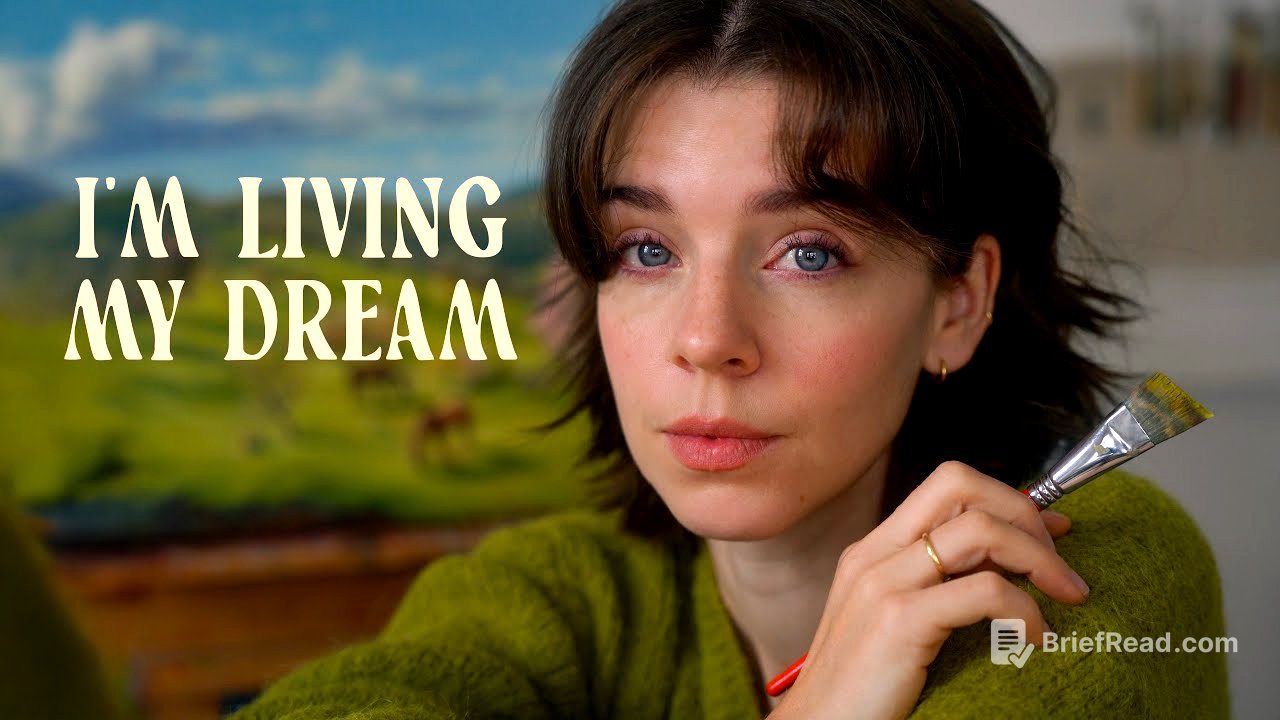
Brooke Cormier reflects on her journey as an artist, emphasising the importance of confidence and positive self-belief in pursuing one's dreams. She introduces the concept of "positive delusion" as a tool to cultivate confidence, sharing personal experiences and practical advice on how to replace negative self-talk with positive affirmations. The video encourages viewers to challenge their self-limiting beliefs, embrace a growth mindset, and persevere in their artistic pursuits.
- Importance of confidence in achieving dreams.
- Introduction of "positive delusion" as a tool for building self-belief.
- Practical advice on replacing negative self-talk with positive affirmations.
Introduction: A Life-Changing Decision [0:00]
Brooke Cormier begins by recounting a pivotal decision she made nine years ago to pursue art, despite initial hesitations and external pressures to follow a more conventional path. She shares an emotional journal entry from when she was 22, just after graduating in landscape architecture, expressing her desire to become a full-time artist and acknowledging the fears associated with this unconventional career choice. Looking back, she expresses gratitude for her younger self's courage to take the leap and pursue her passion.
The Misconception of Chasing Dreams [4:15]
Brooke addresses a common misconception about chasing dreams, challenging the notion that simply wanting something "bad enough" is sufficient for success. While passion and desire are important, she argues that confidence is the primary hurdle. She shares insights from a Google form she created, revealing that many aspiring artists struggle with self-belief. Brooke defines confidence as accepting and trusting oneself, and believing in one's ability to overcome challenges.
Positive Delusion: A Tool for Cultivating Confidence [5:58]
Brooke introduces the concept of "positive delusion" as a tool to cultivate confidence. She defines it as adopting a positive belief about oneself before that belief becomes reality. She illustrates this by asking viewers to imagine an aspiring artist with no talent, education, money, or support, but with unwavering confidence. Brooke argues that this "delusion" is both positive and necessary, serving as a means to assume the role of one's aspired self.
Brooke Makes Your Art Look Professional: Featuring Barabi Majuraju [6:39]
Brooke transitions into the second episode of her series "Brooke Makes Your Art Look Professional," sponsored by Framer. She spotlights Barabi Majuraju, an artist from India, and designs a professional-looking website homepage for her using Framer, a no-code website design tool. Brooke emphasises how easy it is to showcase artwork online in a professional manner using Framer, even without prior web design experience.
Building Self-Confidence Through Positive Self-Talk [8:40]
Brooke shares her personal experience of starting her art career without any formal training or business knowledge, relying on "positive delusion" to bet on herself. She stresses that self-confidence is not a fixed trait and can be developed over time. Quoting Venus Williams, she encourages viewers to "pretend" to believe in themselves until they actually do. Brooke explains that our beliefs shape our brain function, which in turn impacts our reality.
The Forest Analogy: Rewiring Your Brain [10:55]
Brooke uses the analogy of a forest to illustrate how our brains function. She describes how frequently travelled paths in the forest represent our habitual thought patterns, and how negative self-talk can become a well-worn path. She suggests using a "positive delusion compass" to guide us towards a new path, clearing the way with positive self-talk. Over time, this new path becomes easier to travel, solidifying our core beliefs and fostering self-confidence.
Conclusion: Start Before You're Ready [14:21]
Brooke concludes by reminding viewers that they don't need to learn everything before they start, encouraging them to trust that they'll figure things out as they go. She advises paying attention to internal conversations, acknowledging negative self-talk, and using the "positive delusion compass" to steer themselves in the right direction. She encourages self-compassion and emphasises that the journey, though imperfect, will be special and unique. Brooke expresses her hope that the video leaves viewers feeling more positive and confident.