TLDR;
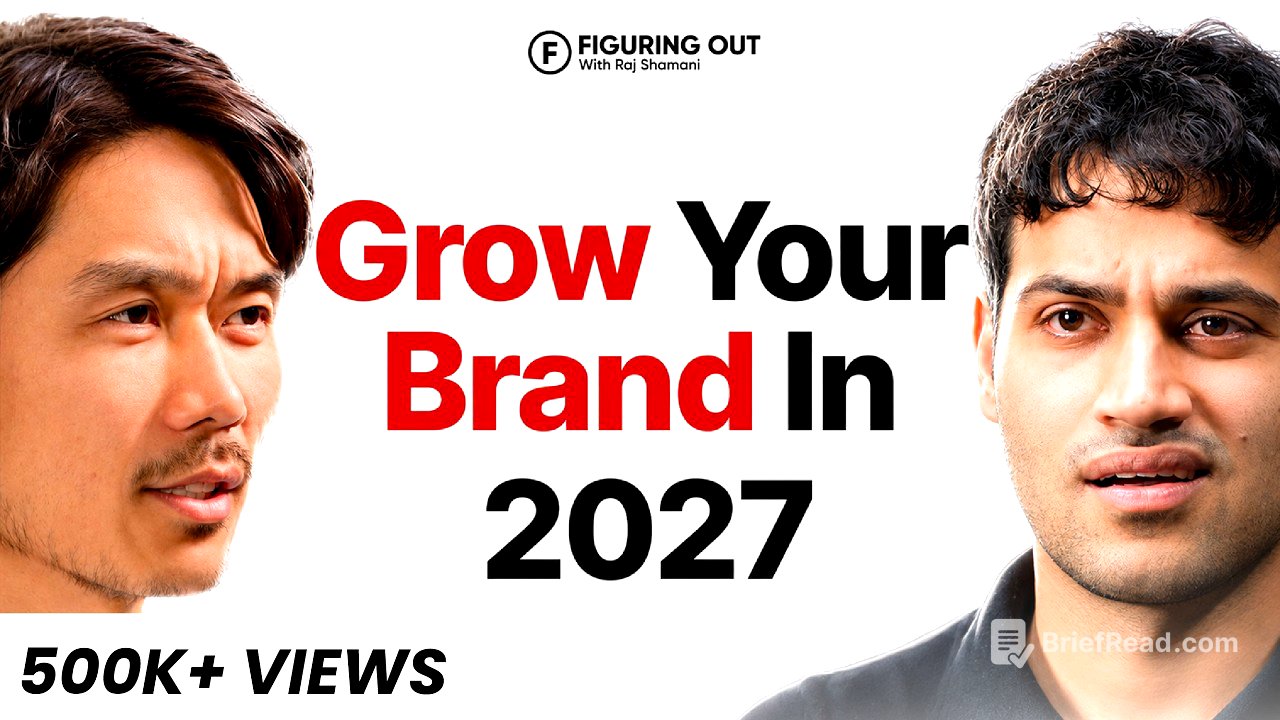
Kent Yoshimura explains how NeuroGum grew into a profitable, fast-growing consumer brand by testing marketing messages, building a large creator and affiliate network, and developing a consistent brand identity. He also shares lessons on product launches, community-building, hiring, international expansion and the risks of protecting a business’s trademarks.
- Test different customer motivations and hooks before scaling content through creators.
- Give creators clear commissions, progression targets and a community that helps them learn from one another.
- Build a recognisable brand through consistent values, communication and customer experiences.
- Choose audiences and partners whose communities genuinely fit the product.
- Hire for trust, humility and problem-solving, and treat setbacks as chances to learn.
How NeuroGum Built a Fast-Growing, Profitable D2C Brand [3:39]
Yoshimura says founders should recognise their weaknesses rather than assume they can do everything themselves. A business can be understood through five functions: operations, sales, finance, marketing and leadership, with the last bringing the others together. NeuroGum’s growth accelerated after the founders hired experienced people to lead these areas and coordinate their work.
He also stresses that founders should set aside ego and hire people who complement their skills. NeuroGum had strong opportunities to generate attention, but needed the right operational structure to make the most of them. Once the team had clear roles and communicated across departments, the business began to grow much faster.
How TikTok, Viral Marketing & Creator-Led Growth Changed NeuroGum [6:45]
TikTok offered a new platform and a growing creator ecosystem, so Yoshimura and the head of growth began posting several times a day and testing different hooks. They aimed to understand what made people stop scrolling, listen and buy. Within a month, a run of videos went viral, giving NeuroGum evidence about which messages worked.
Yoshimura groups the effective messages into three psychological triggers: social fear of missing out, personal insecurities and the desire for self-improvement. Social proof can make people wonder why they have not tried a product when celebrities or trusted figures are using it. Insecurity-based messages connect a product with problems such as tiredness or lack of confidence, while self-improvement hooks frame it as a way to perform better or make more of the day.
NeuroGum used examples such as taking a piece before a date, meeting or job interview to feel more energised and focused. The company also used science-backed ingredients and clinical trials to support its product claims, while avoiding promises that the gum could solve serious medical conditions. Once the team had tested hooks on its own channels, it could share successful approaches with creators and scale the message.
Building a Creator Army: Affiliate Marketing, Commissions & Brand Partnerships [15:23]
NeuroGum expanded its marketing by bringing creators into a network where they could earn commission on tracked sales. The company initially gathered creators from existing influencer and affiliate programmes, sent samples, and invited them into a Discord community. There, NeuroGum shared content and successful hooks, while creators exchanged ideas and tested variations.
Its commission structure gave creators reasons to keep producing and improve their results. Entry-level creators earned a commission, with sales thresholds unlocking higher levels, retainers and better commission rates. Higher-level creators had to meet ongoing sales and content targets to keep their status; top performers could earn substantial sums, with one creator reportedly making around $150,000 in a month. Bonuses, gifts, trips and gatherings helped sustain motivation and made the programme feel like a community rather than just a sales arrangement.
The company also used major moments—such as returning to Shark Tank, launching a new product or entering Costco—to rally creators around a campaign. For retail campaigns where affiliate links could not track sales, creators could receive extra payments for generating views or discussing a launch. NeuroGum also found ways to benefit from other brands’ advertising: its product appeared as a free offer in a partner’s campaign after the inclusion improved that brand’s return on ad spend.
Yoshimura recommends looking for partners with overlapping audiences and offering a clear benefit in return. Examples include dental clinics distributing sugar-free gum, or a mattress company including a sleep product with pillow purchases. A launch also needs a catalyst—such as a high-profile partner, a creative activation or a campaign that gives creators and customers a reason to pay attention.
How to Launch Products & Create Marketing That Stands Out [30:42]
A new product needs a clear launch moment to attract attention; simply making a good product does not guarantee that people will discover it. NeuroGum used launches, retail arrivals and media opportunities to create campaigns that creators could participate in. When the company announced a new sour flavour, for example, it briefed hundreds of creators and offered extra incentives for early sales.
Yoshimura gives the example of a protein-bar company that could not afford a booth at a major industry convention. Instead, it drove a branded truck around the event, attracting attention from attendees and press at a lower cost. The broader lesson is to find an unexpected way to reach the people who matter, rather than copying a conventional launch.
For a sleep supplement, he describes a “bedrot” challenge in which creators compete to stay in bed the longest, streamed online. The entertaining concept could attract viewers, while more serious content and credible experts could explain the product afterwards. Marketing can work as a funnel: a striking hook creates awareness, then other material builds understanding and trust.
Partnerships can also reach a relevant audience without expensive celebrity endorsements. NeuroGum worked with dental clinics because sugar-free gum containing xylitol could fit naturally into a dental-care experience. Yoshimura suggests looking for organisations or communities already in contact with likely customers, while checking the rules and practical constraints of each partnership.
Micro vs. Mega Influencers: What Actually Drives Brand Growth? [46:08]
Yoshimura says small creators can offer strong value because their followers may know and trust them personally. A creator with a small audience may generate better conversion for a much lower cost than a mid-sized influencer with a large fee and weak engagement. He advises brands to make their “backyard”—their first focused customer group—work before trying to reach everyone.
Creators should be chosen for their audience, values and connection to the product, not just their follower count. A smaller creator who shares a brand’s outlook may grow alongside it and give the brand access to a closely related community. For example, a sleep product could target a specific group of stressed workers, then expand to other audiences once its message works.
The conversation distinguishes between mid-tier influencers and genuinely famous figures. A top celebrity can create a large impact, but a single post may not be enough; repeated, credible advocacy is more powerful. NeuroGum built connections through people adjacent to celebrities, then connected those relationships with other relevant communities, including F1. Brands should avoid spending their entire budget on one famous post without also investing in the campaign that makes the partnership known.
Celebrity Marketing, Experiential Campaigns & Building Brand Awareness [55:43]
Celebrity partnerships can build awareness, but the endorsement needs wider activation to have an effect. Yoshimura says a company may need to spend several times the cost of the celebrity partnership on advertising, sponsorships and related promotion so people actually notice it. A famous person’s one-off mention is less convincing than repeated use that appears natural and connects with other trusted figures.
Experiential marketing can help creators and customers associate positive experiences with a brand. For a sour-product launch, NeuroGum invited around 50 influencers to a go-kart venue without paying them to attend; the event gave them something enjoyable to share. The company also used creator gatherings and other activities to strengthen relationships and generate word of mouth.
Large events can be effective when they serve a particular purpose, such as making an impression on retailers at an industry convention. Yoshimura describes a brand that hosted a major event and charged other companies to exhibit or activate alongside it, helping cover the cost. Smaller events, however, can build a stronger sense of connection when the attendees are there because of the brand rather than simply for a popular party.
The Foundations of a Memorable Brand: Identity, Voice & Customer Experience [1:03:53]
NeuroGum’s external brand values are to be science-backed, approachable and humble. The brand aims to communicate evidence without making exaggerated claims or presenting a simple product as a pharmaceutical solution. Internally, its values include calm leadership, servant leadership—where every role serves others—and kaizen, the Japanese idea of continuous improvement or progress over perfection.
Yoshimura describes a brand as a product’s visual language, tone of voice and communication style, shaped by its values. NeuroGum’s packaging states its main benefits clearly, presents ingredients transparently and uses details such as embossing to convey care and reliability. Those signals should make it easy for customers to understand what the product does and feel confident about it.
The tone should remain accessible rather than leading with complicated science. Customers can find more detailed explanations and clinical evidence if they want them, but the first message should be clear and friendly. Yoshimura suggests imagining the product as a celebrity to help define its personality, and setting practical rules in the brand book for fonts, sentence length, rhythm and language.
The brand also needs to define the experience it wants people to have. NeuroGum aims for approachable, fun, high-energy gatherings without VIP hierarchies. Its activities, creator choices, product messages and partnerships should all reflect the same identity, so the brand feels consistent wherever people encounter it.
How to Build a Community That Turns Customers Into Brand Advocates [1:25:11]
NeuroGum holds events of different sizes, often around six times a year, and also supports activities such as Pilates sessions. The purpose is to connect the product with groups who share an interest and may naturally recommend it to one another. A brand can become part of a community when customers see how it fits into something they already care about.
Yoshimura says that a strong community has a shared identity and an accessible way for people to participate. A brand built around elite performance alone may feel out of reach; everyday customers need to see how the product can help them. He points to the failure of a supplement brand associated with famous athletes as a warning that celebrity status cannot replace a connection with ordinary customers.
Smaller gatherings can make the brand itself the common thread, whereas a large event may be remembered mainly as a good party. However, large events can still work when they reach retailers, influencers or other specific audiences, particularly if partner brands help fund the activation. The key is to decide whether the goal is broad visibility, meaningful community ties or both.
Potential communities for a calming product could include corporate workplaces, technology and engineering groups, or wellness retreats. The useful question is where people already gather, who they trust, and whether that environment matches the feeling the product promises. A trusted person in a close-knit community can help a message spread, provided the brand’s values and the community’s expectations align.
Hiring, Leadership & Building a Strong Company Culture [1:45:01]
NeuroGum looks for three qualities in employees: trustworthiness, humility and problem-solving ability. Trust matters because colleagues work closely together; humility helps people admit mistakes and learn from them; and problem-solving enables the team to adapt when conditions change. Experience remains relevant, but a candidate’s fit with the people and culture they will work with is also important.
Mistakes should lead to learning rather than automatic blame. Yoshimura says the team should be able to come together and solve problems calmly, and that clear, achievable yet ambitious milestones can keep morale high. Shared goals work best when employees understand them and believe they can reach them through focused effort.
He recommends reading Who for a structured hiring process and High Output Management for thinking about how teams and systems generate results. Together, these ideas can help a founder create a scorecard that balances experience, cultural fit, problem-solving and the role a person plays in the company’s overall operation.
Yoshimura also asks candidates what they do for fun. Their answer can reveal what matters to them, how they think and what perspectives they might bring to work. A team made up of people with different interests and experiences can approach business problems from more angles, while a company culture should make room for people to be human rather than treating them as interchangeable workers.
How NeuroGum Expanded Globally & Why India Was a Key Market [1:56:56]
NeuroGum’s international approach involved local teams who could find relevant communities and adapt activations while preserving the brand’s core identity. Yoshimura says a localisation agency should do more than translate existing marketing; it should identify local activities and audiences that match what the brand does elsewhere. The product’s message and personality should remain recognisable, even as the execution changes by market.
India became an attractive market through a combination of existing awareness, local partnerships and manufacturing opportunities. Joe Rogan’s international audience had already helped the brand reach people there, and a partnership with Chess.com created another entry point in a country where chess is especially popular. NeuroGum could then connect with chess-related communities and local influencers, building from an initial launch towards a broader creator network.
The company also saw India’s young population, engineers, universities and growing technology sector as signs of long-term opportunity. Yoshimura describes the expansion as the result of timing, existing relationships, a capable local team and several market factors aligning. He views India as an ambitious, developing economy with substantial potential for innovation and consumer growth.
The Most Expensive Mistake He Made in His Career [2:04:40]
NeuroGum had secured a trademark for its category, but a company called Neuro Drinks later sued, claiming the name belonged to it. The opposing owner had far greater financial resources, and Yoshimura believes the lawsuit could have bankrupted the startup. The experience showed how costly it can be to overlook careful planning around trademarks and naming.
The co-founders asked Daniel Lubetzky, whom they had met through Shark Tank, for help. Lubetzky joined a call with the other company and warned that he would support NeuroGum and pursue a countersuit if the claim continued. The lawsuit was dropped, protecting the business.
Three years later, NeuroGum returned to Shark Tank and Lubetzky invested. Yoshimura frames the episode as a reminder to ask for help when facing a serious problem, and as an example of entrepreneurs supporting others because they understand the difficulties of building a company.
Spotting New Product Opportunities & Building the Next Big Category [2:10:14]
Yoshimura sees stress as a major future opportunity, partly because people are becoming more digitally connected and may seek fulfilment outside online life. Products that help people reduce chaos, manage stress or reconnect with the physical world could benefit from a wider cultural shift towards being more present. He points to phone-blocking tools and the return of basic mobile phones as examples of people seeking fewer digital distractions.
He says trust may increasingly come from in-person events, friends and smaller communities as confidence in online information declines. For founders, this means looking for products that fit the ways people are trying to change their habits and relationships with technology. The product itself could take many forms; what matters is meeting a real need within that cultural shift.
Yoshimura also notes that sex, stress and sleep have remained enduring markets. Founders can explore how these needs connect with particular body parts, feelings or customer problems—for example, how stress may relate to hair loss or sleep. He sees possible opportunities in areas such as perimenopause and women’s health, as well as male hormones, especially as more women take on senior roles and seek products that address their needs.
One Piece of Advice Nobody Should Follow [2:15:47]
Yoshimura rejects the advice to “sleep when I’m dead”. He previously worked with very little sleep, sometimes sleeping for 90 minutes at a time before forcing himself awake to work again. He says that routine harmed him and that better sleep improves a leader’s ability to think clearly and perform well.
His practical advice is straightforward: sleep well, exercise, avoid excessive drinking and manage stress. These basic habits, he says, support a person’s ability to operate at their best.
The Most Extraordinary Thing He Wants to Do Next [2:17:25]
Yoshimura wants to explore the ocean’s potential and help build more sustainable marine ecosystems. He grew up near the sea, enjoys surfing and spearfishing, and is interested in catching fish sustainably. He sees the ocean as a vast resource that remains poorly understood and believes there are significant opportunities to learn from it while protecting it.
The Personal Cost of Becoming Kent [2:18:26]
Yoshimura did not follow a conventional career path after university. While his friends took well-paid technology jobs, he slept on sofas, stayed in hospitals and took odd jobs while pursuing his own ambitions. Some friendships did not survive that period, although he came to see this as a way of learning which relationships were genuine.
He had also spent his college years fighting professionally and travelling rather than partying, so he does not feel he missed out on a conventional student life. He sees the difficult experiences as part of the life he chose, not as sacrifices he regrets. He says he would make the same choices again, and believes pressure can produce growth if a person continues to believe in what they are building.
Outro [2:20:58]
The interview ends with thanks to Yoshimura and a request for viewers to share what they liked or disliked, suggest future guests and leave feedback. The host closes by encouraging the audience to keep figuring things out.