TLDR;
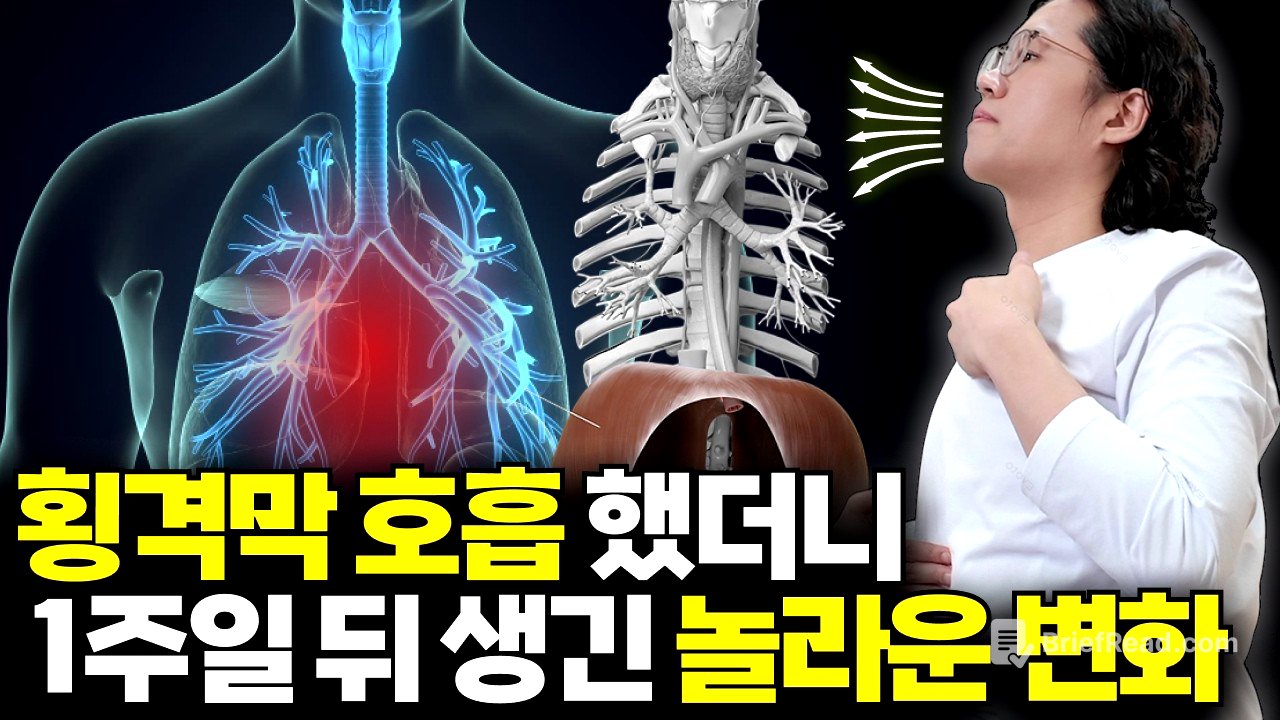
This video explains the importance of diaphragmatic breathing and how to improve its effectiveness by releasing fascial tension. It details the anatomy of the diaphragm, its impact on various bodily functions, and provides practical massage and stretching techniques to prepare the body for optimal diaphragmatic breathing. The video emphasises that diaphragmatic breathing can reduce stress, improve cardiovascular and digestive functions, enhance lymphatic circulation, and boost brain health.
- Diaphragmatic breathing improves overall health by affecting the autonomic nervous system, cardiovascular function, digestion, lymphatic circulation, and brain health.
- Releasing fascial tension through massage and stretching enhances the effectiveness of diaphragmatic breathing.
- Proper posture and understanding the concept of the "zone of apposition" are crucial for optimal diaphragmatic function.
횡격막 마사지 [8:24]
To perform a diaphragmatic massage, lie on your back with your knees bent and feet flat on the floor, maintaining a slight arch in your lower back. Gently place your fingers under the lower edge of your rib cage, starting from the sternum area. As you inhale, relax your fingers, and as you exhale, apply gentle pressure inwards and upwards, following the rib cage. Hold the pressure for two to three seconds, feeling for any resistance in the diaphragm. Continue this massage along the entire circumference of the rib cage, paying extra attention to any particularly tight areas to release fascial tension. This massage can also be done while seated once you become more comfortable with the technique.
복부 근막 마사지 [9:20]
For the abdominal fascial massage, lie flat on your back and use your fingertips to gently press and massage your abdomen, starting from the xiphoid process down to your navel, and then from your navel to your lower abdomen. Spend two to three seconds on each spot, focusing longer on areas that feel particularly stiff. After massaging the centre of your abdomen, gradually move outwards to cover the entire abdominal area. Ensure the massage is gentle, and reduce pressure if you experience any pain.
갈비뼈 근막 마사지 [9:54]
To massage the rib cage fascia, lie on your back and locate the grooves between the ribs below your nipples. Women may need to lift their breasts to access the area just below the fold. Once you've found a groove, gently move your fingers along it towards your sides, releasing tension as you go. If you find any spots that feel particularly sensitive or tight, spend a little more time on those areas. After massaging one groove, move down to the next one and repeat the process, working your way down three grooves in total. Repeat on both sides of your body.
옆구리 스트레칭 [10:59]
For the side stretch, sit comfortably and interlock your fingers behind your head. Inhale, and as you exhale, bend your spine to the left, keeping your lower back straight and focusing on stretching your side. Hold the stretch for five to ten seconds, then return to the centre as you inhale. Repeat on the right side. Do this five times on each side.
오픈 스트레칭 [11:28]
To perform the open stretch, lie on your side with your knees and hips bent at a 90-degree angle, ensuring your lower knee is touching the ground. Extend both arms straight out in front of you, then, keeping your hips and lower body still, open your top arm towards the opposite side, rotating your upper body as if you're opening a book. Follow your hand with your gaze. Exhale as you rotate your upper body to enhance the stretch. Hold the stretched position for five to ten seconds, feeling the stretch in your side and arm fascia. Repeat five times on each side.
등 & 복부 스트레칭 [12:06]
Begin on your hands and knees in a quadruped position. Move your hips back towards your heels while extending your arms forward, holding this position for five seconds to stretch your back. Next, lift your hips and move your body forward, arching your lower back. Hold this position for another five seconds. Repeat this sequence five times, alternating between the back and abdominal stretches.
누워서 횡격막 호흡 (45초간 들숨, 23초간 정지, 6~8초간 날숨) [13:14]
To practice diaphragmatic breathing while lying down, lie on your back with your knees bent and your feet flat on the floor. Place one hand on your chest and the other on your abdomen, just below your rib cage. Inhale slowly through your nose for about four to five seconds, focusing on directing the breath towards your abdomen, so your lower hand rises while your chest remains relatively still. Hold your breath for two to three seconds. Then, exhale slowly through your mouth for six to eight seconds, allowing your abdomen to gently fall. Aim to fully expel the air from your abdomen.
앉아서 횡격막 호흡 [14:24]
To perform diaphragmatic breathing while seated, sit comfortably in a chair, ensuring your spine is straight and the crown of your head is lifted towards the ceiling. Distribute your weight evenly on your sit bones. Relax your shoulders, head, and neck. Place one hand on your chest and the other on your abdomen. Inhale through your nose for four seconds, directing the breath into your abdomen, and hold briefly. Exhale slowly through your mouth for six to eight seconds. When seated, focus on expanding your rib cage not only forward but also sideways and, ideally, towards the back as you inhale.