TLDR;
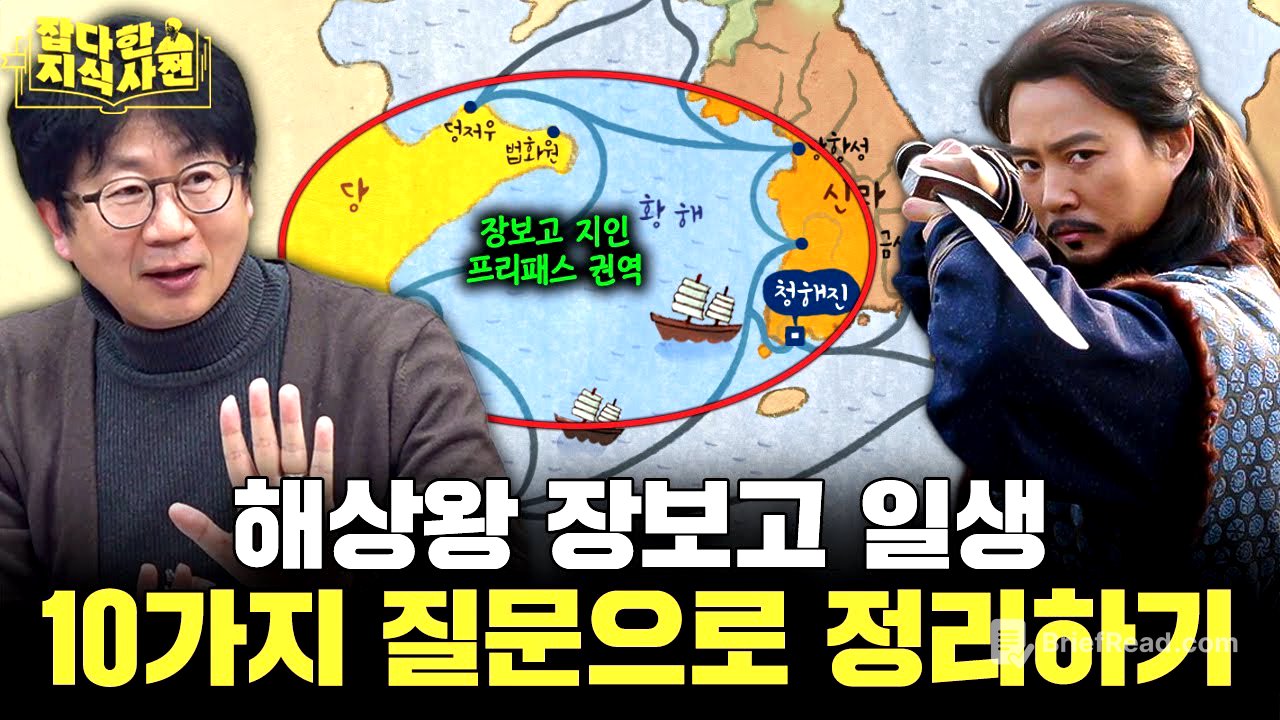
The video discusses the historical figure Jang Bogo, known for establishing Cheonghaejin in Silla and his significant contributions to maritime trade and military defence. The conversation addresses various questions about his life, including his name, reasons for migrating to Tang China, reasons for returning to Silla, and the legacies he left behind, including the challenges he faced from betrayal and political rivalries.
- Jang Bogo founded Cheonghaejin, a significant maritime base.
- His legacy includes the establishment of trade networks and military strategies against piracy.
Jang Bogo: An Overview [0:00]
Jang Bogo, known for founding Cheonghaejin, was a military leader during the latter period of Silla. He moved to Tang China from Silla where he rose to the position of a general, achieving success in both military and trade endeavours. Jang Bogo’s return to Silla was marked by his ambition to defend against pirates and enhance maritime trade, yet he faced complex political struggles leading to his demise. His story reflects the historical transition from a land-based to a maritime-focused perspective in Korean history.
Finally Exceeding 50 Minutes With Author Park Kwang-il [0:17]
Author Park Kwang-il reflects on the challenges of discussing historical figures in detail, aiming to provide a comprehensive understanding of Jang Bogo. The dialogue between the hosts highlights the curiosity and engagement of the audience as they delve into the intricacies of Jang Bogo's life and accomplishments while managing the constraints of broadcast time.
The Protagonist of Korea's First Submarine [1:55]
The video highlights how Jang Bogo's legacy inspired the naming of South Korea's first submarine after him, the Jang Bogo-class submarines. This connection underscores his pivotal role in Korea's maritime history and the ongoing recognition of his contributions to naval defence and trade.
Q1: Is Jang Bogo His Real Name? [7:00]
It’s indicated that 'Jang Bogo' was likely not his original name, but a name he adopted after gaining prominence in Tang China. His real name is believed to be Gungbok or Jeonghyeon. The process of changing names follows the tradition of adapting one’s name to fit into new cultural contexts.
Q2: Why Did Jang Bogo Emigrate to Tang China? [9:44]
Jang Bogo emigrated from a border area in the Silla kingdom, which faced economic hardship and raids from pirates, prompting him to seek better opportunities abroad. The movement towards Tang China was seen as a strategic decision to join a more prosperous and stable society.
Q3: Why Did Jang Bogo Become a Soldier? [13:52]
Influenced by the success of a notable figure, Lee Jeonggi, a high-ranking military leader, Jang Bogo saw an opportunity in the military for upward mobility. His background likely instilled in him the ambition to pursue military success, leading to his eventual rise in ranks.
Q4: Why Did He Return to Silla After Succeeding in Tang China? [18:32]
Despite his success in Tang China, Jang Bogo returned to Silla to leverage his experiences and military prowess against rising threats, particularly piracy, which plagued Silla's coastal security and trade routes. This return reflects his commitment to his homeland and his vision of developing its maritime capabilities.
Q5: Why Was Cheonghaejin Established? [21:50]
Cheonghaejin was established to create a strategic military base and a hub for maritime trade to combat piracy and enhance the economic stability of Silla. Jang Bogo aimed to fortify Silla's position in regional trade networks, consolidating both military and economic power.
Q6: Was the Title of Cheonghaejin Dae-sa Pre-existing? [24:40]
The title of Dae-sa, meaning 'Great Ambassador', was unique to Jang Bogo and created specifically for him, reflecting the new role and responsibilities he held in managing military and trade operations at Cheonghaejin.
Q7: What Were Jang Bogo's Accomplishments? [27:05]
Jang Bogo’s significant achievements include establishing Cheonghaejin as a military and trade base, initiating trade relations with China and Japan, and successfully advocating for maritime security. His work set the foundation for future maritime developments in Korea.
Q8: Why Was He Betrayed by His Subordinates? [30:28]
Betrayal arose from political tensions and rivalries, particularly with his subordinate, Yeomjang, who, seeking power, led Jang Bogo to his assassination. This points to the unstable nature of power dynamics within the military and political structures of the time.
Q9: Where Are the Remnants of Cheonghaejin? [36:51]
The remnants of Cheonghaejin are located primarily on Jangjwa Island and the nearby Janggun Island. These sites include historical artefacts and remnants that reflect the strategic importance of the base during Jang Bogo's time.
Q10: Lessons from Jang Bogo [39:03]
Jang Bogo's life imparts vital lessons about leadership, ambition, and the importance of networks, which are relevant to contemporary society. His story encourages a broader view beyond geographical confines, highlighting the necessity for connections and collaborations in a globalised context.