TLDR;
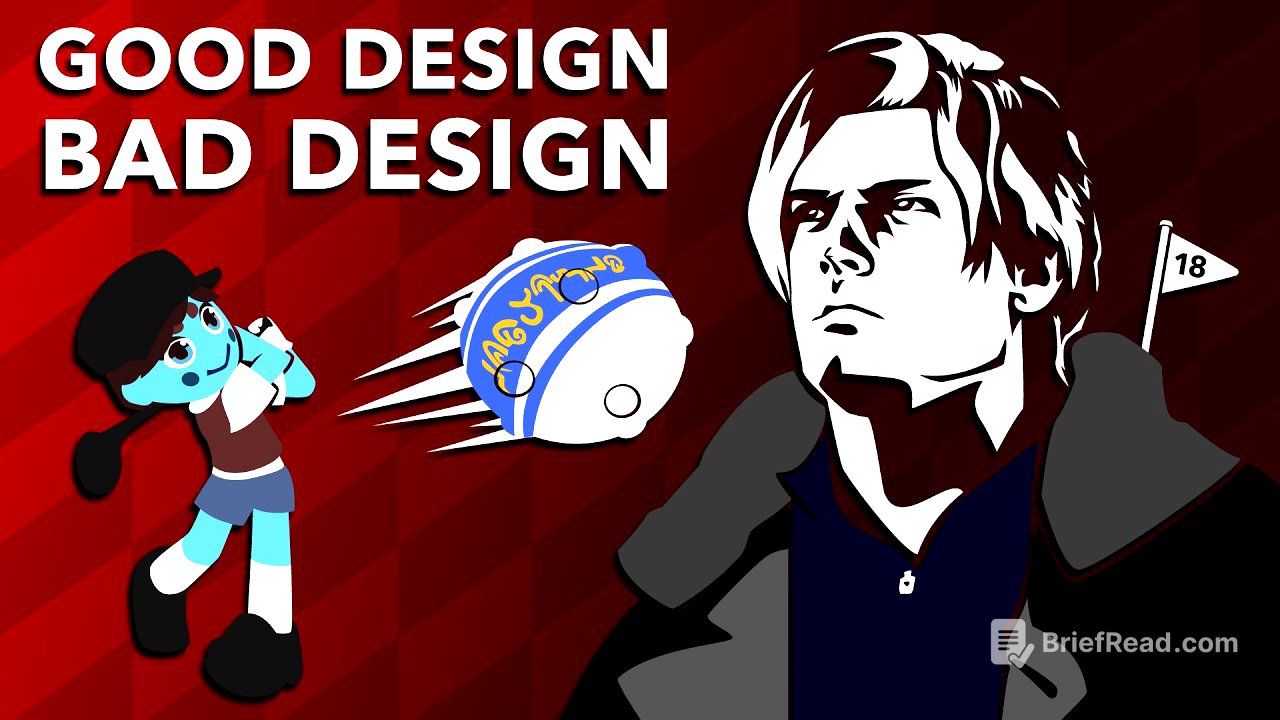
This video explores the nuances of good and bad graphic design in video games, highlighting how these elements significantly impact the player experience. It examines specific examples from three games: Super Battle Golf (good design), Final Fantasy X (bad design), and a hypothetical Resident Evil 9 (good design). The analysis covers aspects like UI, UX, camera work, and information presentation, demonstrating how thoughtful design choices can enhance gameplay while poor design can hinder it.
- Super Battle Golf introduces a novel UI element that streamlines gameplay.
- Final Fantasy X's Blitzball minigame suffers from a poorly executed tutorial.
- A hypothetical Resident Evil 9 uses camera perspective to create distinct gameplay experiences.
Intro [0:12]
The video introduces the concept of evaluating graphic design elements in video games, including menus, UI, UX, colour choices, fonts, animation, and camera work, all of which contribute to the presentation of information. It's highlighted that even good games can have bad design elements and vice versa. The video will present two examples of good design and one example of bad design.
Super Battle Golf - Good Design [2:15]
Super Battle Golf is praised for its innovative approach to golf game mechanics, injecting elements of Mario Kart into the sport. The game introduces a unique UI element: a shot power bar that changes background colours based on the terrain the ball will land on. This bar adapts to the player's situation and club angle, providing a dense but easily readable display of information. This design choice streamlines decision-making, allowing players to quickly aim and shoot, which is crucial in a fast-paced game where opponents can interfere with weapons and obstacles. The game avoids the need for a traditional overhead camera view, enhancing the immersive experience.
Final Fantasy X - Bad Design [6:19]
The video critiques Final Fantasy X's Blitzball minigame for its poor onboarding experience. The game presents a massive amount of information upfront in a series of text boxes, explaining every mechanic, stat, and technique before the player has even had a chance to play. This tutorial is then followed by an hour of regular JRPG gameplay, further distancing the player from the information they were just given. The first match is against tough opponents, making it even harder for new players to grasp the game. This approach violates the principle that information should be conveyed close to the point of use, making it difficult for players to learn and enjoy Blitzball.
Resident Evil 9 - Good Design [10:51]
A hypothetical Resident Evil 9 is presented as an example of how camera perspective can significantly impact gameplay and user interface. The game features two characters: Grace, who plays with a first-person camera reminiscent of earlier Resident Evil games, and Leon, who uses a third-person, over-the-shoulder camera similar to Resident Evil 4. Grace's segments focus on slow horror, tension, and resource management, with a limited inventory and vague health status. Leon's segments are action-oriented, with a clear health bar, an attaché case for storing items, and a shop system. The choice of camera perspective dictates the player's sense of power and preparedness, making the game more or less scary depending on the character being played. The ability to switch camera views further highlights the importance of camera placement in shaping the overall experience.
Outro [15:55]
The video concludes by encouraging viewers to share their favourite game UIs in the comments. It notes that while graphic design in games has improved, there is always room for further enhancement.





![24 Oras Express: September 28, 2026 [HD]](https://wm-img.halpindev.com/p-briefread_c-10_b-10/urlb/aHR0cDovL2ltZy55b3V0dWJlLmNvbS92aS9rQ0FROGtqQXJwUS9ocWRlZmF1bHQuanBn.jpg)