TLDR;
This video focuses on fruits and vegetables under the food and nutrition course, exploring their classification, nutritional composition, storage, cooking principles, post-harvest changes, and health benefits. The key takeaways include:
- Fruits are vital for health, providing nutrients and preventing diseases.
- The classification of fruits and vegetables is based on shapes, structures, and habitats.
- Nutrients like vitamins, minerals, and antioxidants in fruits and vegetables contribute to overall body function and disease prevention.
Introduction to Fruits and Vegetables [0:16]
The session introduces fruits and vegetables as essential components of a balanced diet, highlighting their importance in providing vital nutrients for health, growth, and disease prevention. Students will learn about classification, composition, and storage of fruits and vegetables, as well as cooking methods and their nutritional significance.
Classification of Fruits [2:40]
Fruits are defined as the ripened ovary of flowers, often sweet and juicy. They are classified into groups like berries, citrus, drupes, melons, and tropical fruits based on shape, cell structure, and habitat. The nutritional value outlines that fruits generally have low protein and fat but provide beneficial dietary fibre, vitamins, and minerals.
Nutritional Composition of Fruits [3:40]
Fruits are primarily low in calories and high in moisture, making them perishable. They are rich in soluble and insoluble fibre, with a few exceptions like avocado, which is high in healthy fats. Ripe fruits contain higher sugar levels, and certain fruits provide omega-3 fatty acids. Understanding the nutritional roles of fruits helps appreciate their health benefits.
Role of Pigments in Fruits [5:48]
Natural pigments in fruits, such as chlorophyll, carotenoids, anthocyanins, and anthosanthins, impart colour and contribute to nutritional value and antioxidant activity. Chlorophyll aids in photosynthesis and turns colour under different conditions. Carotenoids like beta-carotene provide pro-vitamin A and health benefits, while anthocyanins enhance heart health.
Water Content and Structure of Fruits [10:36]
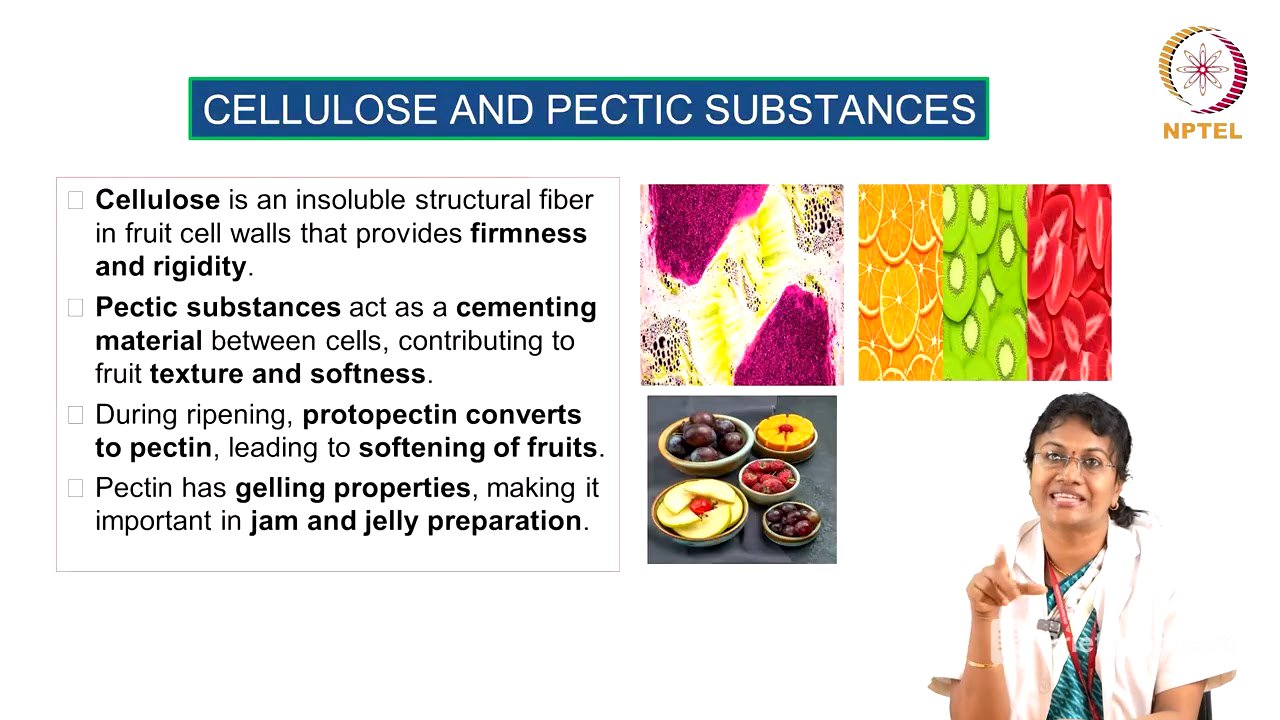
Fruits typically have a moisture content of 70% to 95%, contributing to their refreshing qualities. This high water content also leads to perishability; thus, proper storage is essential. The structural components, including cellulose and pectin, play a key role in the firmness and texture of fruits, influencing their consumption and processing.
Flavor and Aroma of Fruits [15:18]
The sweetness of fruits comes from sugars, while organic acids contribute tartness. Volatile compounds add aroma, enhancing the overall flavour profile. Changes during ripening, influenced by the balance of sugars and acids, significantly affect the palatability and consumer acceptance of fruits.
Bioactive Compounds in Fruits [17:00]
Fruits contain polyphenols, which are major bioactive compounds that contribute to antioxidant activity and overall health benefits. Polyphenols help alleviate oxidative stress, reduce the risk of chronic diseases, and support health by preventing nutrient deficiencies caused by inadequate intake.
Bitterness in Fruits [17:50]
Some fruits have bitterness due to compounds like alkaloids and flavonoids. Although pronounced in unripe fruits, bitterness may decrease as they ripen. Nevertheless, certain bitter fruits may still offer health benefits despite impacting taste acceptability.
Post-Harvest Changes in Fruits [18:51]
After harvest, fruits undergo changes such as respiration and ethylene production, leading to ripening, spoilage, and moisture loss. Proper storage is vital to prevent these changes, ensuring the longevity and nutritional value of fruits.
Ripening of Fruits [20:16]
Ripening is a natural process that enhances the flavour, colour, and sweetness of fruits. It involves the breakdown of chlorophyll, starch conversion to sugars, and the development of volatile compounds. Artificial ripening, often unsafe, should be avoided in favour of naturally ripened fruits.
Vegetables: An Overview [24:50]
Vegetables encompass various edible plant parts, including roots, stems, leaves, and flowers. Different classifications exist, highlighting the diversity within edible plant structures, their nutritional value, and health benefits.
Nutritional Composition of Vegetables [26:49]
Green leafy vegetables are excellent sources of vitamins A, C, folic acid, iron, and calcium, supporting immunity and prevention of deficiencies. Roots and tubers provide calories and vary in nutrient content, while other vegetables often have high moisture levels, contributing to their perishability.
Pigments in Vegetables [29:27]
Similar to fruits, vegetables contain pigments like chlorophyll and carotenoids, contributing to their colour and health benefits. Understanding the role of these pigments can enhance culinary applications and nutritional values.
Organic Acids and Enzymes in Vegetables [31:43]
Organic acids found in vegetables enhance flavour and act as natural preservatives. Enzymes accelerate metabolic reactions, such as the conversion of starches and proteins, improving the texture and overall quality of vegetables throughout cooking and processing.
Bitterness in Vegetables [34:20]
Bitter compounds in vegetables may negatively affect taste acceptance, but they can provide health benefits. Processing methods, like soaking and fermentation, can help reduce bitterness while maintaining nutritional integrity.
Vegetable Cookery [35:10]
Cookery methods can lead to nutrient loss in vegetables, along with changes in colour and texture due to the affects of heat on pigments and compounds. Proper post-harvest handling is essential to minimize losses in nutritional quality during cooking.
Conclusion on Fruits and Vegetables [38:01]
Fruits and vegetables are protective foods rich in vitamins, minerals, and antioxidants. Regular consumption is essential for preventing deficiency diseases and promoting overall health. Proper handling, storage, and cooking methods are crucial to retaining their nutritional quality and health benefits.