TLDR;
The video discusses food adulteration, its detection methods, and the health risks associated with it. It covers the definition of food adulteration, common adulterants found in everyday food items, and the impacts of these adulterants on health. Furthermore, it describes various household tests to identify adulteration in food products like milk, honey, grains, and vegetables.
- Food adulteration is the contamination of food with poor-quality substances for economic benefits.
- Common food items like dairy products, grains, and spices are often adulterated, leading to potential health risks.
Understanding Food Adulteration [0:14]
The video begins by defining food adulteration and its prevalence in the market. It highlights how food can become contaminated through the addition of inferior substances, which lowers nutritional value and may render food unsafe for consumption. Examples of common food items affected include vegetables, meat, and dairy products, and it is noted that the practice is widespread in developing countries despite laws against it.
Types and Reasons for Adulteration [3:05]
Various reasons for food adulteration are discussed, including economic motives, imitation of food products, lack of awareness, and growing food demand. Three main types of adulterants are identified: intentional, where poor-quality substances are purposely added; incidental, resulting from poor hygiene; and accidental, due to mishandling. The video elaborates on harmful effects like nutritional deficiencies and organ damage, particularly to the heart, liver, and kidneys.
Common Adulterants and Their Effects [6:18]
The video details specific adulterants found in various food products and their associated health risks. For example, milk may have water or starch added, causing stomach disorders, while ghee could contain mashed potatoes or vanaspati, leading to gastrointestinal issues. Other products like sugar can be adulterated with chalk powder, resulting in serious health problems, including kidney failure. Each mentioned product has specific adulterants that can cause various health complications.
Safety Measures Against Adulteration [10:57]
To ensure food safety, several measures are recommended, including avoiding dark-coloured junk foods, thoroughly washing fruits and vegetables, and checking for valid seals and FSSAI labels. The importance of vigilance in the purchasing process of food products is emphasised to mitigate the risks associated with adulteration.
Household Tests to Detect Adulteration [11:43]
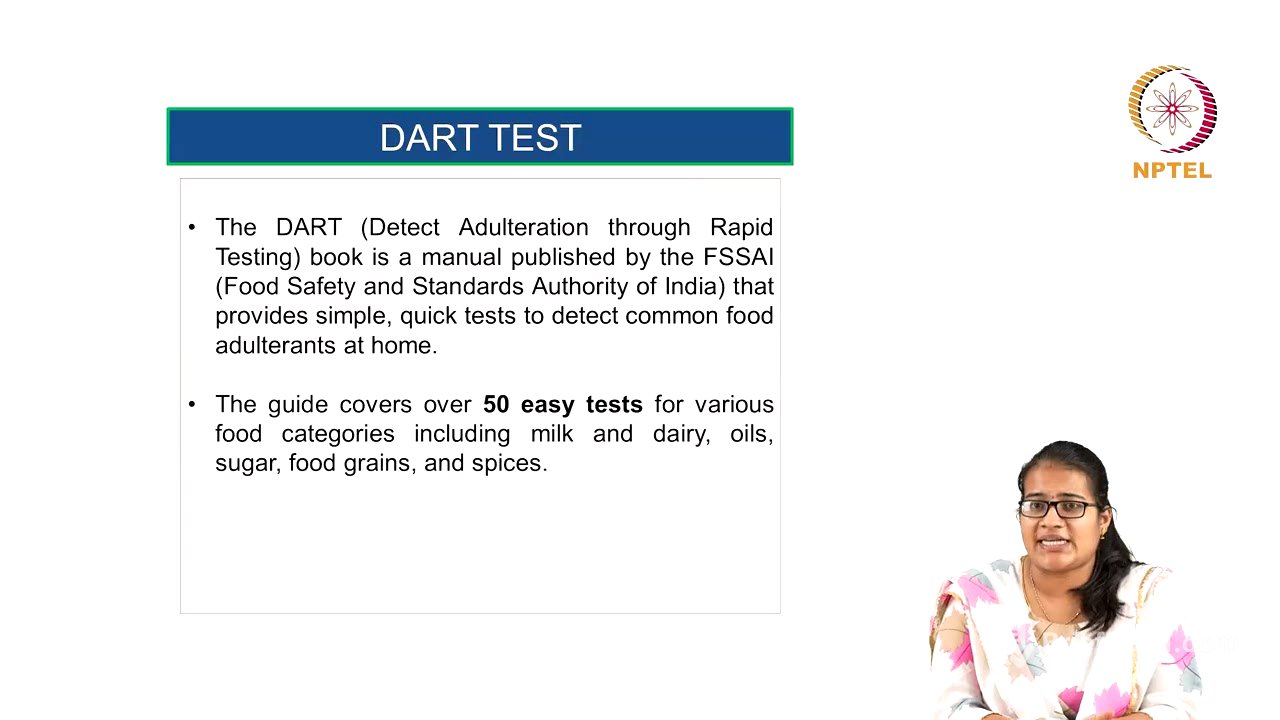
The video introduces the Dart test for detecting food adulteration using everyday items. It demonstrates various simple tests for common household products. For instance, to test milk adulteration, milk is dropped on a slanting surface – pure milk leaves a white trail, while adulterated milk flows quickly without a mark. Similarly, tests for honey, black pepper, and grains are explained, allowing viewers to check for adulteration risks in their kitchens. Each test provides a practical means of ensuring food integrity.