TLDR;
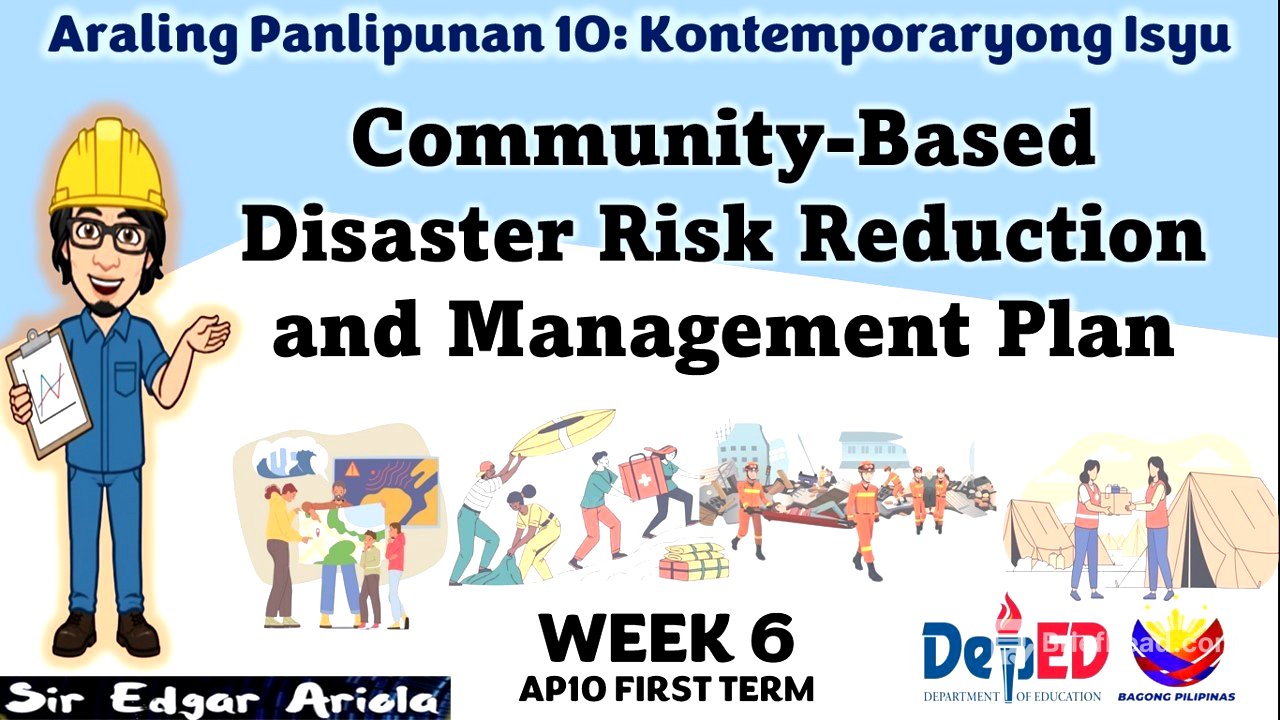
This video discusses the steps for creating a Community-Based Disaster Risk Reduction (CBDRR) plan, highlighting its four stages essential for disaster management. Key points include:
- Understanding hazards, vulnerability, and risk assessments.
- Importance of disaster preparedness, response, and recovery strategies.
- The roles of community cooperation and government agencies in reducing disaster impact.
Intro [0:00]
The video introduces the significance of community-based disaster risk reduction and management (CBDRRM), emphasizing the need for preparedness among citizens to mitigate the effects of disasters. It outlines that the discussion will cover the steps in developing a CBDRR plan, divided into four main stages.
Hakbang sa Pagbuo ng CBDRR [0:23]
This section outlines the process of developing a CBDRR plan. It highlights that this plan is divided into four stages aimed at preparing communities for potential disasters. It stresses the need for assessments of hazards and community capabilities to build a comprehensive disaster plan.
Unang Yugto: Disaster Prevention and Mitigation [0:41]
The first stage focuses on disaster prevention and mitigation, which involves assessing risks from various environmental challenges. It details the components of a disaster risk assessment, including hazard assessment—which evaluates potential damage—vulnerability assessment—measuring community weaknesses—and capacity assessment. It also explains the processes of hazard mapping and historical profiling to understand the risks and prepare effectively.
Ikalawang Yugto: Disaster Preparedness [6:33]
The second stage covers disaster preparedness, which entails taking action before and during disasters to protect lives and property. It highlights the importance of informing community members about necessary actions and ensuring proper coordination among various sectors to prevent confusion during emergencies. The goals of this stage include delivering alerts, providing guidance on protective measures, and instructing the public on safe actions during disasters.
Ikatlong Yugto: Disaster Response [8:25]
This stage of disaster response includes three types of assessments: needs assessment to identify immediate necessities for victims, damage assessment to evaluate property destruction, and loss assessment for service or production interruption. These assessments are crucial for effective response strategies and ensuring that victims receive the help they require promptly.
Ikaapat na Yugto: Disaster Rehabilitation and Recovery [9:15]
The fourth stage is focused on rehabilitation and recovery, aiming to restore and rebuild damaged structures and services to return to normalcy. It refers to a collaborative approach introduced in 2006 among various organisations to enhance community resilience and resource management post-disaster.
Disaster Management [11:37]
Disaster management is described as a dynamic process involving planning, organisation, leadership, and coordination among different sectors to effectively address hazards and help communities recover from disasters. It encompasses activities designed to maintain order during crises and ensure proper response to re-establish normalcy.
Hazard [13:09]
Hazards are identified as threats from natural or human-induced sources that can cause damage to life, property, and the environment. The video explains two categories of hazards: anthropogenic hazards, which result from human activity, and natural hazards such as storms and earthquakes.
Disaster [14:01]
A disaster is described as an event that causes significant danger and damage to people and the environment. It can be natural, like a hurricane, or man-made, like war. Disasters result from the interplay of hazard, vulnerability, and community capacities to respond.
Vulnerability [14:36]
Vulnerability refers to people and infrastructure more likely to be affected by hazards due to geographical conditions and socio-economic factors. The summary underscores how vulnerable structures contribute to greater disaster impacts.
Risk [15:04]
Risk indicates the expected damage against people, property, and livelihoods due to disasters. Vulnerable population segments generally face higher risk levels as they often lack the means to effectively manage hazards.
Resilience [15:27]
Community resilience is defined as the capacity to withstand and recover from adverse events. This resilience can be structural, through building strong infrastructure, or societal, in the form of acquiring knowledge regarding hazard preparedness and response.
Layunin ng PDRRM [16:02]
The Philippine Disaster Risk Reduction and Management (PDRRM) Act of 2010 is highlighted, with its foundational goals of proactive planning for hazards and the necessary roles government plays in reducing disaster risks. This includes the importance of community involvement in creating effective disaster management plans that are inclusive of diverse social sectors.