TLDR;
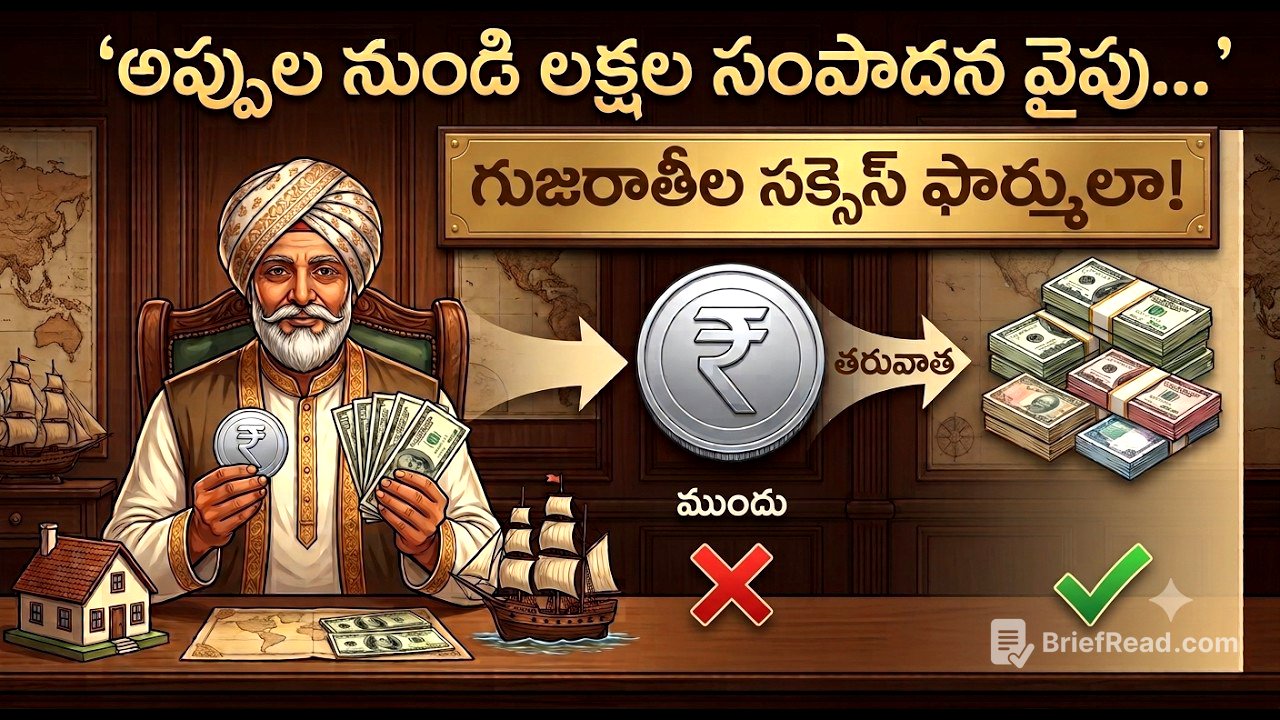
This video explores the mindset differences between those who work for money and those who make money work for them, particularly focusing on the Gujarati community in India. It highlights the importance of understanding human behaviour, thinking in terms of opportunities, and valuing learning over immediate financial gain.
- The way a Gujarati family approaches business is rooted in their mindset and culture, promoting learning and problem-solving.
- Understanding risk and failure is crucial for business success, as it helps to leverage experiences into future opportunities.
- The emphasis is placed on the long-term wealth-building mindset rather than short-term gains.
Chapter 1: The Money Mindset [0:00]
The chapter poses the question of why some people spend their entire lives working for a salary, while others make money work for them. It introduces the concept that it isn't merely about financial wealth, but rather a specific mindset. Notably, it discusses how only 5% of India's population originates from Gujarat yet how many of the nation's wealthiest businesses are tied to this state. The narrative begins with a story of a father teaching his son about the nuances of business transactions, indicating that understanding people is key to becoming a successful entrepreneur.
Chapter 2: Business vs Employment [2:02]
This chapter highlights the contrasting questions posed by job seekers versus business-minded individuals. Many look for employment opportunities, while entrepreneurs seek to understand the problems faced by the public. An example involving an entrepreneur who identified a gap in the market shows how Gujaratis notice opportunities where others see challenges. It emphasises the crucial difference in mindsets that leads to business creation.
Chapter 3: Understanding Risk [3:07]
The discussion shifts to how Gujarati individuals assess risks differently. When faced with the prospect of starting a business, they focus on the potential worst-case scenario rather than fear. This mindset allows them to strategically approach risks. The story of a well-known entrepreneur observing the petrol market for patterns illustrates the importance of understanding market dynamics rather than just job responsibilities.
Chapter 4: The Wealth-Building Question [4:03]
Here, the focus is on the common tendency to upgrade lifestyles upon receiving money versus the Gujarati mindset, which questions how much more wealth can be generated. Gujaratis prioritise building systems that generate income over spending money on immediate wants, creating a cycle of wealth accumulation and financial independence.
Chapter 5: Inheritance vs Mindset [4:40]
The chapter discusses the misconception that wealth is purely inherited. It highlights how Gujarati families focus on imparting a wealth-building mindset rather than just giving money. An example contrasts two fathers, one who gives money without teaching its value and another who teaches lessons on maintaining customer trust and building a reputation, showing how these values can lead to sustained wealth across generations.
Chapter 6: Customer Trust Over Profit [5:34]
This chapter elaborates on how Gujaratis view customer loyalty as more valuable than immediate profit. They prioritise earning a customer's repeat business over just making a sale, thus ensuring long-term sustainability of their ventures. The focus is on creating trust and lasting relationships to maintain business relevance over generations.
Chapter 7: Learning from Failure [6:01]
The narrative explains how Gujaratis approach failure as an opportunity to learn rather than an endpoint. They reflect on lost investments to ask what they learned from the experience, which drives them to return with greater knowledge and resilience in future endeavours. This attitude of returning with lessons learned sets them apart when facing setbacks.
Chapter 8: The Key Distinction [6:45]
In the final chapter, the overarching question from the start is revisited. The distinction made is that it is not merely the state of Gujarat or its people but rather the minor choices made in daily life that shape their financial futures. The video concludes by urging viewers to adopt the mindset of assessing expenditures based on whether they bring immediate satisfaction or contribute to long-term wealth creation. It reinforces that becoming wealthy starts with adopting the right mindset and learning from exemplar behaviours.