TLDR;
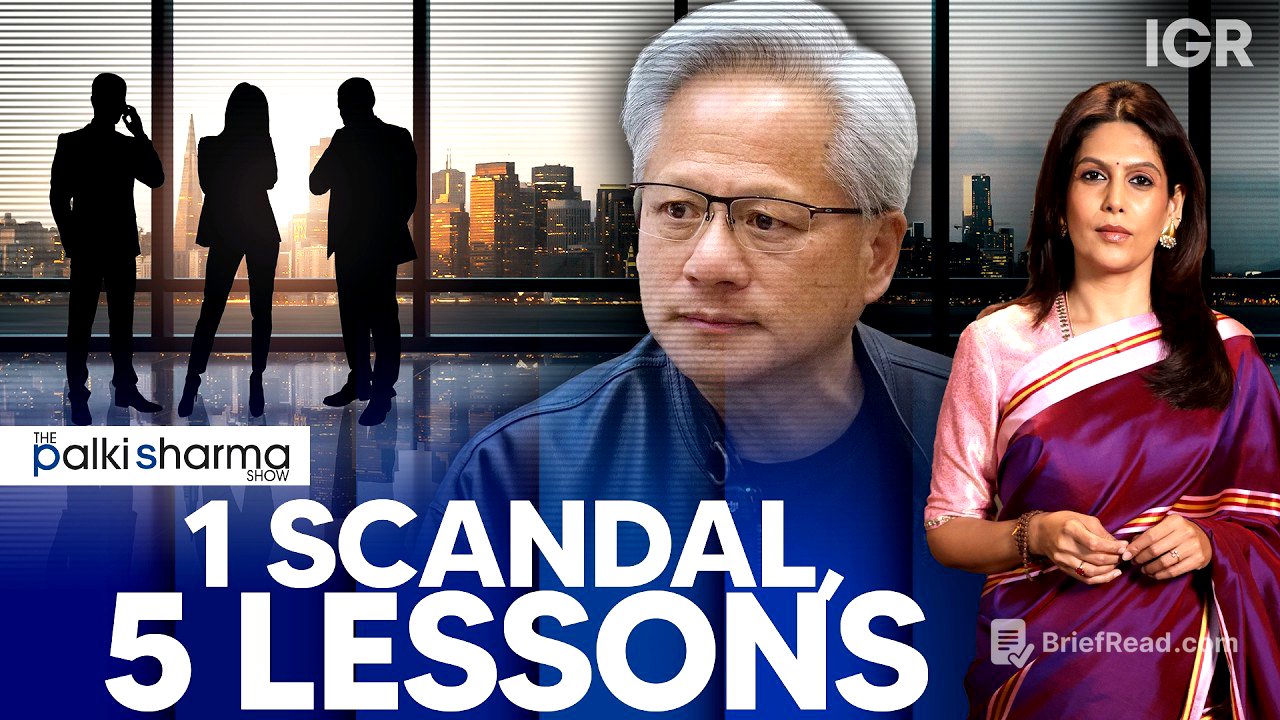
Jensen Huang’s reported exit from Nvidia is presented as a cautionary tale about how personal conduct can affect a company and its reputation. The video draws five lessons: loyalty and honesty matter, people remain a weak link in security, organisations need succession plans, companies must manage dependence on key individuals, and credibility can be destroyed far faster than it is built.
- Personal scandals involving prominent leaders can have consequences beyond their private lives.
- Strong cybersecurity cannot prevent every risk created by human actions.
- Succession planning and reducing dependence on one person help protect organisations.
- Reputation takes years to establish but can collapse quickly.
Personal Conduct and Public Trust [0:18]
Loyalty and honesty are presented as essential values for everyone, especially public figures whose lives may influence others. Huang had publicly portrayed himself as a devoted family man and praised his wife for supporting his family and Nvidia’s growth. The video alleges that he was secretly involved with at least three women, sharply contradicting that public image. It argues that such conduct damages his credibility and makes him a poor role model for the young entrepreneurs who once admired him.
Human Vulnerability in an Age of Espionage [1:10]
Cybersecurity measures can defend against many technical attacks, but people remain vulnerable to manipulation and poor decisions. Nvidia had reported a ransomware incident in 2022 and a cloud breach the previous month; the video says neither had caused damage on the scale attributed to Huang’s scandal, which it claims cost $600 billion in market value and threatened the AI boom. It also describes a suspected espionage case at OpenAI, where a Saudi employee was arrested after allegedly planting hidden cameras in meeting rooms. The contrast is that even as AI systems expose technical vulnerabilities, people can still compromise secure spaces through surveillance, manipulation or coercion.
Why Succession Plans Matter [2:43]
Even iconic leaders need a clear successor and a planned transfer of responsibility. Apple is given as an example: Tim Cook handled day-to-day operations before officially taking over from Steve Jobs in 2011. The video also says Cook’s successor, John Ternus, was identified by 2024 and took charge in 2026. At Berkshire Hathaway, Warren Buffett named accountant Greg Abel as his successor in 2021, and Abel became CEO in early 2026. Without a succession plan, a leader’s departure can create confusion and conflict, a problem the video also associates with family-run businesses in India.
Managing Key-Person Risk [3:59]
Key-person risk arises when too much knowledge, planning or operational responsibility rests with one individual. If that person leaves, the organisation may struggle or even collapse. Nvidia’s dependence on Huang is presented as one example, while SpaceX’s reliance on Elon Musk is another; the video notes that SpaceX’s IPO documents warned it might not find a suitable replacement if Musk left. Some leaders may be exceptionally difficult to replace, so eliminating this risk completely may be unrealistic. The practical aim, particularly for publicly traded companies, is to limit the damage their departure could cause.
Reputation Can Collapse in Seconds [5:04]
The final lesson is that credibility and reputation require years to build but can be destroyed in moments. This applies not only to chief executives and business leaders but to everyone. The video concludes that Huang learned this lesson through the consequences of the scandal surrounding him.