TLDR;
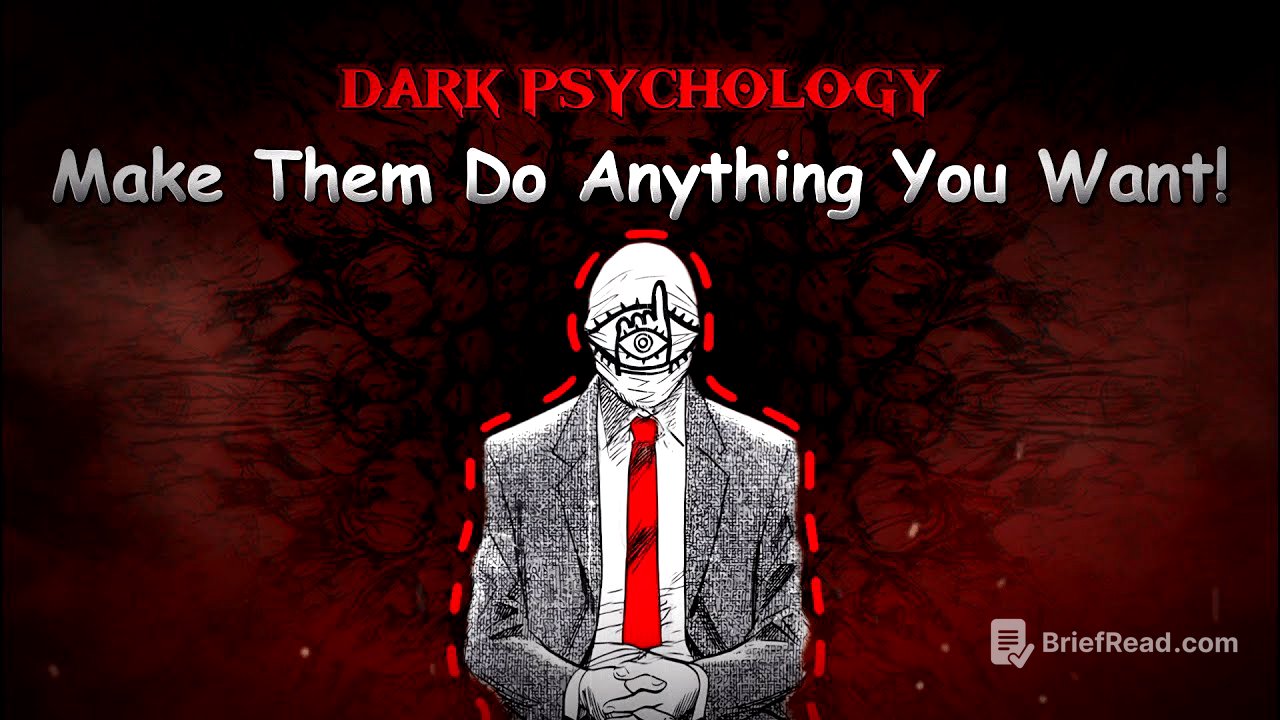
This video outlines 15 dark psychology tricks used for manipulation. These tricks range from subtly undermining someone's achievements to influencing their decisions and behaviours through carefully crafted language and scenarios. The video emphasises the importance of understanding these tactics to avoid becoming a victim and potentially using them to achieve desired outcomes.
- Twisting good news to erode confidence.
- Using nouns to create a sense of belonging and influence.
- Agreeing with someone to redirect their emotions.
- Employing the "ego elevator" by asking people about themselves.
- Manipulating questions to elicit desired responses.
- Staying calm to make others appear unhinged.
- Withholding gratitude to make others seek your appreciation.
- Offering something of value in exchange for assistance.
- Using "we" instead of "I" to create a sense of shared responsibility.
- Asking for advice instead of opinions to foster alliance.
- Giving backhanded compliments to build a positive image.
- Mirroring body language to create a sense of similarity.
- Asking for a small favour to warm up a cold person.
- Framing requests as choices to give a sense of control.
- Using "because" to provide a reason for a request, increasing compliance.
Intro [0:00]
The video introduces the concept of dark psychology and its use in manipulation. It warns that manipulators are always watching, know your weaknesses, and plant seeds of doubt to bend your mind to their will. The viewer is presented with a choice: learn and implement these tricks or become a victim.
TRICK No 1 [0:09]
This trick involves twisting good news to undermine someone's achievements. It's often used by narcissistic partners or parents who diminish accomplishments to erode confidence. For example, when someone shares news of a promotion, the manipulator might focus on what could have been better, leaving the person feeling deflated.
TRICK No 2 [1:08]
This tactic uses nouns instead of verbs to foster a sense of belonging and make people easier to influence. By identifying with a group, individuals feel safer and are more susceptible to manipulation. For example, saying "I'm a wine drinker" instead of "I like drinking wine" reinforces group identity.
TRICK No 3 [1:48]
This trick involves agreeing with someone who is upset or angry to redirect their emotions. By validating their feelings, you can get them on your side and potentially influence their actions. Agreeing with them enough might lead to unexpected opportunities.
TRICK No 4 [2:10]
The "ego elevator" is particularly effective, especially with females, and involves asking people questions about themselves. Since everyone loves talking about themselves, this tactic makes them enjoy the conversation and puts you in control, allowing you to learn more about them.
TRICK No 5 [3:06]
This trick focuses on manipulating questions to elicit a desired response. The way a question is phrased can significantly influence the answer. By adding hints or assumptions, being clear with words, and limiting options, you can guide the person's thoughts towards a specific viewpoint.
TRICK No 6 [4:27]
Staying calm when someone is emotional or angry makes them appear more triggered and foolish. Manipulators know which buttons to press to provoke a reaction, and remaining composed allows them to maintain control of the situation.
TRICK No 7 [4:56]
The "Gratitude Gambit" involves consistently thanking someone for even the smallest things until it becomes second nature for them. Then, withholding thanks for a few instances will make them value your appreciation so much that they will go to great lengths to earn it again.
TRICK No 8 [5:48]
This trick, based on the 48 Laws of Power, suggests offering something of value in exchange for assistance. Instead of simply asking for a favour, consider what the other person values, such as money, recognition, or time, and offer it to motivate them to help you.
TRICK No 9 [6:33]
This tactic highlights the power of language, specifically using "we" instead of "I" to create a sense of shared responsibility. This subtly shifts the perspective on a task, making it harder to refuse a request.
TRICK No 10 [7:12]
Asking for advice instead of an opinion makes the other person feel like an ally. Seeking advice draws them in and makes them a partner in trying to make the best of an idea, rather than objectively critiquing it.
TRICK No 11 [7:42]
Giving compliments behind someone's back is a powerful manipulation trick. The compliments are likely to reach them, making them feel grateful to you and building a positive image of yourself in their mind without direct flattery.
TRICK No 12 [9:02]
Mirroring someone's body language works on a subconscious level, as we tend to like people who are like us. By copying their gestures and posture, you can fool them into thinking you are similar, creating a sense of affinity.
TRICK No 13 [9:24]
If someone is cold towards you, ask them for a small favour. This trick works because we tend to like people we do favours for, so by doing a favour for you, they may subconsciously start to like you more.
TRICK No 14 [9:52]
Framing requests as choices gives people a sense of control. Instead of directly telling someone to do something, offer them a choice between two options, making the task seem less daunting and giving them a sense of agency.
TRICK No 15 [10:19]
Explaining why you need a favour, even with a nonsensical reason, increases the likelihood of compliance. People are more inclined to assist you if you provide a reason, regardless of how illogical it may be, simply by using the word "because".
IMPORTANT [11:45]
The video concludes by suggesting that the viewer has only scratched the surface of manipulation and encourages them to explore more dark psychology tricks.