
TLDR;
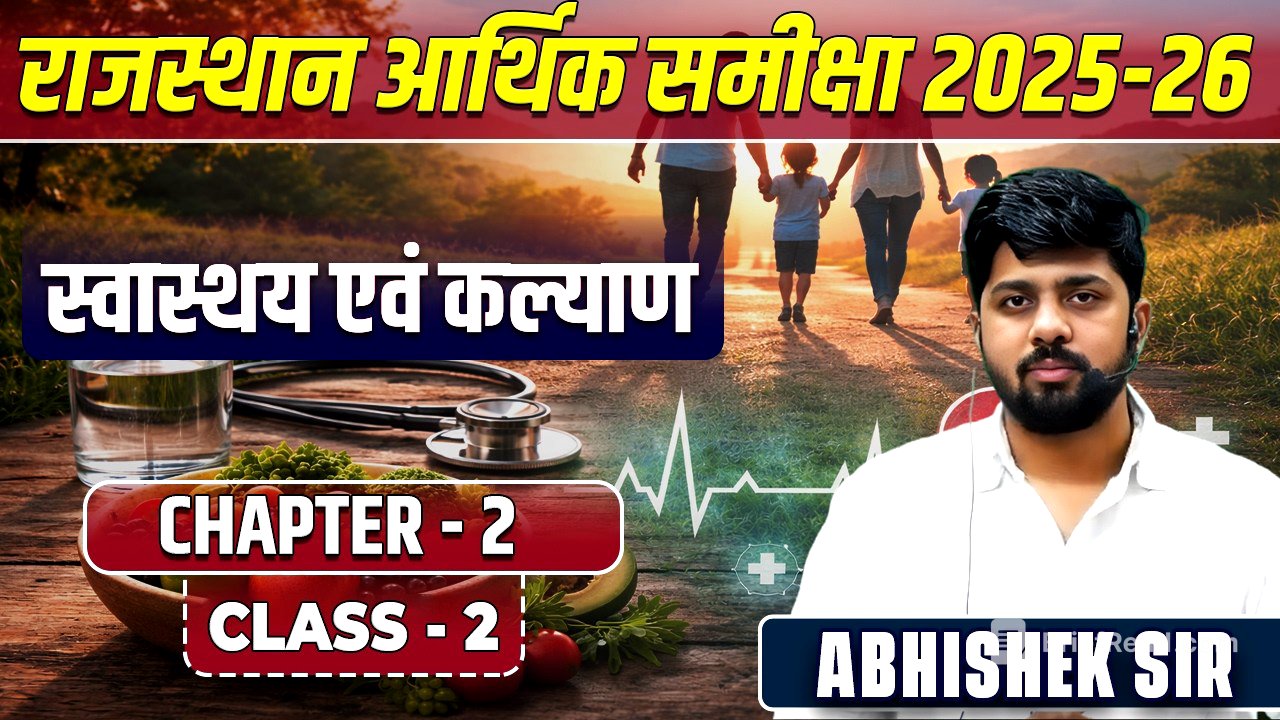
This YouTube video provides a comprehensive overview of Rajasthan's health initiatives and policies, focusing on schemes aimed at improving healthcare access, infrastructure, and specific health outcomes. It covers a range of topics from national health policies and schemes to specific programs targeting various demographics and health issues, such as maternal and child health, mental health, and disease control.
- National Health Policy 2017 and Ayushman Arogya Mandir
- Key Health Schemes in Rajasthan
- Disease Control and Special Health Programs
Introduction [0:06]
The presenter outlines the plan to cover the health chapter from the economic survey, emphasising the importance of understanding the individual identity and uniqueness of each chapter. The focus is on memorising the content, particularly concerning health, and understanding the advancements expected in India by 2047, with Rajasthan playing a leading role. The health chapter is structured around nine major areas, including universal health, medical colleges, medical tourism, AI-based healthcare, Ayushman Health, food security, coarse grains, legal measures, and consumer protection.
National Health Policy and Ayushman Arogya Mandir [1:59]
The National Health Policy of 2017 aims to provide universal medical coverage, emphasising the development of health and welfare centres. Primary health centres are crucial for providing immediate treatment for minor illnesses, with a recommendation to allocate two-thirds of the health budget to their development. In November 2023, these centres were renamed Ayushman Arogya Mandirs, offering holistic primary medical treatment and comprehensive primary healthcare. These Mandirs provide 12 key facilities, including care for pregnant women and childbirth, newborn and infant care, childhood and adolescence care, family planning, management of communicable and non-communicable diseases, OPD services, ENT care, oral health, elderly care, burn and trauma care, and mental health care.
Key Health Schemes in Rajasthan [13:20]
The Chief Minister Ayushman Health Scheme, effective from 1st May 2021, aims to provide universal healthcare. It offers free annual insurance up to ₹25 lakh for the entire family for a premium of ₹850. Certain categories, such as those under the National Food Security Act (NFSA), socio-economic caste census, EWS, small and marginal farmers, contract workers, those over 70 years, and Covid Anugraha Yojana beneficiaries, are exempt from paying the premium. The scheme operates through insurance and trust modes, with varying coverage amounts and treatment packages. Organ transplants, fixation, and cochlear devices are also included. Budget 2024 included a 73-day cancer package, and recently, 132 new treatments, including those for mental trauma and surgical ailments, were added. The scheme offers inbound and outbound benefits, allowing cashless treatment within Rajasthan and extending benefits to those from other states with Ayushman Yojana cards from April 2025, and to Rajasthan residents seeking treatment in other states from December 2025. The scheme has a target of 2.86 crore beneficiaries, with 2.29 crore having completed eKYC, and a mother fund of ₹3500 crore has been created.
The Chief Minister Free Healthy Rajasthan scheme, launched on 1st April 2022, merges the free medicine scheme (2nd October 2011) and the free checkup scheme (7th April 2013). It provides free medicine and testing facilities at district hospitals, community health centres, PHCs, sub-centres, Ayushman Arogya Mandirs, and medical colleges, offering 1238 medicines, 428 surgical items, and 156 sutures.
The Chief Minister Bal Sambal Yojana, launched in 2024, provides assistance up to ₹50 lakh for the treatment of children under 18 suffering from rare diseases, along with ₹5000 per month.
The Rajasthan Government Health Scheme (RGHS), from 1st July 2021, provides cashless treatment for ministers, former and present MLAs, All India Service officers, Rajasthan Government officials, employees, and pensioners. It covers government and private hospitals within and outside the state, with registration through Jan Aadhar. It includes allopathy, Ayurveda, Unani, Siddha, and Homeopathy, and uses the RGHS Connect app.
The Ayushman Vandan Yojana, launched on 29th October 2024, provides insurance of ₹5 lakh for citizens over 70 years.
Disease Control and Special Health Programs [32:34]
Each Gram Panchayat will have a PHC named Adarsh PHC, and community health centres will be developed to provide comprehensive facilities. The Attack on Pure Food Adulteration campaign, from 15th February 2024, encourages reporting of fake food products via 181, with a ₹51,000 reward for confirmed complaints.
The National Mental Health Programme, initiated in 1982, aims to support individuals with mental health issues, offering counselling 24/7 via the helpline 14416 (Telemanas). Camps are organised to raise awareness, and individuals are encouraged to seek help for mental health problems.
The National Oral Health Programme, started in 2014-15, aims to reduce regional disparities in dental health between rural and urban areas by organising camps and providing access to dentists in rural areas.
The Silicosis Policy, introduced in 2019, supports those involved in stone work who are affected by silicosis. It provides ₹3 lakh for rehabilitation, ₹2 lakh in case of death, ₹10,000 for funeral expenses, increased widow pension from ₹1250 to ₹1500, benefits of the Palanhaar Yojana for children, and an Aastha card for families with more than 40% disability. Early detection of silicosis is being done through AI.
The National Deafness Control Programme, started in 2006-07, aims to reduce inequality in access to treatment for deafness between rural and urban areas by setting up camps.
The Tobacco Control Programme includes the Tobacco-Free Youth Campaign 3.0, launched on 9th October 2025, to raise awareness about the harmful effects of tobacco, with active participation from Sarpanch, BDO, and village-level officers.
The National Programme for Prevention and Control of Fluorosis addresses fluorosis-affected villages, with efforts to control it.
The National Viral Hepatitis Control Programme aims to eradicate Hepatitis C by 2030 and reduce A, B, and E, with four medical colleges in Rajasthan serving as centres.
The Integrated Disease Surveillance System connects laboratories to monitor diseases, with 27 district hospitals developed as District Prevention Health Laboratories.
The Madhuhari program, launched on 29th November 2024, focuses on diagnosing Type 1 Diabetes, providing training to pediatricians and free insulin and diabetes-related supplies.
The Madhu Netra program, started in July 2025, aims to prevent retinal damage in children with diabetes, with five treatment centres set up.
The Prime Minister Dialysis Program, ongoing since 2016, provides free dialysis for BPL families in 61 hospitals across 41 districts.
Several community health centres (CHCs) and sub-health centres have been upgraded, and two new satellite hospitals have been built in Jaipur and Ajmer.
The National AIDS Control Programme, ongoing since 1992, includes STI clinics, free consultation, testing, medications, blood banks, and ART centres.
The AYUSH Mission promotes Ayurveda, Yoga, Unani, Siddha, and Homeopathy, with the Rajasthan State AYUSH Society formed in 2015 and a research centre established in Ajmer.
The Employee State Insurance Scheme (ESIS) provides health insurance for employees in private institutions with more than 10 employees and a salary of less than ₹21,000, with contributions from both the company and the employee.
The National Health Mission includes rural and urban sub-missions, with the ASHA program spreading awareness in villages and Usha in cities.
The National Child Health Program focuses on diagnosing and treating defects, diseases, deficiencies, and developmental delays in children.
The National Adolescent Health Program, started in 2014, aims to take care of teenagers, establishing Ujala Clinics and providing outreach programs.
Ambulance services, including 104 Janani Express and 108 ambulances, are available.
The Mobile Medical Service Scheme, started in 2008-09, provides free medical facilities in desert, tribal, and underdeveloped areas.
The Chief Minister Ayushman Arogya Maa Voucher scheme provides free sonography for pregnant women.
The Prime Minister Ayushman Bharat Health Infrastructure Mission aims to develop world-class infrastructure between 2021 and 2026.
The Village Health and Sanitation Committees, chaired by the Sarpanch or Ward Panch, spread awareness and take care of cleanliness in villages.
Telemedicine e-Sanjeevani, under the Ayushman Bharat Digital Health Mission, connects doctors and patients through a hub and spoke model.
Achievements include leprosy eradication and targets for tuberculosis and other diseases.







![ILLSLICK - แค่ฉัน [Official Video]](https://wm-img.halpindev.com/p-briefread_c-10_b-10/urlb/aHR0cDovL2ltZy55b3V0dWJlLmNvbS92aS96RHc5Y18wTkVkQS9ocWRlZmF1bHQuanBn.jpg)